The Lisboa Brief, Week of 19 September 2026: Two Weeks to Object to the 16E Tram, the Bairro Alto Cameras Get Three More Years, and Four Anaesthetists Leave Dona Estefânia
Your weekly roundup from the capital: the 16E fast tram consultation closes on 30 September, the Bairro Alto's cameras are renewed in a city that wants 616 more, four anaesthetists resign from Dona Estefânia, Gira's new app drops the 300 euro day-pass hold, and the theatre reopens on the Rossio.
Two weeks remain to object to the tram line Carris wants to run from the Praça do Comércio to the Parque Tejo. Elsewhere: the Bairro Alto's cameras get another three years in a city that wants 616 more, four anaesthetists resign from Dona Estefânia, Gira's new app drops the 300 euro hold on a day pass, and the national theatre reopens on the Rossio with free tickets.
Two Weeks to Object to the 16E
The environmental consultation on the 16E, an eleven-kilometre surface light-rail line with seventeen stops from the Praça do Comércio to the Parque Tejo, closes on 30 September. Anyone can comment until then through the government's Participa portal; after that the project moves to an execution design and the questions narrow considerably.
At Monday's information session, Parque das Nações residents objected to the lost parking, the noise and the vibration, one telling the room the line would "assassinate" the neighbourhood. The Agência Portuguesa do Ambiente says the scheme is viable provided its effects are minimised and monitored. Carris puts the cost at 160 million euros on one page of the study and 183 million on another.
Twenty-Seven Cameras, and 616 More
An order published on Monday in the Diário da República renews the twenty-seven cameras watching the Bairro Alto for another three years. The renewal is routine; what sits behind it is not. The city runs 126 cameras today, every one in the historic centre or along the river. The council wants 500 more at Parque das Nações, along Almirante Reis and on Avenida da Liberdade, and a further 116 in the Baixa Pombalina and at Santa Apolónia by 2028. That takes the network well out of the nightlife districts it started in.
Getting Around
EMEL replaced the Gira app on Tuesday, and the 300 euro hold on a day pass goes with it. Logins, passes and balances carry across, and trips stay free to 45 minutes. Two things get worse: loyalty points stop accruing, with existing balances frozen and no date for converting them, and the wallet shared with the parking app ePark is now two wallets, bridged by a telephone call.
On the river, all ten of Transtejo's electric catamarans worked on the same day for the first time on Wednesday, three years after the first one arrived. The figure that matters on the quayside is not the world record claimed at Cais do Sodré: it is that suppressed sailings are down about 90 percent since November.
And FlixBus boards its first passengers at Sete Rios on 29 September, six months after a Lisbon court ordered immediate access. It gets 23 services, about 1.9 percent of the terminal's claimed capacity, and nothing between half past four and half past eight. The rest of its Lisbon operation stays at the Gare do Oriente, so check which terminal your coach leaves from.
In the Hospitals
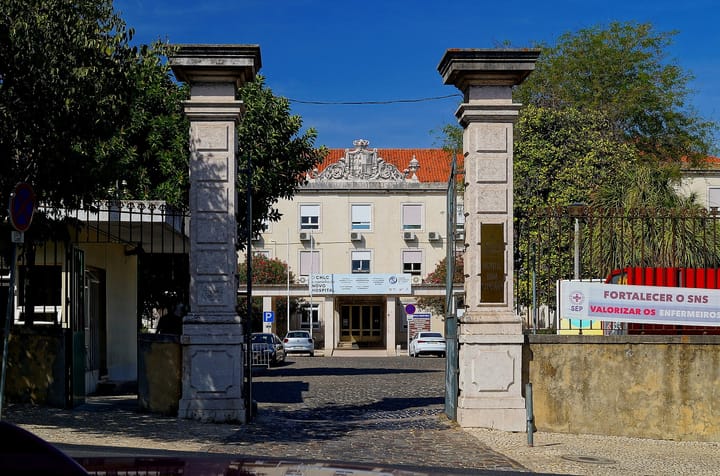
Four anaesthetists will leave the Hospital Dona Estefânia in October, a fortnight after all nine team chiefs in its paediatric emergency department resigned their posts. The Unidade Local de Saúde São José says three of the four were already absent and the fourth part time. The constraint is national: the Ordem dos Médicos puts the shortfall at 600 anaesthetists.
At Amadora and Sintra, the new president of the local health unit puts the share of foreign nationals among her patients at around 40 percent, from 150 nationalities, in a hospital built for 300,000 people that answers to twice that. Its fixed emergency team has eight or nine doctors where it needs thirty. Better news from Santa Maria, where a programme built with a Cambridge hospital has operated on 25 patients who would once have been flown to England.
At the Câmara
Carlos Moedas used his account of the summer at the Assembleia Municipal on Tuesday to ask the government to cancel the Volta deposit scheme outright, calling it "a tax for those who pay, and an unprecedented social drama in the city". The Environment Minister accepts adjustments are needed but guarantees the scheme stays. A petition against it, past 37,000 signatures, waits on a ruling in parliament's Environment Committee.
At the 135th anniversary of the Polícia Municipal on Friday, the Minister of Internal Administration said selling fake drugs in the Baixa is to become a crime in its own right. Handing a tourist a bag of pressed bay leaf is a fraud, and fraud is semi-public, so the victim must complain and pursue it; in practice they are on a plane home first. Making it a public crime lets prosecutors act on their own.
Around the Region
A 4.4 million euro care home in Mafra was inaugurated on Tuesday and cannot admit anybody: sixty beds, a hundred and fifty people waiting, and no Social Security agreement to fund 48 of the places. In parliament, the bill that would stop every AIMA lawsuit landing in the Lisbon Administrative Circuit Court was debated on Wednesday. And one Lisbon music school's injunction has frozen the whole country's artistic-education funding, with the ministry barred from publishing a single provisional list and unable to give a date.
One Number
48.4 percent. That is Lisbon airport's share of every passenger moved in Portugal between January and July. Lisbon carried 20.8 million, up 1.0 percent against Porto's 7.1. In absolute terms Lisbon added about 200,000 passengers; Porto, at half the size, added 680,000.
On in Lisbon
The Teatro Nacional D. Maria II is back on the Rossio after three years and 15.1 million euros of work, the whole reopening programme free and tickets collected rather than bought. The centrepiece is a premiere of Macbeth directed by Pedro Penim, the play that was on stage the night of the 1964 fire. Guided visits run today, and the Coro do Recomeço closes the weekend on Sunday.
The European Heritage Days run to 27 September and several dozen Lisbon venues are taking part: a free guided visit to the Palácio Nacional da Ajuda on Sunday the 20th, the taxidermy laboratory of the Museu Nacional de História Natural e da Ciência opening its doors, and on the 26th a walk between São Vicente de Fora and the Sé, which has just taken the religion category in the new Sete Maravilhas de Portugal.
Lisbon AI Week returns from 21 to 27 September, scattered across venues around the city rather than gathered in one hall. Festas na Rua closes on the 26th with Rui Massena and Carlão in the garden of the Palácio da Alfarrobeira in Benfica, and Cinema na Praça on the Alameda the same evening. The Feira da Luz runs daily in Carnide until the 27th, and the Make Sense week offers free head and neck cancer screening at the Hospital CUF Tejo from 21 to 25 September.
That is the capital's week. The Lisboa Brief returns next Saturday.
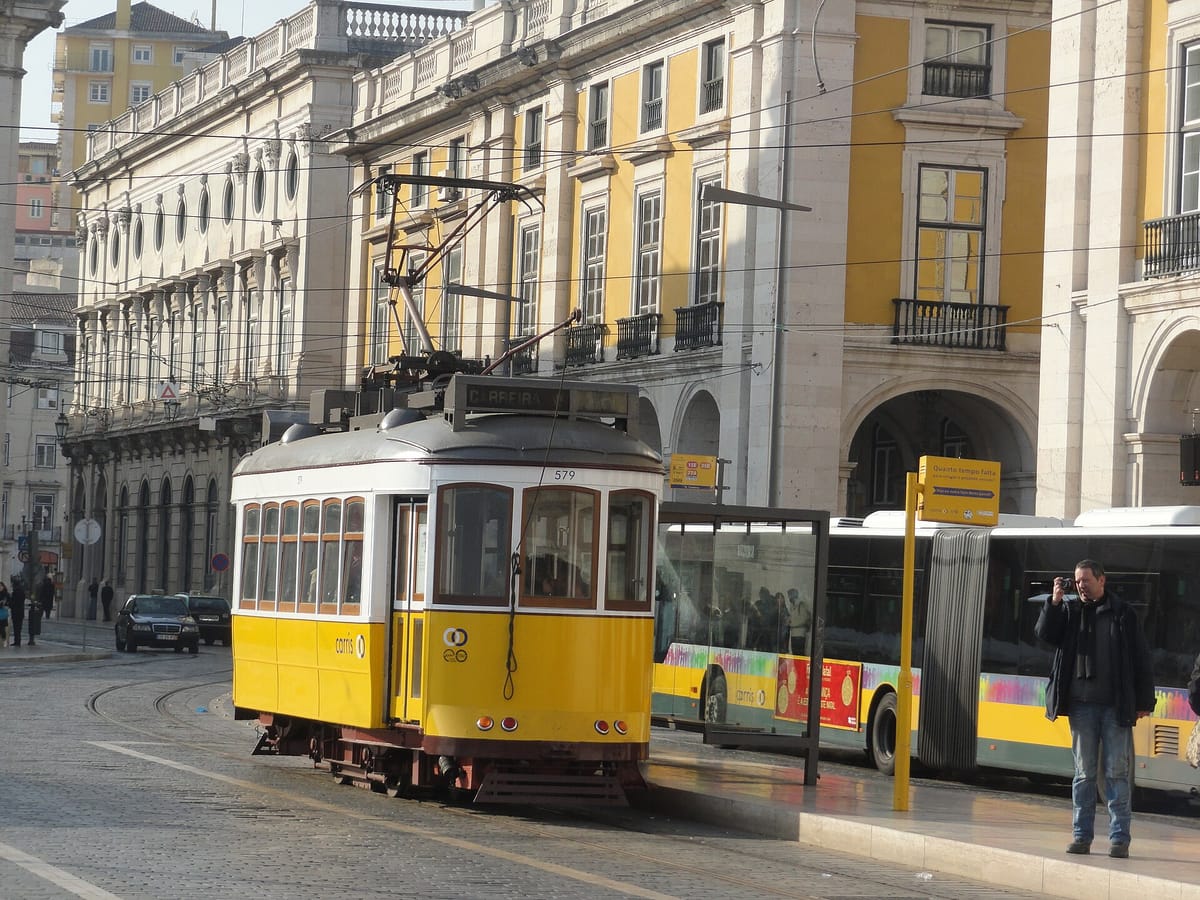
Feature image: a Carris tram at the Praça do Comércio stop, by Anne-Lotte O'Dwyer (CC BY-SA 2.0), via Wikimedia Commons.