A 4.4 Million Euro Care Home in Mafra Was Inaugurated on Tuesday and Cannot Admit a Single Resident
Sixty beds, thirty-eight jobs and a hundred and fifty people waiting. What is missing is the Social Security agreement that would fund 48 of the places, and without it the doors stay shut.
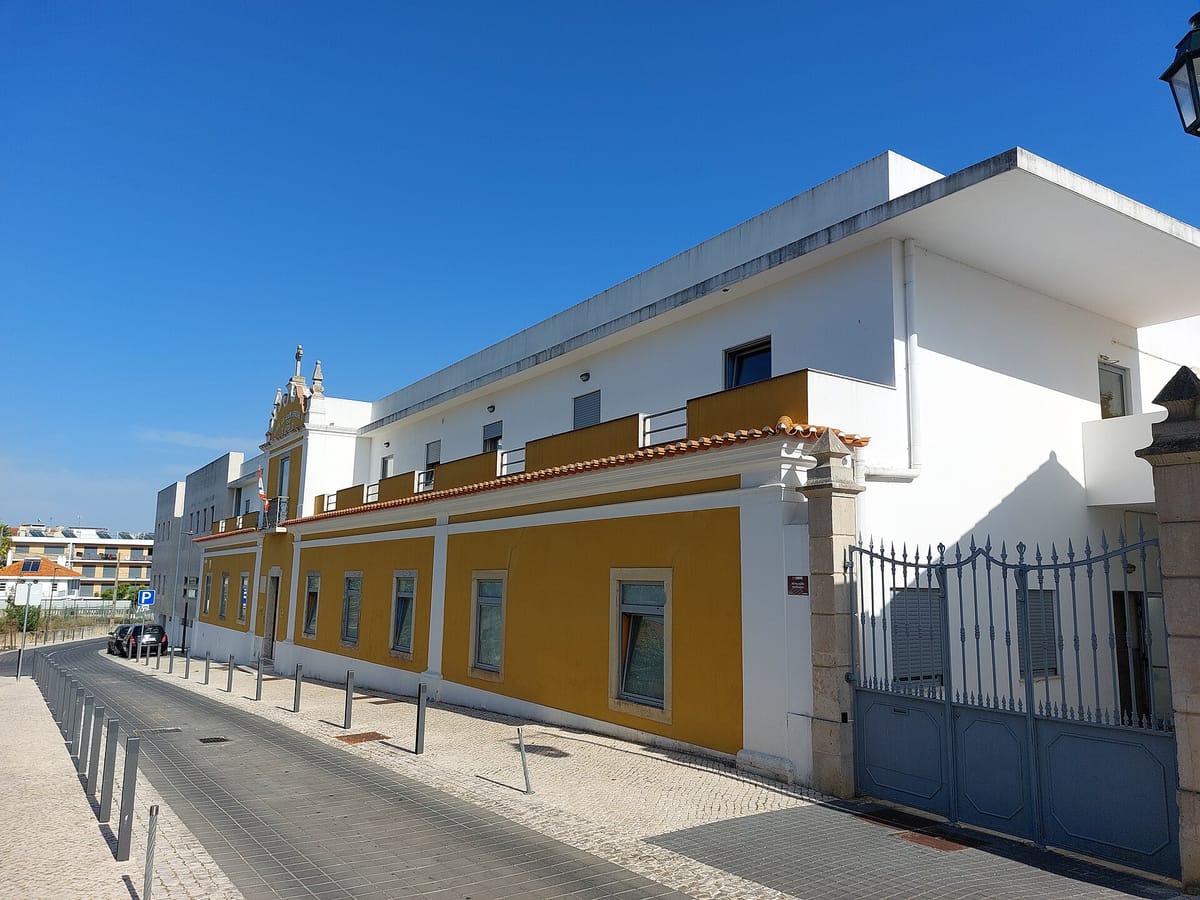
The Minister for Labour and Social Security cut the ribbon on a new care home in Mafra on Tuesday. It has sixty beds, thirty-eight new jobs attached to it and a waiting list of a hundred and fifty people. It cannot take a single resident, because the paperwork that would let the state pay for most of them has not been signed.
The building is the second residential home run by the Santa Casa da Misericordia de Mafra, a 4.4 million euro investment of which 2.3 million came from the Recovery and Resilience Plan. Maria do Rosario Palma Ramalho called it "a happy investment of public money in a social work" in her speech at the ceremony, and acknowledged in the same breath that the agreement with the Instituto da Seguranca Social is still outstanding. That agreement would have the state co-finance 48 of the 60 places.
Finished, inspected, empty
Without it, the home cannot open at all. The provedor of the Misericordia, Joaquim Sardinha, told the Lusa news agency that the missing agreement blocks the estrutura residencial para pessoas idosas, the formal designation for a care home in Portuguese law, from entering service.
Lusa reported that it knows of other institutions waiting months for Social Security authorisations and signed agreements before they can open a care home or a creche, even once the building is ready.
Asked about that, the minister rejected the characterisation. There is no "wait of months in most cases", she said, describing what happens instead as "the normal procedure", and adding that projects funded through the Recovery and Resilience Plan actually move faster because some procedural requirements are waived. It is, she said, "a phase that demands verification of another type of conditions", and the government's efforts to cut red tape in the sector "are already producing results".
Why the Misericordia built it
Sardinha's case for the investment was blunt, and it is one heard across the Portuguese health system. "The hospitals are full of people who should no longer be there, there is no capacity in the social institutions, and we always have a great many people on the list," he said.
He is describing what the sector calls internamentos sociais: patients who are medically ready for discharge but have nowhere safe to go, and who therefore occupy hospital beds for weeks or months. Every place a care home cannot open is a place that problem does not get.
The home itself has an unusual history. It occupies the buildings that housed Mafra's old hospital and health centre until 2019, when the service moved into new premises as Centro de Saude Mafra Norte. The Misericordia looked for private partners in health and found none, then decided to convert the site itself. The public tender went out at 3.4 million euros. Costs rose after one of the old buildings was found to lack seismic protection and had to be demolished and rebuilt.
Sixty beds against a list of a hundred and fifty
The institution already runs a first home with 76 residents. The new one adds 60 places and 38 jobs in a municipality where 150 people are already registered and waiting.
None of that changes until the agreement is signed. For the families on that list, the distinction between a building that is finished and a building that is open is not a procedural one.