West Nile Virus Has Reached Seven Horse Farms in Portugal This Year, and a Health Council Fears Human Cases Are Going Unnoticed
The DGAV counts seven equine outbreaks in Portalegre, Santarém and Setúbal. Europe has 2,009 human cases, including 149 in Spain, three of whose affected provinces border Portugal. Portugal has reported none.
West Nile virus has been confirmed on seven horse farms in Portugal this year, three in the district of Portalegre, three in Santarém and one in Setúbal, according to the latest count from the Direção-Geral de Alimentação e Veterinária (DGAV, the Directorate-General for Food and Veterinary Affairs), dated 30 October. No human case has been reported in Portugal this season.
A group of health organisations now says that may not be the whole picture. The Conselho Português para a Saúde e Ambiente (CPSA, the Portuguese Council for Health and Environment) warned on Monday of a "high probability" that human infections are going undiagnosed, Lusa reported.
A heavy season next door
Across Europe, 20 countries have reported 2,009 locally acquired human infections since the start of the 2026 season, according to the weekly report of the European Centre for Disease Prevention and Control (ECDC), published on 29 October with data to 28 October. Italy has reported 780 cases, Greece 463, France 180 and Spain 149. The CPSA says that is almost twice last year's number.
Several of the Spanish areas where people caught the virus this year are close to Portugal. The ECDC lists seven affected Spanish provinces, and three of them border Portugal: Badajoz and Cáceres in Extremadura, and Huelva in Andalusia. The other four are Seville, Cádiz, Córdoba and Málaga.
"The documented circulation of mosquitoes carrying the virus, the existence of infected animals in the country and the high number of cases recorded in southern Europe, particularly in Spain, justify greater attention from health professionals and the authorities to the possibility of this underdiagnosis," the CPSA said in its statement.
How the virus spreads
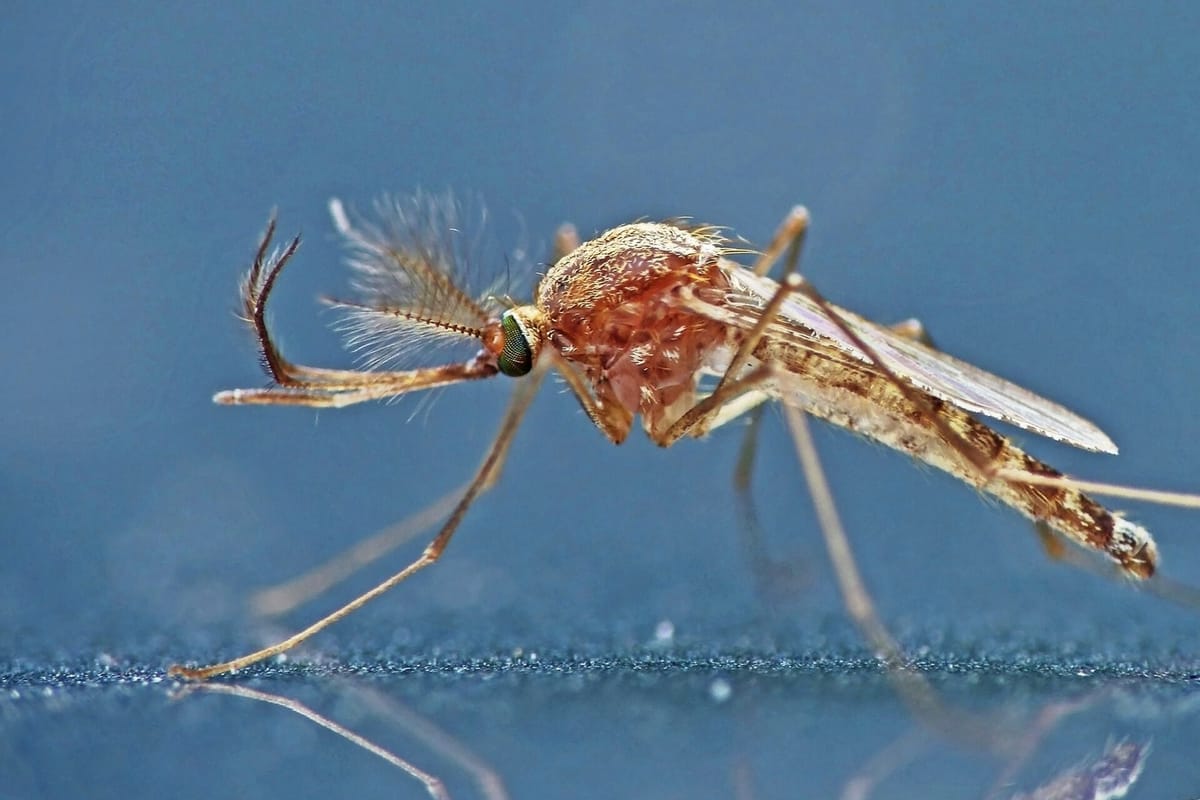
The virus lives mainly in wild birds and passes to people and horses through the bite of infected mosquitoes, above all of the Culex genus. People and horses are "dead-end" hosts: they can fall ill, but they do not pass the virus on, the DGAV explains on its information page.
The mosquitoes that carry it are common in Portugal. The CPSA, citing the 2025 report of the Rede Nacional de Vigilância de Vetores (REVIVE, the National Vector Surveillance Network), says Culex species made up more than 45 percent of the 9,502 adult mosquitoes that the Instituto Nacional de Saúde Doutor Ricardo Jorge (INSA, the National Health Institute) caught last year. REVIVE is the same programme that tracks the spread of the tiger mosquito.
Most people who are infected have no symptoms. According to the CPSA, about one in five develops a fever, with headache, muscle pain, tiredness, nausea or vomiting that is easy to mistake for another viral infection. A small share, which the CPSA puts at about 5 percent, develop serious neurological illness such as meningitis or encephalitis, and the risk is highest for older people and those with weakened immune systems.
What the health council is asking for
- Doctors should consider West Nile virus when a patient has a fever with no clear cause, or meningitis, encephalitis or sudden paralysis, depending on where they have been.
- Laboratory testing should be available quickly everywhere in the country, with results confirmed by RNA tests, particularly on urine, where the virus can be found for two to three weeks after infection.
- Mosquito surveillance and control should be stepped up.
What residents can do
The CPSA advises people to protect themselves from bites, especially at dusk and during the night, and to get rid of standing water where mosquitoes breed. The same advice applies to the tiger mosquito, which has been found in a growing number of municipalities.
Horse owners have extra steps. The DGAV's advice for owners says vaccination is "strongly recommended". Vaccines are authorised case by case: the owner's vet applies to the DGAV through the GesEqus platform. The DGAV also asks owners to keep horses away from mosquitoes at dawn and dusk, to use repellents, and to report dead wild birds near their animals through its ANIMAS app. Vets who suspect a case should notify it through the DGAV's SPC system at spc.dgav.pt.
The CPSA's statement cited four outbreaks in horses; the DGAV's table dated 30 October lists seven. Earlier this autumn, the DGAV also reported Shamonda virus, a different insect-borne virus, on cattle farms.