INSA's 2025 REVIVE Report Puts Aedes albopictus in 28 Mainland Municipalities — Lisboa, Oeiras, Almada and Sesimbra Join the Tiger-Mosquito Footprint as Dengue Serotype 2 Persists in Madeira's Aedes aegypti
INSA's 2025 REVIVE Report puts Aedes albopictus in 28 mainland municipalities, up from 18 in 2024. Six new municipalities added in 2025 — Condeixa-a-Nova, Covilhã, Lisboa, Oeiras, Almada and Sesimbra. Dengue serotype 2 again detected in Madeira's Aedes aegypti.
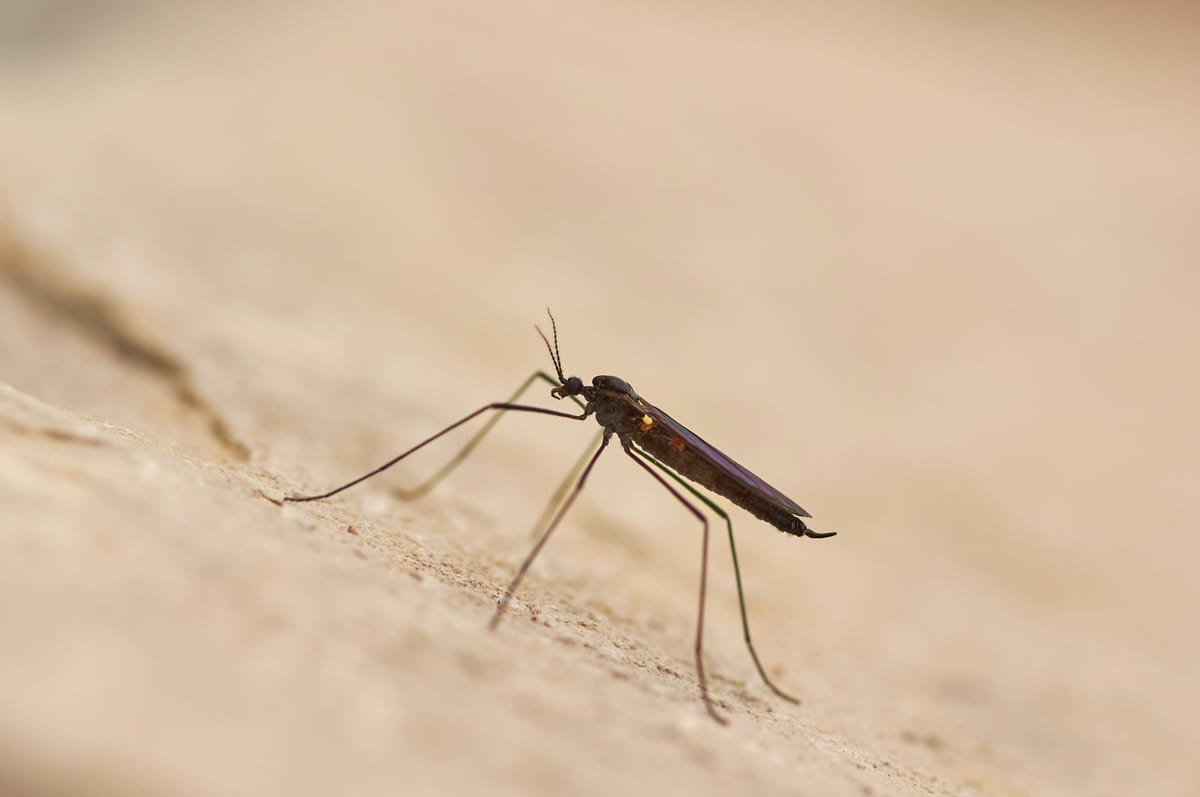
The Instituto Nacional de Saúde Doutor Ricardo Jorge has confirmed Aedes albopictus — the Asian tiger mosquito and a competent vector for dengue, chikungunya, Zika and yellow fever — in 28 mainland Portuguese municipalities by the close of the 2025 surveillance season, up from 18 a year earlier and a marked acceleration from the species' first detection in northern Portugal in 2017. The findings come from the 2025 REVIVE Report (Rede de Vigilância de Vectores), the country's national vector-surveillance programme, with field sampling carried out across 243 municipalities.
The 2025 footprint
The six new mainland municipalities added in the 2025 round are Condeixa-a-Nova and Covilhã in the Centro region, and Lisboa, Oeiras, Almada and Sesimbra in the Lisbon and Setúbal arc. The expansion stretches the species' continuous corridor along the Tagus estuary — for the first time placing established populations of A. albopictus on both banks of the river inside the Greater Lisbon metropolitan area. REVIVE technicians collected 44,123 adult mosquitoes across 22 species and 48,503 eggs of invasive species during the 2025 season, with the Asian tiger mosquito accounting for the lion's share of the invasive sub-total.
How the species moved through Portugal
Aedes albopictus was first detected on the Portuguese mainland in 2017 in the country's north, near the Galician border — the same diffusion pathway that brought the species into northern Spain in the early 2010s. It surfaced in the Algarve in 2018, jumped to the Alentejo in 2022, reached the Lisbon region in 2023 and was logged in the Centro in 2024. The 2025 round is the first to confirm establishment, rather than a single detection, in the high-density municipalities on the south bank of the Tagus — Almada and Sesimbra — and on the western Lisbon flank in Oeiras.
Madeira and dengue serotype 2
Mainland Portugal does not yet have an autochthonous dengue case from Aedes albopictus. Madeira is a different story. Aedes aegypti — a separate, more efficient dengue vector — has been established on the island since 2005, and was the cause of Madeira's 2012-2013 dengue outbreak. The 2025 REVIVE round again detected dengue serotype 2 (DENV-2) in Aedes aegypti samples drawn from the island's vector network. INSA's reading is that Madeira remains the highest-risk Portuguese territory for an autochthonous dengue cluster, and that the mainland's growing A. albopictus footprint raises the medium-term probability of locally acquired transmission anywhere a viraemic returning traveller is bitten before symptom onset.
What the disease risk actually looks like
Aedes albopictus is a competent vector for at least four arboviruses of public-health concern: dengue, chikungunya, Zika and yellow fever. The species bites aggressively during daylight hours — unlike the Anopheles malaria vectors that bite at dusk — and breeds in small artificial water reservoirs: plant saucers, gutters, abandoned tyres, plastic containers, neglected swimming pools. INSA's recurring guidance to municipalities is that the most effective control lever sits with eliminating standing water on private property, since adulticide spraying knocks population peaks down only briefly and does not reach the egg banks.
What residents should do
For households inside the 28 affected municipalities — and especially for those in Greater Lisbon and the Setúbal peninsula now newly inside the footprint — the practical steps are the standard arbovirus playbook: turn over plant saucers and any open containers after rainfall, change the water in pet bowls and decorative basins twice a week, clear gutters, cover rainwater barrels with mesh, and treat persistent water reservoirs with a Bti larvicide where elimination is not possible. Foreign residents arriving from a dengue-endemic region with febrile symptoms in the two weeks following their journey should request a dengue serology workup at the SNS or a private laboratory, and avoid being bitten during the febrile window — that is the single intervention that breaks the autochthonous-transmission chain.
Source: Instituto Nacional de Saúde Doutor Ricardo Jorge, REVIVE 2025 Report, via Público (Azul), 2 May 2026.