Shamonda Cattle Virus Surfaces on Five Portuguese Farms, From Bragança to Beja, as Vets Issue an Alert
A midge-borne cattle virus new to Portugal is now on five farms in Odemira, Vimioso, Loures, Crato and Montijo. The DGAV says there is no evidence it infects people, no vaccine exists, and suspected cases should be reported.
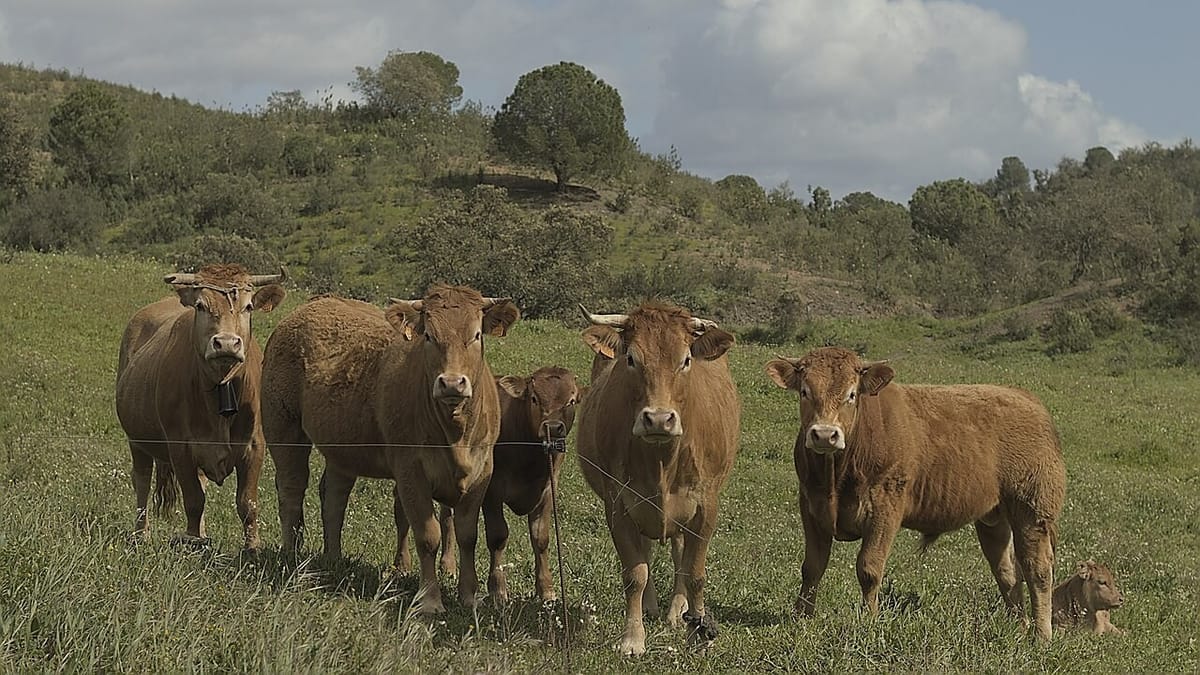
Shamonda, a midge-borne cattle virus that had never been recorded in Portugal before this autumn, has now been found on five farms in five districts, from Bragança in the far north-east to Beja in the south. On Monday (12 October) the Ordem dos Médicos Veterinários (OMV, the veterinarians' professional order) issued an alert at the request of the national veterinary authority, the Direção-Geral de Alimentação e Veterinária (DGAV, Directorate-General for Food and Veterinary Affairs), according to the Lusa news agency.
The DGAV reported the first Portuguese cases in its information note n.º 2/2026, dated 2 October, which said the virus had been confirmed that week on a single dairy farm. One week later, its case table of 9 October listed five.
Where the five farms are
The table counts farms with a positive laboratory result, by RT-PCR (a test for the virus itself) or by ELISA (a blood test for antibodies). One farm is listed in each of these municipalities:
- Odemira (Beja district): a farm marked for both dairy and beef cattle;
- Vimioso (Bragança district): beef cattle, positive on ELISA only;
- Loures (Lisbon district): dairy cattle;
- Crato (Portalegre district): beef cattle;
- Montijo (Setúbal district): dairy cattle.
The other four farms were confirmed by RT-PCR. The DGAV's own technical page notes that antibody tests can cross-react with related viruses already present in Europe, such as Schmallenberg, which is why it describes neutralisation tests as the way to confirm a serological result. The table lists cattle only; no sheep or goat holding appears in it.
What the virus does to a herd
On the first farm, the DGAV said, the animals had fever, diarrhoea, reduced feed intake and a drop in milk production. Morbidity was high, with clinical signs quickly reaching every animal on the farm, but most animals recovered and no deaths were recorded.
The authority's page on the Shamonda virus sets out the wider picture:
- Incubation: 2 to 5 days.
- Cattle: the most susceptible species. Morbidity can reach 100 percent of a farm, and no deaths directly attributable to the virus have been observed so far.
- Pregnant animals: the virus can cross the placenta and infect the foetus, causing abortion or serious foetal malformations.
- Sheep and goats: can be infected without showing obvious signs.
- Horses: some animals with nervous signs have tested positive, but no causal link has been shown.
The OMV's alert, as reported by Lusa, adds prostration to the list of signs in cattle.
No evidence of a risk to people
The DGAV states that there is no evidence that Shamonda is a zoonosis, meaning a disease that passes from animals to humans. The OMV put it in similar terms: it said there is no evidence the virus is zoonotic and no known risk of transmission to people. There is also no evidence of significant direct transmission from one animal to another; the virus spreads mainly through the bites of Culicoides midges, the same tiny insects that carry bluetongue, epizootic haemorrhagic disease and African horse sickness.
No official control measures, and no vaccine
Shamonda is not covered by European Union animal health law or by the World Organisation for Animal Health (WOAH) lists, so, the DGAV says, it is not subject to official control measures. The national reference laboratory is the Instituto Nacional de Investigação Agrária e Veterinária (INIAV, National Institute for Agrarian and Veterinary Research).
There is no vaccine. The DGAV says prevention and control should rest on protecting animals from the midges, including repellents and insecticides, together with symptomatic veterinary treatment of sick animals, especially during the periods when the insects are most active. Its page links to lists of authorised veterinary medicines containing avermectins and pyrethroids, and to insecticides approved for use in animal buildings.
What farmers and smallholders should do
- Report suspicions: the DGAV asks for any suspected case to be reported as an emerging disease through its animal disease prevention and control system, SPC.
- Watch the signs: fever, diarrhoea, animals off their feed and a sudden fall in milk yield, often across the whole herd at once.
- Watch pregnancies: abortion and foetal malformation are the serious risks the DGAV describes. For diagnosis in foetuses, stillborn animals and calves with malformations compatible with the disease, the DGAV lists samples of brain, cerebellum, spleen and blood.
- Cut midge exposure: the DGAV recommends protecting susceptible animals from midges and other small biting flies, above all when the insects are most active, using authorised repellents and insecticides.
The European picture
When we reported on the virus reaching seven Spanish farms on 25 September, the DGAV's first note (dated 23 September) recorded no case in Portugal. The European variant, known as Shamonda-Europe, was first detected in Switzerland at the end of July and has since been found in Germany, France, Austria, Belgium, the Netherlands, Liechtenstein, Italy and Spain.
The DGAV says the spread of the European variant across several member states and the first Portuguese cases reinforce the need for proper surveillance of insect-borne diseases, with close monitoring needed to judge the risk of further spread and the impact on animal health and livestock farming. According to the OMV, the authority is following the situation and posts updated information on its website, where the case table is the figure to watch.