A Cattle Virus Never Before Seen in Iberia Has Reached Seven Spanish Farms, and Portugal's Veterinary Authority Asks for Suspected Cases to Be Reported
The DGAV's note on the Shamonda virus, a midge-borne relative of Schmallenberg, describes fever, diarrhoea and a 10 to 20 percent drop in milk in adult cattle, and abortions or malformations when pregnant cows are infected.
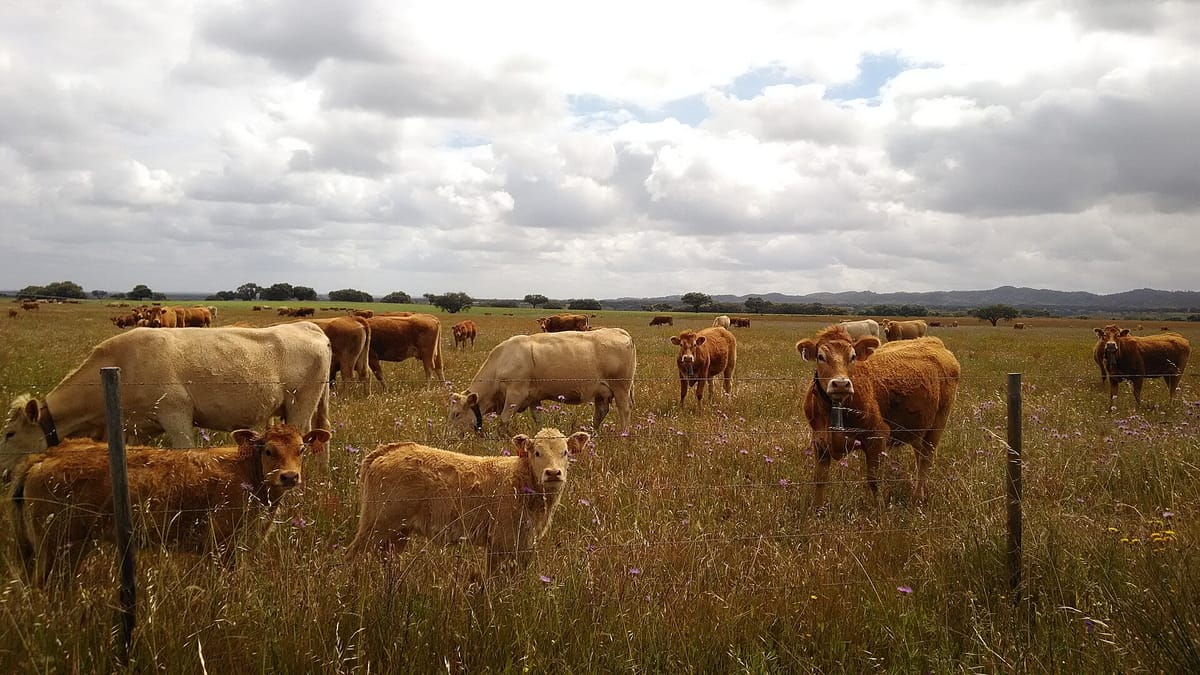
A cattle virus that had never been recorded in Europe until this summer has now been found on farms in Spain, the first detection anywhere on the Iberian Peninsula. Portugal's food and veterinary authority, the DGAV, has published an information note on the Shamonda virus and is asking for closer surveillance, and for suspected cases to be reported, as the disease moves south.
The note does not report any case in Portugal. It was signed on 23 September by the director-general, Susana Guedes Pombo, published on Thursday, and sets out what the virus is, where it has spread and what it does to a herd.
Seven Spanish farms, in Córdoba and Toledo
According to the DGAV, Spain's Ministry of Agriculture, Fisheries and Food reported that its national reference laboratory at Algete confirmed Shamonda type 1 on seven cattle farms in the provinces of Córdoba and Toledo. The animals showed the same signs seen elsewhere in Europe: fever, diarrhoea and a drop in milk yield. Further clinical suspicions are being investigated in other parts of Spain.
The virus was first identified in Nigeria in the 1960s and later turned up sporadically in Africa and Japan. A variant called "Shamonda-Europe" was detected for the first time in Central Europe this summer, starting in Switzerland at the end of July. It has since been found in Germany, France, Austria, Belgium, the Netherlands, Liechtenstein, Italy and Spain. In France alone it had been confirmed in 37 départements by September.
How it spreads and what it does
Shamonda belongs to the same group (the Simbu serogroup) as the Schmallenberg and Akabane viruses, which farmers in northern Europe will remember from the Schmallenberg outbreak of 2011 and 2012. It is carried mainly by the bites of Culicoides midges, the same tiny insects that spread bluetongue. There is no evidence of significant direct transmission from one animal to another, but the virus can pass from a pregnant cow to the foetus.
- In adult cattle: fever, diarrhoea and a fall of 10 to 20 percent in milk production for 7 to 10 days. The DGAV says morbidity can be high, potentially affecting every animal on a farm, but most adults recover and no deaths directly attributable to the virus have been observed so far.
- In pregnant cows: the virus can cross the placenta, and infection of the foetus can cause abortion or serious congenital malformations.
- In sheep and goats: they appear to be susceptible to infection, but without obvious clinical signs.
- In horses: some animals with nervous symptoms have tested positive, but a causal link between the infection and those signs has not been shown.
What the DGAV is asking farmers and vets to do
The DGAV says the arrival of the European variant in several member states, and the recent confirmation of outbreaks in Spain, show the need to strengthen surveillance of midge-borne diseases, particularly those of the Simbu group. On its page about the virus, it asks for clinical vigilance and the reporting of suspected cases as an emerging disease, so that the risk can be assessed and any measures considered. Suspicions are reported through its disease prevention and control information system (SPC), usually by the farm's veterinarian.
For cattle keepers anywhere in the country, that means watching for fever, diarrhoea or a sudden drop in milk in the herd, and for abortions or calves born with malformations in the months ahead, and calling the farm's vet if they appear. The DGAV note and the reporting procedure are on dgav.pt.