Four Anaesthetists Leave Lisbon's Children's Hospital in October, a Fortnight After Its Emergency Chiefs Quit Their Posts
The health unit says three of the four were already absent and the fourth worked part time, and that it has hired ten people since June. The doctors' body puts the national shortfall at 600 anaesthetists.
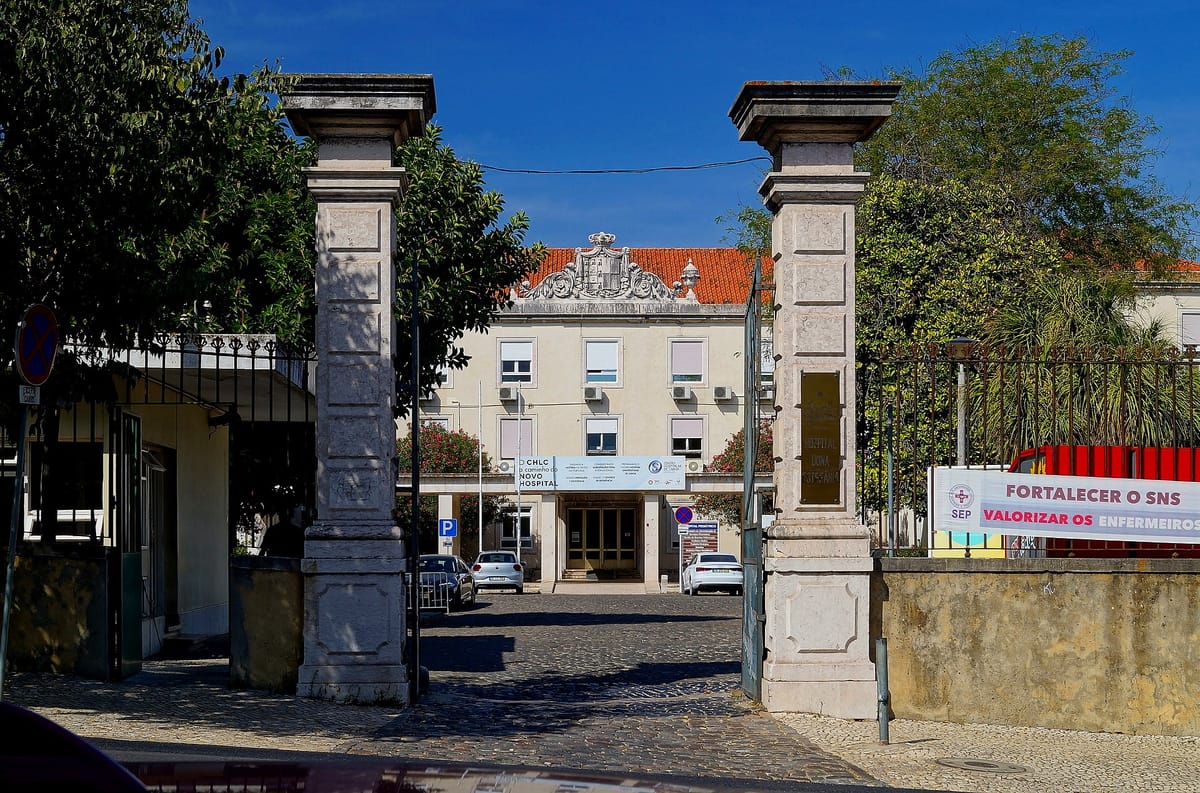
Four anaesthetists will leave the Hospital Dona Estefânia in October, the Unidade Local de Saúde São José confirmed on Friday. The unit, which runs seven hospitals in Lisbon, said it expects the effect on the service to be small.
Dona Estefânia is Portugal's principal paediatric hospital, and anaesthesiology is the specialty that has been causing it trouble all year. The four departures are resignations taking effect next month. The ULS argued that three of the four had already been absent for several months, one on parental leave and two on prolonged sick leave, and that the fourth was working part time, so the practical loss of cover is smaller than the number suggests.
What the hospital says it has gained
Against those exits the unit set its recruitment. Since June it has hired four anaesthesiology specialists onto the permanent staff and taken on six new service providers who are currently working at Dona Estefânia. It also said the anaesthesiology service is managed across all seven hospitals together, so other anaesthetists with paediatric differentiation can be moved temporarily to Dona Estefânia when needed.
The unit described its anaesthesiology establishment as one of the largest in the country: 83 specialists, 41 doctors in specialty training and more than 20 service providers. At that size, it said, entries and exits are to be expected, whether through retirement, resignation or mobility. It conceded that spreading those people across several highly differentiated hospitals in Lisbon creates staffing demands greater than at comparable institutions whose clinical activity is concentrated on one site.
The context the statement does not dwell on
At the start of this month, all nine team chiefs in the paediatric emergency department at Dona Estefânia resigned their posts, citing constraints with anaesthesiology. The ULS said at the time that the resignations concerned only their coordination and leadership roles, and acknowledged that there had been difficulties filling the anaesthesiology rotas, attributed to holiday absences and to a national shortage of anaesthetists.
That national shortage is the part no single hospital can manage its way out of. The Ordem dos Médicos recently estimated that the Serviço Nacional de Saúde needs 600 more anaesthetists and called for a national strategy to attract and keep them in the public service. Anaesthesia is the constraint on almost everything a hospital does: without it there is no scheduled surgery, no emergency operating and no paediatric procedure under sedation.
The State has already acknowledged the specific problem at this unit. ULS São José was classified as a geographically underserved area for anaesthesiology in this year's government order granting incentives to doctors hired by local health units, a measure the unit itself described as an important instrument for attracting and retaining staff.
What this means for you
- Do not assume a closure. The hospital has not announced any suspension of activity, and says cover can be drawn from the other six hospitals in the unit. The previous warning signs did not stop the service.
- Scheduled paediatric surgery is where delays show first. If your child has an operation booked at Dona Estefânia in October or November, confirm the date directly with the service rather than assuming it holds.
- Emergencies still go where they always went. Call SNS 24 on 808 24 24 24 for advice before travelling, and 112 in an emergency. The paediatric emergency department has not been announced as closing.
- The incentive scheme is a signal, not a fix. Classifying a unit as underserved raises what it can offer new hires; it does not create anaesthetists who are not there.
The number to watch is not four. It is the 600 the Ordem dos Médicos says the health service is short of nationally, because every hospital in the country is recruiting from the same pool.