One Lisbon Music School's Injunction Has Frozen the Whole Country's Artistic-Education Funding, and the Ministry Cannot Say When the Lists Will Appear
Acordarte, which runs the Academia de Musica de Lisboa, challenged the 14 August sponsorship-contract tender as manifestly illegal and unconstitutional. Filing the case automatically barred the ministry from publishing the provisional lists, and the school year has started.
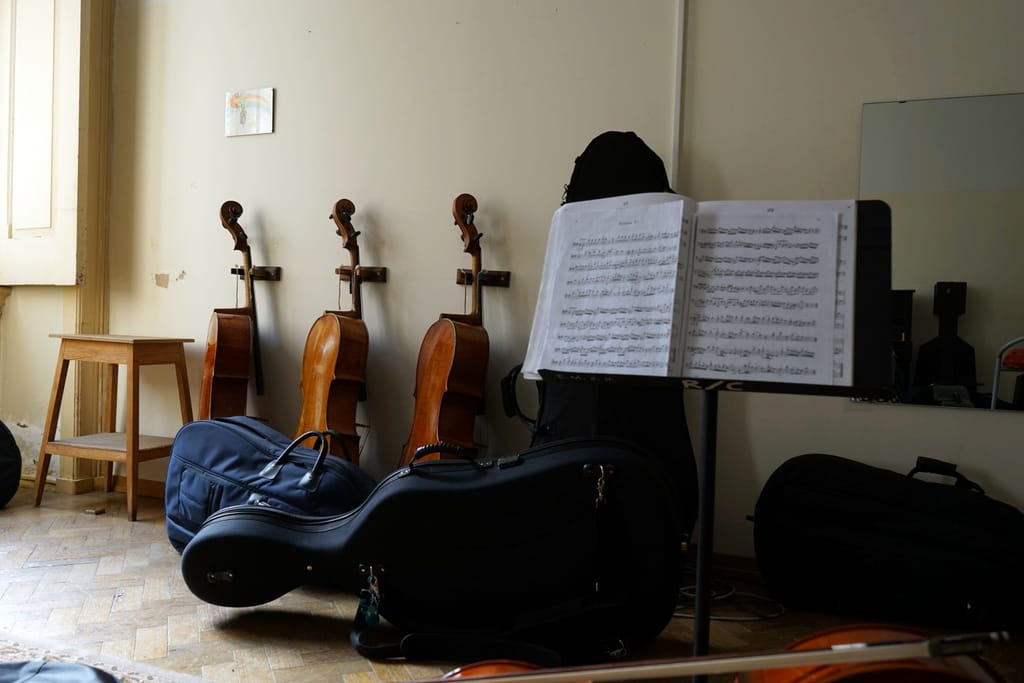
A Lisbon music school has frozen the entire national tender that decides which specialised artistic-education places the State pays for this school year, and the Ministério da Educação, Ciência e Inovação (Ministry of Education, Science and Innovation) says it is now legally barred from publishing a single provisional list.
The injunction was filed by Acordarte, the body that runs the Academia de Música de Lisboa (Lisbon Music Academy), against the tender for contratos de patrocínio, the sponsorship contracts through which the State funds places at private and cooperative schools teaching music, dance and other specialised artistic courses. Without one, a family pays the full fee.
The tender opened on 14 August. Acordarte went to court seeking its suspension "on the grounds of manifest illegality and unconstitutionality", the school said in a statement.
Why a school sued over a funding notice
Acordarte's complaint is that nothing changed. The ministry, it says, published the opening notice "ignoring the numerous meetings held with the sector and their respective suggestions, without listening to the more than a thousand people who demonstrated outside its premises last March, and disregarding recent case law that clearly indicated that something would have to change".
The notice, it argues, was "in every way identical to the notices of previous tenders". On its reading, that repetition "calls into question fundamental rights, such as the right to Education and to Culture, and incurs a violation of structuring constitutional principles, such as the principles of equality, proportionality and competition".
The school framed the action around a specific group: more than eighty pupils enrolled on the Curso Básico de Música (Basic Music Course) who sat the entrance examinations and were then left without a funded place. That is the practical shape of the dispute. The admission process works; the financing attached to it does not stretch to everyone who passes.
What the ministry says it can and cannot do
Asked by the Lusa news agency where the results are, the ministry confirmed it is "prevented from beginning or continuing the execution" of the publication of the provisional lists. It said it hoped "the situation is resolved as quickly as possible, in defence of the interests of the students".
It could not give a date. "It is not possible, at this moment, to indicate a date for its publication, and the evolution of the judicial process that allows the publication of those lists must be awaited," the ministry, led by Fernando Alexandre, said.
That wording reflects how Portuguese administrative law works rather than a decision the ministry has taken. Filing this kind of injunction against an administrative act triggers an automatic bar on executing it until the court rules. The ministry did not choose to pause; the paperwork paused it.
The suspension is provisional and holds until the administrative court decides on the injunction itself.
Families are caught in the middle of the timetable
The school year has already started. Pupils sat auditions in the summer on the assumption that the funding lists would follow in the usual sequence, and those lists are now the thing the ministry cannot publish. A family that does not know whether its child's place is funded does not know what the year costs.
The pattern is becoming familiar. Earlier this week, Lisbon families whose children still show as unplaced took the same ministry to court over school placements, after the manual desk that used to resolve those cases was removed. In both instances the administrative route ran out and the judicial one opened, in the weeks when the answer was supposed to already exist.
Specialised artistic education has been contested ground in Portugal for years, because the sponsorship-contract model sits awkwardly between public provision and private schools. The State does not run most of these conservatories; it buys places at them, tender by tender, year by year. When the tender stops, so does the certainty.
There is no indication yet of when the court will rule. Until it does, the eighty-odd pupils Acordarte named, and every other applicant across the country waiting on a provisional list, are in the same position: admitted, and unfunded.