Twenty-Five Patients Who Would Have Been Flown to England Were Operated On in Lisbon Instead, and the Saving Is Put at More Than 1.5 Million Euros a Year
Santa Maria's pulmonary thromboendarterectomy programme, built with the Royal Papworth Hospital in Cambridge, has recorded 25 operations in two and a half years. Until it opened, the national standard let a Portuguese centre meet the rules by sending cases abroad.
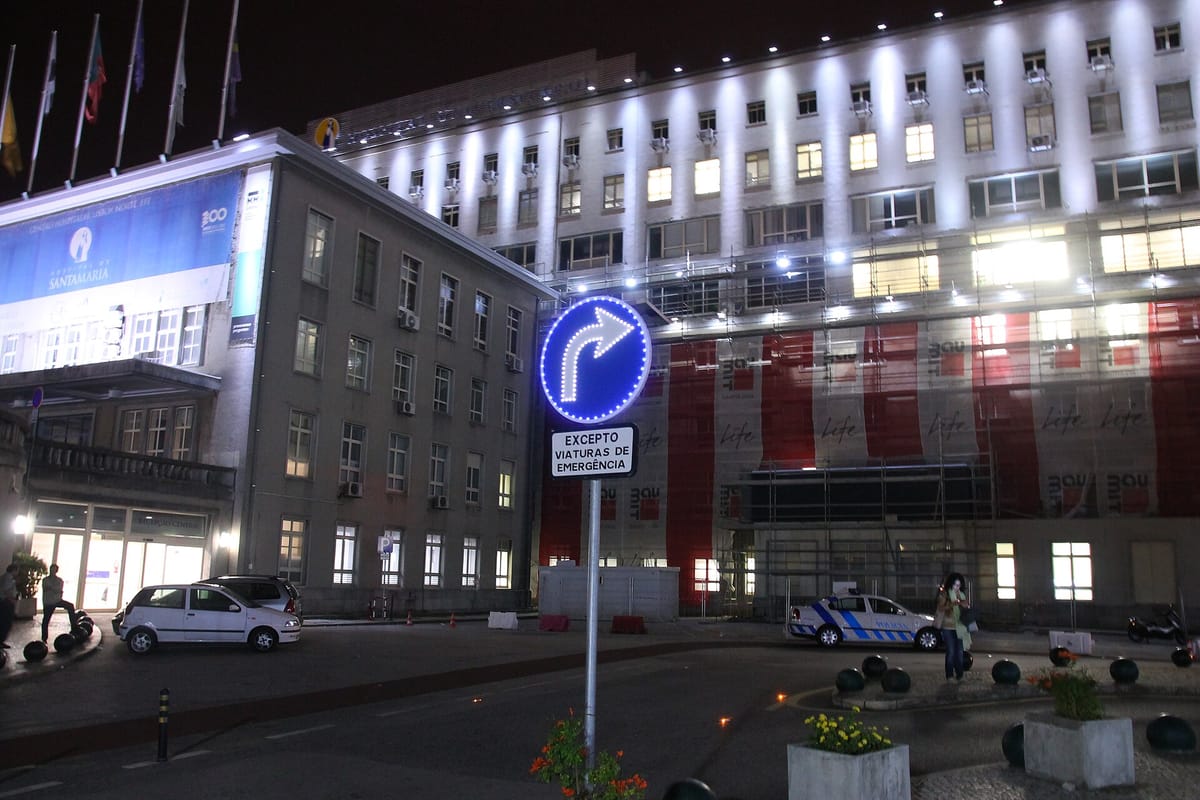
Until two and a half years ago, a patient in Portugal diagnosed with chronic thromboembolic pulmonary hypertension had one realistic route to the operation that can cure it: a flight to England. That is no longer the case, and public television reported on Sunday that the Serviço Nacional de Saúde (National Health Service) is saving more than 1.5 million euros a year as a result.
The programme sits at the Unidade Local de Saúde de Santa Maria (Santa Maria Local Health Unit) in Lisbon, inside its Departamento de Coração e Vasos (Heart and Vessels Department). It began in mid-2024 with three successful operations, and by August this year the hospital had recorded 25.
The operation, and why so few places do it
Chronic thromboembolic pulmonary hypertension, known by its Portuguese initials HPTEC, is what happens when fibro-thrombotic material lodges permanently in the pulmonary arteries and does not clear. It is rare and serious, and unlike most forms of pulmonary hypertension it is potentially curable if caught in time and treated in a specialised centre. The hospital says it can affect more than a third of the patients referred to pulmonary hypertension centres in the first place.
The procedure that clears it is not routine cardiac surgery. It requires deep hypothermia, cooling the patient to around 20 degrees, and a complete circulatory arrest, followed by mechanical clearance of the obstructed vessels. Historically it carried high complication rates. Done in the right setting, the hospital says, the risk is comparable to other cardiac procedures, and combined with drug therapy it delivers a significant gain in both survival and quality of life.
The Lisbon programme was set up with the Royal Papworth Hospital in Cambridge, one of the world's reference centres, and led at the outset by its surgeon David Jenkins. It is coordinated locally by Ricardo Ferreira of cardiothoracic surgery and Rui Plácido of cardiology, and draws on imaging, pulmonology, anaesthesia and intensive care alongside them.
What the rulebook demands
The reason this capability was concentrated abroad for so long is written into the Direção-Geral da Saúde (Directorate-General of Health) standard that governs the field. Norma n.º 004/2018 sets out what a hospital must have before it can call itself a pulmonary arterial hypertension treatment centre at all: for an adult centre, at least ten new group I or group IV cases a year sustained over three years, at least 50 patients under permanent follow-up, and round-the-clock specialist cover from cardiology, pulmonology, internal medicine and intensive care.
Crucially, the same standard requires every such centre to have "protocolled access to endarterectomy surgery and lung transplantation". Access, not capacity. A centre could meet the national standard in full while sending its surgical cases out of the country, and that is what Portugal did.
Doing the surgery in-house is a separate application with a much longer list: installed cardiac and thoracic surgical capacity, an ECMO programme, a team experienced specifically in chronic pulmonary thromboembolism, a haemodynamics laboratory used to dilating these lesions where surgery is not an option or falls short, an adult congenital heart disease and pulmonary hypertension programme, CT and angiography with vascular specialisation, and intensive care experienced in cardio-respiratory critical care. Centres are revalidated by the DGS every February.
What this means for residents
- Rare-disease care is a location problem. For conditions this uncommon, the question is rarely whether the SNS will pay. It is whether anyone in the country performs the procedure, and whether the referral pathway finds you.
- Treatment abroad is expensive and disruptive. The saving quoted is the state's, but the cost families were carrying was travel, accommodation and weeks away from home during a major cardiac operation.
- Diagnosis is the bottleneck. The condition is curable when caught in time, which puts the weight on persistent breathlessness after a pulmonary embolism being investigated rather than lived with.
Portugal has been building this kind of highly specialised capacity in visible steps, from record heart and lung transplant numbers in 2025 onward. It sits oddly alongside the parts of the system that are struggling: the SNS still has tens of thousands of patients waiting more than six months for an operation. Both are true at once, and a service handling ten patients a year shifts neither total. What it changes is the answer a Lisbon cardiologist can now give one specific group of patients when they ask where the surgery happens.