General Daily Briefing: Saturday, 19 September 2026
Good morning. Here is your Saturday briefing for 19 September 2026: the day's essential Portugal stories for residents, expats and anyone keeping an eye on the country, running from the free creche programme that has now spent the money that built it to a small Alentejo town waiting on a report in Paris.
- Families: the government says 97 percent of Creche Feliz applications have a place assigned, and the recovery-plan funding behind the expansion is now exhausted.
- Transport: Porto has tendered 2.4 million euros for a 9.1 kilometre cycle route to Matosinhos, about a fifth of which shares the road with cars.
- Justice: selling fake drugs to tourists in the Baixa is to become a public crime of fraud, closing a gap that has protected the trade for years.
- Defence: the F-16 replacement will be written into the Military Programming Law reaching Parliament this year, though the aircraft choice comes separately.
- Health: four anaesthetists leave Lisbon's children's hospital in October, weeks after its paediatric emergency chiefs resigned over the same specialty.
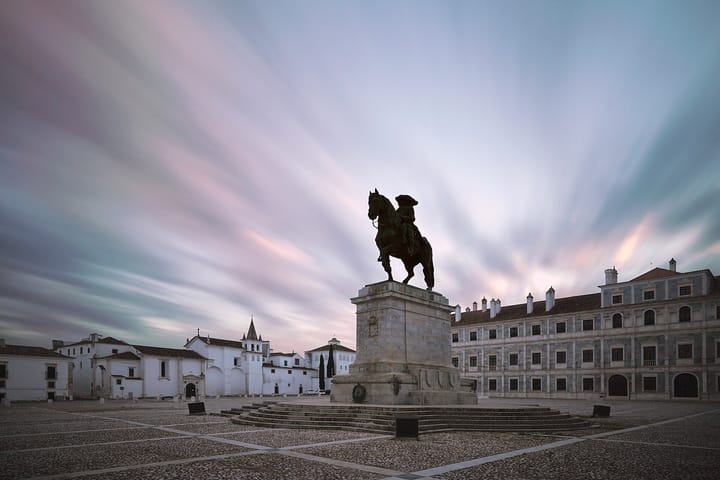
- Heritage: Vila Vicosa's World Heritage bid is under technical assessment in Paris, with a decisive meeting due before the end of the year.
Taking a Child Out of Portugal in 2026
If you are flying out of Portugal with a child and the other parent is not travelling, the border may ask for an authorisation you cannot produce at the desk. Our new guide explains when one parent's consent is enough and when it is not, what the Autorizacao de Saida de Menor has to contain, how to get a signature certified, and what the rules are for children travelling with grandparents, with a school group or alone.
The Cartao de Estacionamento in Portugal in 2026
Portugal's disabled parking card is free, valid for ten years and recognised across the European Union, but it turns on a single threshold: a certified incapacity of 60 percent, assessed for the right condition. The guide sets out who qualifies, how the medical board works, what the card does and does not entitle you to, and how it is treated when you drive it into another member state.
The Free Creche Programme Reports 97 Percent, and Loses Its Funding Source
The Minister for Labour, Solidarity and Social Security said on Friday that 97 percent of applications to Creche Feliz now have a place assigned, and that more than 19,000 free places have been created since April 2024. Rosario Palma Ramalho gave the figures in Bugalhos, in the council of Alcanena, at the first of three creche openings she attended that day. Installed capacity across the programme, which makes nursery care free from birth to the end of the third year through the social sector and municipalities rather than the State directly, now stands above 141,000 children, and a centralised platform for managing and searching vacancies went live this year. A free place is not a free service: the State reimburses the institution that provides it, and that payment rose 8.7 percent in 2025 and a further 6.9 percent in 2026, lifting the monthly sum per creche place from 515.90 euros to 551.50 euros, with the stated aim of covering the full cost. The three Alcanena openings, two of them conversions of closed primary schools, represent about 3.4 million euros and take the council from 150 places to 305. The harder number is where the next tranche comes from. The expansion has been paid for largely out of the Recovery and Resilience Plan, and the government announced at the start of September that the targets under this ministry had been met, counting 7,543 creche places created or refurbished. Asked what follows, the minister said only that “for the future we will have to turn to other financing instruments”. Ninety-seven percent is also a national average, and a national average is exactly where a shortage in one metropolitan area can hide.
Porto Puts a Cycle Route to Matosinhos Out to Tender
GO Porto, the city's municipal works company, has launched a 2.4 million euro tender for a cycle route running 9.1 kilometres from the Trindade metro station in central Porto to Sao Mamede de Infesta in Matosinhos. Bids close at 23:59 on 31 October 2026. The work was coordinated between two councils run by opposing parties, Porto under the Social Democrat Pedro Duarte and Matosinhos under the Socialist Luisa Salgueiro, and is split into two lots, one per council, which may be awarded to different contractors: eight months of execution in Porto, one year in Matosinhos. The Porto leg covers about four kilometres from Trindade to the Circunvalacao by the Hospital de Sao Joao, taking in the Jardim do Marques de Pombal, Rua de Santa Catarina and the Asprela university campus. The Matosinhos leg runs 5.1 kilometres from the Circunvalacao to Leca do Balio, past the ISCAP business school and the Mosteiro de Leca do Balio, finishing at the Corredor Verde do Leca. Seventeen bicycle parking areas are planned along it, twelve in Matosinhos and five in Porto, and the project is a candidate for funding under Portugal Ciclavel 2030. The design is less ambitious than the headline length suggests. About four kilometres are one-way segregated track and 3.2 kilometres are two-way segregated track; on the rest, where the council says the space does not allow segregation, cyclists share the carriageway with cars with extra signage rather than a physical barrier. That leaves roughly a fifth of the route as marked shared road, and which fifth it is will decide whether this is a route a commuter uses or a route a parent lets a teenager ride.
The Baixa's Fake Drug Trade Gets a Criminal Offence of Its Own
The Minister of Internal Administration said on Friday that the government is preparing a change in the law to punish the sale of fake drugs, the trade in which sellers approach tourists in Lisbon's Baixa offering cannabis or cocaine and hand over pressed bay leaf. Luis Neves made the announcement at the ceremony marking the 135th anniversary of the Policia Municipal de Lisboa, with the mayor Carlos Moedas present; Moedas and the PSP have both been pressing for it. The measure, in his words, “creates a specific classification of the crime of fraud, as a public crime, directed specifically at this activity, the sale of substances that pass themselves off as narcotics without being so”. The distinction matters more than it sounds. Fraud in Portugal is ordinarily a semi-public offence, which means the person defrauded has to make and maintain a complaint, and a tourist who paid 50 euros for a bag of leaves is generally on a plane home before any of that can happen. A public crime is prosecuted by the Ministerio Publico on its own initiative. “This is a legal ambiguity that has been systematically exploited by those who make a business of it, because technically it is not a narcotic substance,” Neves said, adding that the change gives “a solid legal basis for intervening in public space”. Moedas put it more bluntly: as things stand the sellers “are arrested, they get to the police station, and they leave, because it is not a drug”. Nothing has changed yet. This is a stated legislative intention, not a published law, and until a text appears in the Diario da Republica the grey zone remains exactly where it is.
The F-16 Replacement Goes Into the Military Programming Law
The replacement of Portugal's F-16 fleet will be written into the next Lei de Programacao Militar, which is in the final stage of drafting and reaches Parliament before the end of the year. General Joao Cartaxo Alves, Chief of the General Staff of the Armed Forces, said so in his first interview with the Lusa news agency since taking the post about six months ago. It matters because in May the Defence Minister Nuno Melo admitted the programme might be left out of the law, which sets equipment investment on a twelve-year horizon. The proposal will state the money, not the manufacturer: the contest between Lockheed Martin with the F-35, Saab with the Gripen E and the Airbus-inclusive Eurofighter consortium is decided and announced separately. Cartaxo Alves led the Air Force from 2022 to the start of this year and has never hidden a preference for the F-35; asked whether he still holds it, he said he has “a personal opinion” but that the process belongs to the Chief of Staff of the Air Force. On air defence, where his predecessor warned of Portuguese vulnerabilities, he said low-altitude systems are being bought through the European SAFE loans and medium to high altitude systems through the Military Programming Law. The harder problem is people. Portugal has roughly 24,000 serving personnel against a target of 31,000 by 2029, and the general called the position “a phase of transition”, putting retention ahead of recruitment: the country cannot keep training people who leave after the six years of the contract regime. He was cool on the civic-military programme that would offer 18 to 23 year olds about 400 euros and a free driving licence, saying “small offers” will not differentiate a military career. Between 1,100 and 1,200 Portuguese personnel are currently abroad on about 40 missions.
Dona Estefania Loses Four Anaesthetists, and the Shortage Is National
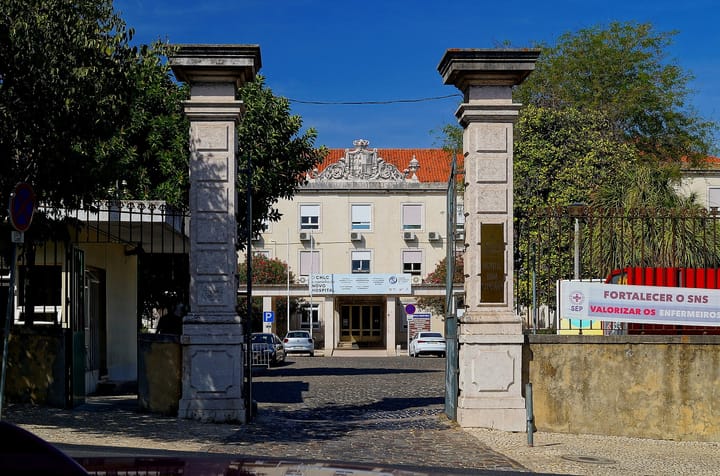
Four anaesthetists will leave the Hospital Dona Estefania, Portugal's principal paediatric hospital, in October. The Unidade Local de Saude Sao Jose, which runs seven hospitals in Lisbon, confirmed the resignations on Friday and said it expects the effect to be small: three of the four had already been absent for months, one on parental leave and two on prolonged sick leave, and the fourth was working part time. Against the exits it set its hiring, four specialists onto the permanent staff and six new service providers since June, and noted that anaesthesiology is managed across all seven hospitals, so colleagues with paediatric differentiation can be moved in temporarily. The unit described its establishment as one of the largest in the country, 83 specialists, 41 doctors in specialty training and more than 20 providers, while conceding that spreading them across several highly differentiated Lisbon hospitals creates demands greater than at comparable institutions working on one site. The context it dwells on less is recent. At the start of this month all nine team chiefs in the paediatric emergency department resigned their posts, citing constraints with anaesthesiology, and the unit then acknowledged difficulties filling the rotas. Anaesthesia is the constraint on almost everything a hospital does, and the shortage is not local: the Ordem dos Medicos recently estimated the health service needs 600 more anaesthetists and called for a national strategy to attract and keep them. ULS Sao Jose has already been classified a geographically underserved area for the specialty in this year's incentives order, which raises what it can offer a new hire but does not create anaesthetists who are not there.
Vila Vicosa Waits on Paris, and a Vote in Istanbul in 2027
Vila Vicosa's bid to become a UNESCO World Heritage Site is in Paris for technical assessment, and whether it reaches the final stage will be decided before the end of this year. The mayor of the Alentejo town, Inacio Esperanca, told the Lusa news agency on Friday that a decisive meeting is expected in November or December, and that the report it produces “may or may not recommend the presentation and vote” of the bid. That vote would come at the 49th session of the World Heritage Committee, in Istanbul from 27 June to 7 July 2027. The bid is titled Vila Vicosa: Sede Ducal, and it is no longer the town's own project: it was ratified by the Minister of Foreign Affairs in December 2025, which makes it a bid of the Portuguese State. Its arguments are the urban layout of the town and its built heritage, the Paco Ducal, the pantheon of the House of Braganca, the churches and the ensemble of small palaces with their frescoes, together with the coronation of Nossa Senhora da Conceicao as patron saint of Portugal. The ICOMOS international assessor has visited and the national assessor has reported; in parallel, a process to classify the ensemble as a National Monument is in public consultation, with the renaming published this week in the Diario da Republica and the classification expected before year end. The idea dates to 2001, when the architect Nuno Portas put it to the town. “From 2001 to 2013 practically nothing was done,” the mayor said. Work began in 2013, the town reached the indicative list in 2017, the proposal was rejected by the national UNESCO commission in 2021, and the current bid was drafted from December 2021. Portugal has 17 World Heritage properties today.