The Next Military Programming Law Will Carry the F-16 Replacement, and the Armed Forces Chief Wants Retention Before Recruitment
General João Cartaxo Alves says the law is in final drafting and reaches Parliament this year. It will state the money, not the manufacturer, and the choice between three aircraft comes separately.
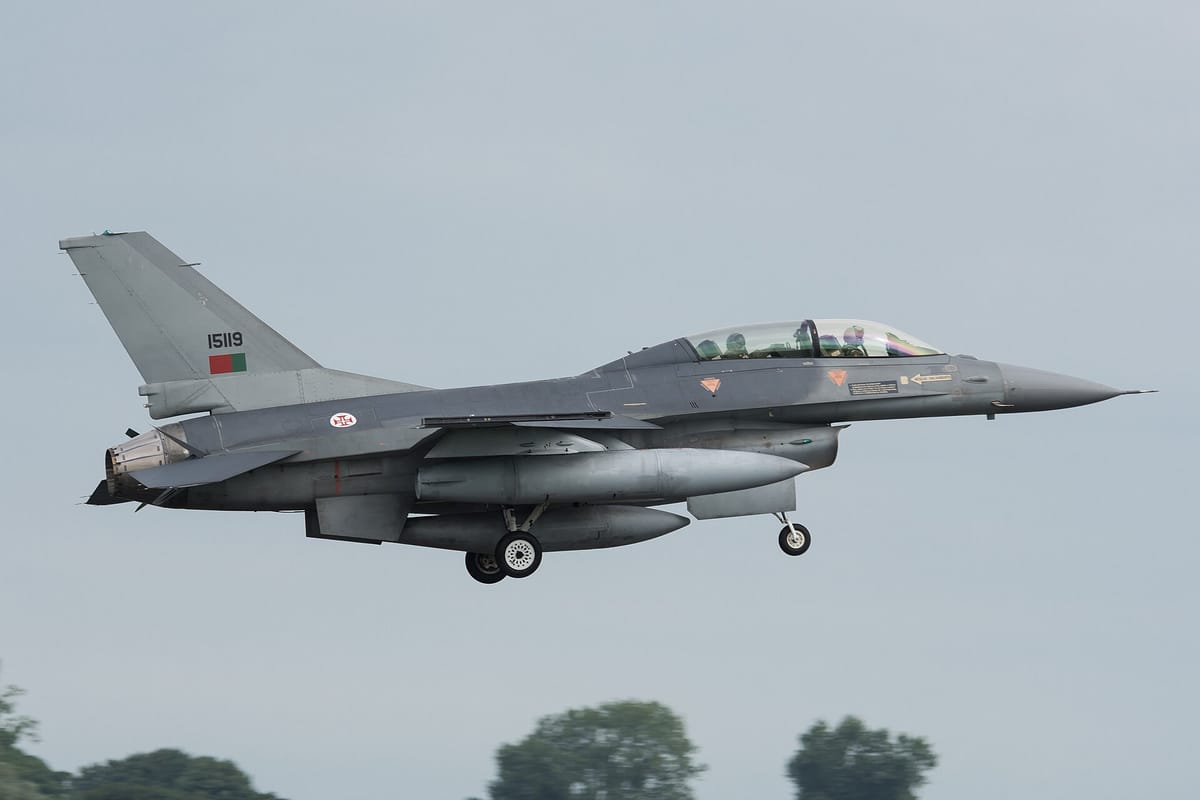
The replacement of Portugal's F-16 fleet will be written into the next Military Programming Law, which is in the final stage of drafting and goes to Parliament before the end of the year. The Chief of the General Staff of the Armed Forces said so in an interview with the Lusa news agency, his first since taking the post about six months ago.
General João Cartaxo Alves said the programme to replace the squadron, which is at the end of its service life, "was already scheduled to be included in the Lei de Programação Militar" and will feature in the proposal the government has to put before the Assembleia da República shortly. That matters because in May the Defence Minister, Nuno Melo, acknowledged the programme might be left out of the law, which sets public investment in armed forces equipment on a twelve-year horizon.
Three aircraft, no decision announced
The proposal will not name the manufacturer. A Military Programming Law states the money the government expects to commit to a programme; the choice of supplier has to be announced separately by the government. The contest is between Lockheed Martin with the F-35 Lightning II, Saab with the Gripen E, and the European consortium including Airbus with the Eurofighter Typhoon.
Cartaxo Alves led the Air Force between 2022 and the start of this year and has never hidden a personal preference for the F-35. Asked whether he still holds it, he said he has "a personal opinion" but that his job now is to coordinate between the branches, and that the Chief of Staff of the Air Force is responsible for the process. He noted that decisions of this kind are not made in a day, that a great many factors are weighed by specialists rather than "in the public square", and that Melo has said the choice will be announced "in due course". He added that the Portuguese armed forces are not "isolated from the world" and that interoperability matters, because "no country buys weapons for itself alone".
On air defence, where his predecessor General Nunes da Fonseca warned of Portuguese vulnerabilities, the general said "significant steps" are being taken: low-altitude systems for the Army and Air Force through the European SAFE loans, and medium to high altitude systems through the Military Programming Law.
Keeping people is the harder problem
Portugal has roughly 24,000 serving military personnel against a government target of 31,000 by 2029. Cartaxo Alves called the position "a phase of transition" and said the priority is retention rather than recruitment: the country cannot keep training people who leave after the six years of the contract regime, particularly as training now takes longer because of technological change. He pointed to housing conditions and access to military health care as the levers.
He was noticeably cool on the civic-military programme proposed in May by PSD and CDS-PP, which would offer 18 to 23 year olds three to six weeks in uniform, about 400 euros and a free driving licence at qualified military establishments. Parliament approved it as a recommendation with no force of law. "Small offers" will not differentiate a military career, he said; people should come because they are drawn to something with a purpose.
Portugal currently has between 1,100 and 1,200 military personnel abroad on about 40 missions, a number rising with the international situation.
What this means for you
- The bill lands in Parliament this year. The Military Programming Law is public, debated and voted, so the figure the government attaches to the fighter programme becomes a matter of record.
- Two funding channels, not one. Low-altitude air defence is being bought with European SAFE loan money; the bigger systems go through the national law. They are approved and scrutinised differently.
- The aircraft choice is a separate announcement. Do not read the law's publication as the decision between the F-35, the Gripen and the Eurofighter.
Oversight of the European borrowing already has its own monitoring body with parliamentary seats inside it. The Military Programming Law is where the rest of the bill becomes visible.