Government Offers Councils 477 Empty State Buildings for Affordable Housing and Culture, With Until 31 December to Claim Them
Estamo has listed 477 unused state buildings that councils can take over to manage as affordable homes, cultural spaces, municipal services or health units. Councils have until 31 December to choose, and must pay to restore what they take.
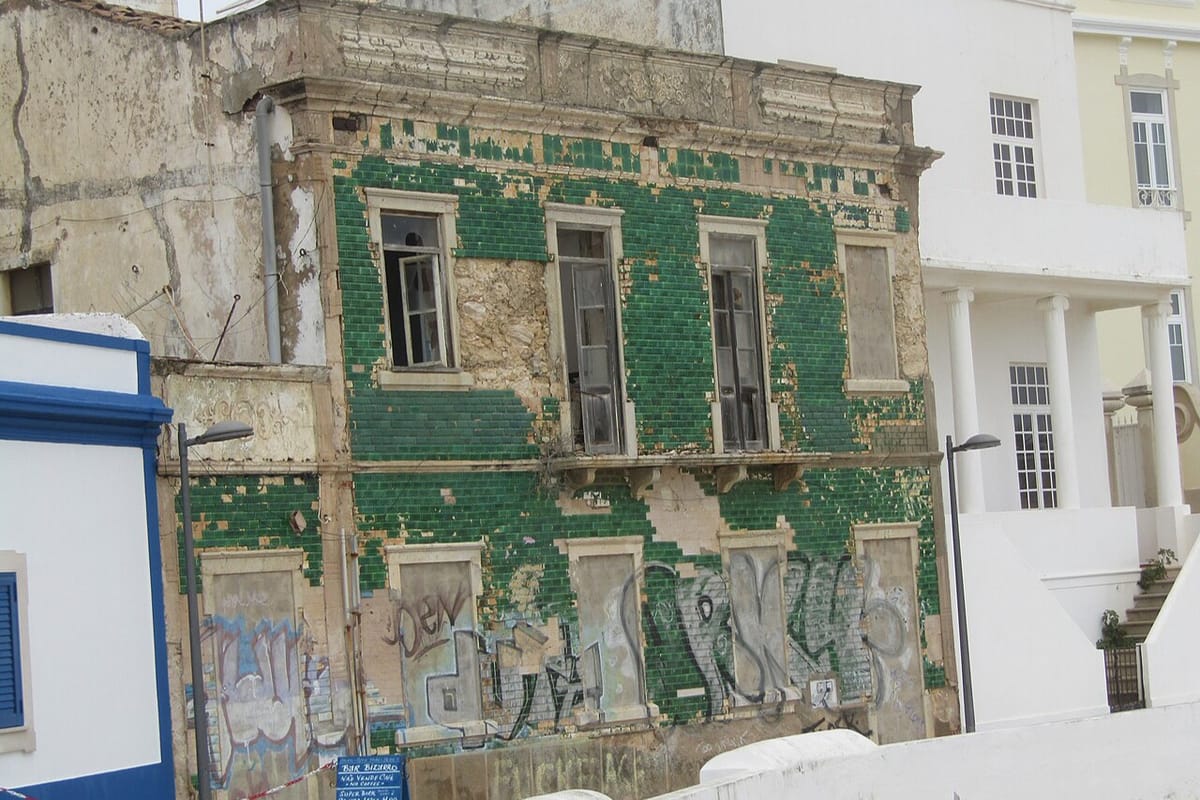
The Government has written to Portugal's municipalities with a list of 477 unused state-owned buildings whose management they can take over, and councils have until 31 December to say which ones they want. The buildings can be turned into affordable housing, cultural spaces, municipal services or health units, according to a joint communiqué issued on Friday 6 November by the Ministério das Finanças (Finance Ministry), the Ministério da Economia e da Coesão Territorial (Ministry of Economy and Territorial Cohesion) and the Ministério das Infraestruturas e Habitação (Ministry of Infrastructure and Housing).
The list was drawn up by Estamo, the state company that manages public property. The ministries say Estamo has finished an inventory of 60,000 public properties six months ahead of schedule, and that properties held by public institutes and those inherited from the abolished Administrações Regionais de Saúde (regional health administrations) have also been mapped, bringing the total to 80,000. The 477 buildings are described as a "first list".
How a council takes a building over
Each council received only the buildings inside its own boundaries. It can also point to other empty public buildings in its area that are not on the list and ask for those too, the ministries say.
The mechanism is not new. Since 2019, Decreto-Lei n.º 106/2018 (the decree-law transferring management of unused public property to councils) has let a municipality ask for a state or public-institute building that has stood inactive, empty or abandoned for at least three consecutive years. Under that decree, the council must submit an economically sustainable project for the building, setting out the building's intended use and how long it wants to manage it, up to a maximum of 50 years. The Government then has 120 days to approve the request; if it does not answer, the request counts as approved.
The decree also shifts the bill. A council that takes over a building becomes responsible for the full cost of restoring it and for its upkeep, although it keeps any rent the building earns and may use EU funding for the works. If a project makes a profit, 10 percent of that profit goes back to the State. Management is transferred, not ownership, though the State can sell a building to the council directly and the council has first refusal if it is put up for sale to anyone else.
What it could mean for housing
The ministries do not say how many of the 477 buildings are suitable for homes, where they are, or what condition they are in, and the list itself has not been published. Since 2024, 95 buildings have gone to 64 municipalities, representing an investment of 80 million euros, the communiqué says.
The offer comes as other public money for housing tightens. The 2027 budget plans 63.5 percent less housing investment as Recovery Plan funds run out, while Portugal 2030 now channels 656 million euros into housing. Because councils must pay to renovate whatever they take on, how many of these buildings end up as homes is likely to depend on which councils can find that money.
What happens next
Councils have until 31 December to tell the Government which buildings they want. Each request then follows the decree's approval process, so the first new homes or facilities from this round are unlikely to open for some time. Residents who want to know whether an empty state building in their area is on the list should ask their câmara municipal (town council) or raise it at a public council meeting.