A Baby Born Missing Four Fingers Puts a Seixal Ultrasound Clinic Under Health Inspectorate Scrutiny, After Pregnancy Scans Called His Hands Normal
The IGAS has opened an inspection of Unilabs Seixal | Amora over how it carries out and reports pregnancy scans. A morphology scan report flagged poor image quality yet called the hands apparently normal, and the mother says no one told her to repeat it.
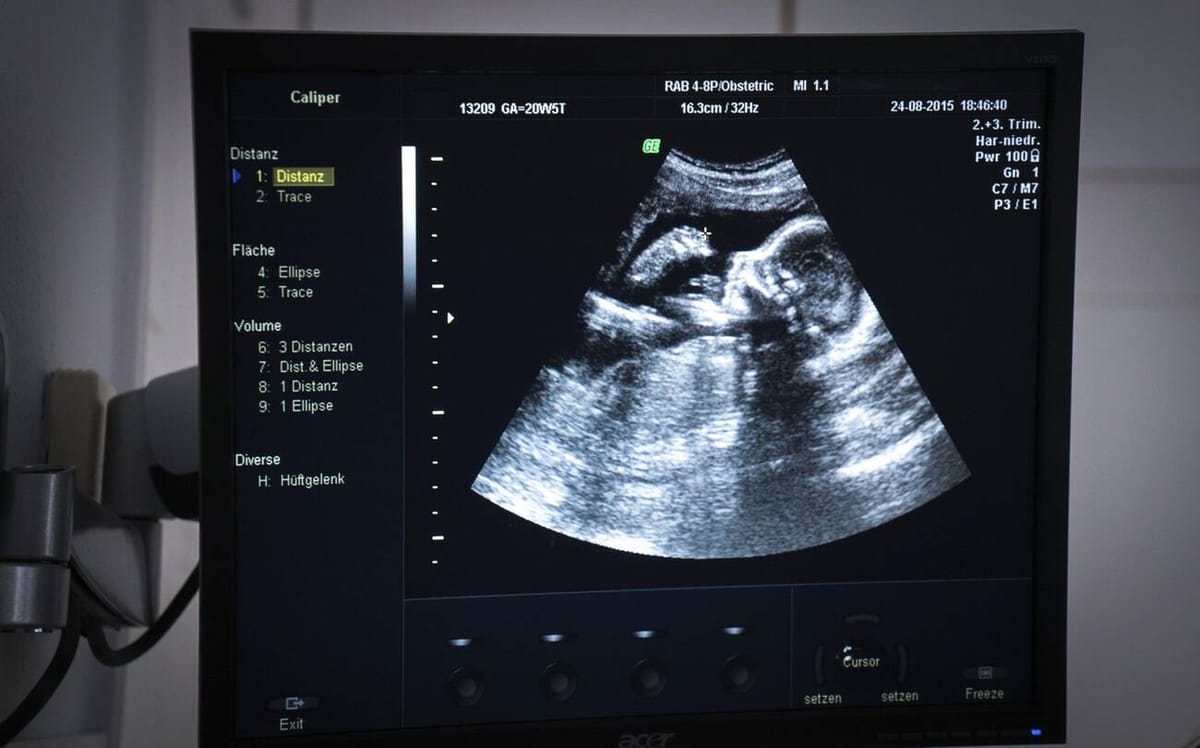
The IGAS (Inspeção-Geral das Atividades em Saúde, the health inspectorate) has opened an inspection of Unilabs Seixal | Amora, a private clinic in the Seixal municipality, south of Lisbon, where a pregnant woman followed by the SNS (Serviço Nacional de Saúde, the national health service) had her ultrasound scans. Her son was born missing four fingers on his right hand, something none of the scans had flagged.
The inspector-general ordered the process, n.º 059/2026-FIS, on Thursday, 5 November, the IGAS said in media note n.º 62-2026 (Portuguese only) on Friday. It will look at:
- how ultrasound scans are carried out during pregnancy follow-up at the clinic;
- the quality and adequacy of the scans;
- how technical limitations are identified and communicated;
- whether the procedures that apply were followed when an assessment was incomplete.
The inspectorate says it will check compliance with the applicable rules, guidance and good practice, and that it is not possible to anticipate any conclusions at this stage.
What the family says happened
The case was first reported by TVI/CNN Portugal's "Exclusivo" programme, as relayed by Notícias ao Minuto. The pregnancy was followed at the Amora health centre, and the scans were done at the Unilabs clinic in Paivas, Amora. According to that report:
- the report on the morphology scan, the detailed mid-pregnancy scan, described it as a "low-quality exam", because the mother's abdominal wall reduced image sensitivity and made small details hard to assess;
- the same report described the baby's hands and feet as "apparently normal";
- the mother says she was never told of the limitation or advised to repeat the scan, and learnt that her son had only one finger on his right hand on the day he was born.
"If you couldn't see the image, why didn't they ask me to have another scan?" she told the programme. She said she would not have ended the pregnancy, but would have wanted time to prepare. Her lawyer has contacted Unilabs and the doctor who signed the reports. He is weighing a claim for compensation and a criminal complaint, and complaints to the Ordem dos Médicos (medical association), the ERS (Entidade Reguladora da Saúde, the health regulator) and the IGAS.
Clidiral, the Unilabs group's diagnostic and radiology clinic that did the scans, said its analysis so far indicates the exam was conducted in line with good clinical practice, Direção-Geral da Saúde (DGS, the Directorate-General of Health) rules and guidance, and international expert consensus.
What a morphology scan is expected to show
Teresa Loureiro, head of the obstetric ultrasound unit at Lisbon's Santa Maria Hospital, told the programme:
- the morphology scan is usually done between 20 and 22 weeks and is meant to assess the baby's limbs, hands and feet included;
- what can be seen depends on the baby's position and the quality of the images;
- counting the fingers is not mandatory in a routine low-risk scan, although it is recommended.
The report cites guidance from the International Society of Ultrasound in Obstetrics and Gynecology (ISUOG). It says the scan should look at the arms, forearms, hands, thighs, legs and feet, but that counting each finger and toe is not required. When a full assessment is not possible, the same guidance says the scan should be repeated or the woman referred to another professional.
Where this fits in SNS pregnancy care
Under the DGS's clinical norm 001/2023 on care before and during pregnancy and after birth (Portuguese only), women with low-risk pregnancies are followed in primary care, at their health centre. The norm says lab tests and ultrasounds must be done in good time and "in places that ensure a quality response". In practice, many SNS scans are done at contracted private clinics such as this one. Since 29 October, specialist nurse midwives can also order scans in health centres that opt in to a new model of care.
If you are pregnant, ask for a copy of each scan report and read it. If a report mentions limited image quality, or says a structure could not be fully seen, ask your family doctor or midwife whether the scan should be repeated. Complaints about any health provider, public or private, can go to the ERS. This week the IGAS also opened an inquiry into the death of an 87-year-old in Portimão Hospital's A&E.