Constitutional Court Rejects Two More Montenegro Appeals Over Access to His Spinumviva Declaration, and His Office Says the Judges Did Not Rule on the Substance
The Constitutional Court's plenary decided cases 975/25 and 743/26 on 3 November. The Prime Minister's office says the judges again did not rule on the substance, and that all his declarations are already public.
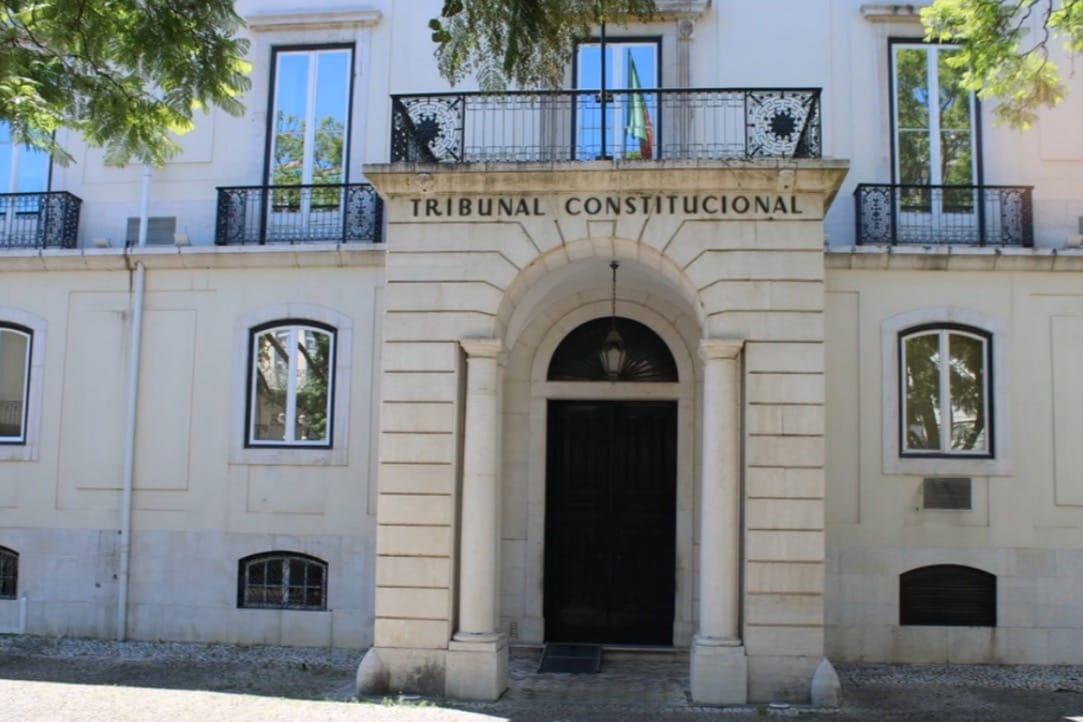
Portugal's Tribunal Constitucional (TC, the Constitutional Court) has turned down two appeals by Prime Minister Luís Montenegro over what the public may see in his declaration of income, assets and interests, including details of Spinumviva, the company he founded. The court's plenary decided cases 975/25 and 743/26 on Tuesday, 3 November, the court confirmed to the Lusa news agency, as reported by Notícias ao Minuto. The decision became public on Friday, 6 November, after Observador reported it.
The rulings themselves are not yet online. The court told Lusa they will be published only once they become final, under its rule for cases on politicians' declarations. What is known about the grounds comes from the Prime Minister's office.
What the dispute is about
Holders of political office file a single declaration of income, assets and interests with the Entidade para a Transparência (EpT, the Transparency Entity), the body attached to the Constitutional Court that checks these declarations. Under Lei n.º 52/2019, the register of interests is published online and the income and asset fields can be consulted on request. Article 17 of that law lets a declarant object to access to parts of the declaration for a valid reason, such as third parties' interests or privacy; the EpT decides, and access to the contested items is suspended until the case ends.
Spinumviva was founded by Montenegro and passed to his children in March 2025, according to RTP. Lusa reports that the dispute with the EpT dates from April 2025, when the Prime Minister objected to the public release of the company's client list.
The legal path so far
- First appeal: the court declined to hear it because it was filed after the 15-day deadline, and on 12 March 2026 its plenary unanimously rejected Montenegro's complaint against that decision, RTP reported.
- Client list made public: on 5 May 2026 Montenegro filed a new declaration listing 13 Spinumviva clients and the type of service provided, mostly data protection work and management consultancy; Lusa found it on the EpT platform in June.
- Two further appeals: filed in August 2025 and May 2026, these sought to limit access to bank account balances, details of the services Spinumviva provided and the tax register entries (matrizes) of his urban properties, according to Lusa. These are the appeals decided on 3 November.
What Montenegro's office says
The Prime Minister's office confirmed it had been notified. It said the court "did not decide the underlying question, invoking arguments of a formal and procedural nature", and regretted that "after all this time" the best reading of the law remains unclear, prolonging "uncertainty" that affects citizens' participation in political life. "Even so, in the case of the current Prime Minister, all the declarations have already been made and are public," it added. A source close to Montenegro told Expresso that he considers the matter closed and will not appeal again, RTP reported.
What happens next
The rulings will appear on the court's website once final. Neither the court nor the EpT has said publicly whether, or when, the items covered by these two appeals will be opened to consultation, and the reasoning will only be clear when the texts are published. Portugal's wider rules for public officials are also changing: civil servants' conflict-of-interest form has been delayed to 2027.
Anyone can read the published register of interests of a minister or MP through the Entidade para a Transparência, which publishes it on its online platform.