The Cartão de Estacionamento for People With Disabilities in Portugal in 2026: A Practical Guide to the 60 Percent Threshold, the Free Ten-Year Card, and Where It Is Recognised Across the EU
Portugal's disabled parking card is free, lasts ten years and is recognised across the European Union. It is also narrower than most people assume. Who qualifies, what the medical certificate has to say, how to apply, and what the card actually lets you do.
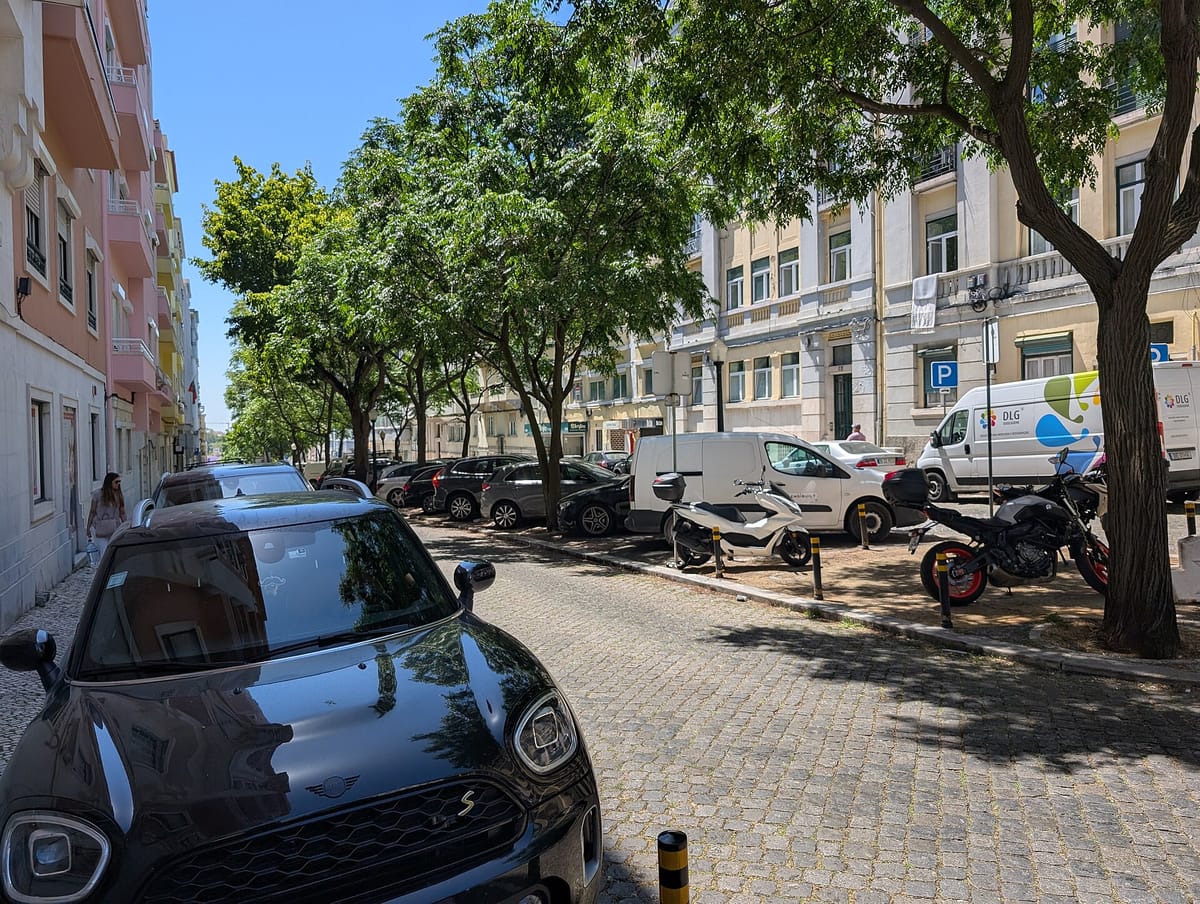
Portugal issues a disabled parking card on the common European model. It is free, it lasts ten years in most cases, it is recognised in every other EU member state, and a card issued in another member state is recognised here. It is also narrower than most people assume: it is not a general parking permit, and it does not travel with the vehicle.
The card is the cartão de estacionamento de modelo comunitário para pessoas com deficiência condicionadas na sua mobilidade, approved by Decreto-Lei n.º 307/2003 of 10 December and substantially reworked by Decreto-Lei n.º 128/2017 of 9 October. The Instituto da Mobilidade e dos Transportes (Institute for Mobility and Transport), the IMT, issues it and keeps the register.
This guide covers who qualifies, what the card actually entitles you to, how to apply, and what happens when it expires. It applies to anyone resident in Portugal, whatever passport they hold.
The short version
- It costs nothing. The IMT lists the fee as zero.
- The gatekeeper is the medical certificate, not the IMT. Almost everything turns on holding an atestado médico de incapacidade multiúso, the multipurpose incapacity certificate, with the right threshold and the right box ticked.
- Ten years, usually. Unless the certificate orders a reassessment, in which case the card expires on that date.
- It belongs to the person, not the car. It may only be used in a vehicle actually carrying the holder.
- It is a permit to use reserved bays, not to park anywhere. The law allows one narrow exception, and it is narrower than the folklore around it.
Who qualifies
Article 4 of Decreto-Lei n.º 307/2003, in the wording given to it by Decreto-Lei n.º 128/2017, sets out three routes. A person may hold the card if they have:
- a motor, physical or organic disability, from congenital or acquired changes in the structure and functions of the body, producing a permanent functional limitation of 60 percent or more assessed under the Tabela Nacional de Incapacidades (National Incapacity Table), where that disability makes it difficult to move about on the public highway without another person's help or without aids such as prostheses and orthoses, wheelchairs, crutches or walking sticks, or makes it difficult to access or use conventional public transport;
- an intellectual disability or Autism Spectrum Disorder with an incapacity of 60 percent or more;
- a visual disability, with a permanent alteration in the domain of vision of 95 percent or more on the same table.
Separately, Article 4(2) covers people with disabilities from the Armed Forces under Decreto-Lei n.º 43/76 of 20 January, or people treated as equivalent to them, with motor incapacity of 60 percent or more.
Two things follow from that list that often surprise applicants. The first is that the old rules are gone: Decreto-Lei n.º 128/2017 revoked Articles 2 and 3 of the 2003 decree outright, and with them the former definitions, including the 90 percent threshold that used to apply to profound multiple disability. Anything you read describing that threshold is describing law that no longer exists. The second is that 60 percent alone is not enough on the first route. The certificate has to show both the degree and a disability of a kind that impedes locomotion or the use of public transport. The IMT is explicit that on certificates issued by a junta médica this has to appear in the field headed natureza da incapacidade, the nature of the incapacity.
The certificate is the real hurdle
Article 6(2) requires proof of the applicant's condition through an atestado médico de incapacidade multiúso issued under Decreto-Lei n.º 202/96 of 23 October. Our separate guide to the atestado médico de incapacidade multiusos covers how to obtain one and how the junta médica assessment works.
For the parking card specifically, there is one detail worth knowing before you submit anything: the IMT says the field on the certificate referring to Decreto-Lei n.º 307/2003 must be filled in. A certificate that establishes 60 percent but leaves that box blank is a certificate that will come back.
People with disabilities from the Armed Forces use a different proof: the Cartão de Pessoa Deficiente das Forças Armadas issued by the Ministério da Defesa Nacional (Ministry of National Defence), together with a document from the competent medical body establishing the disability and its nature.
The oncology route
There is a faster path for cancer patients. Lei n.º 14/2021 of 6 April created a special procedure, extended and consolidated by Lei n.º 1/2024 of 4 January: a newly diagnosed cancer patient receives an incapacity certificate with an automatic minimum degree of 60 percent for five years from the date of diagnosis. The hospital where the diagnosis was made issues it, and the doctor who issues it and confirms the diagnosis must be a specialist other than the one treating the patient. No junta médica is required. Patients whose diagnosis has passed the initial five years and who need reassessment keep the 60 percent until the new assessment is carried out.
The IMT confirms that this certificate is on its own a sufficient basis for the parking card. The trade-off is in the validity, which is covered below.
Applying
Three routes, all of them using the same form.
- Online. Through IMT Online, the institute's electronic service. The IMT publishes a user manual for this specific service.
- In person. At any IMT counter, at its regional directorates and district delegations.
- By email. In which case the application has to carry an electronic signature.
The paperwork is short: Requerimento 13-IMT, signed by the person concerned or by whoever legally represents them; sight of an identity document; and the multipurpose incapacity certificate. Article 6(2) names the Cartão de Cidadão (Citizen Card) as the way to prove identity and residence. There is no fee.
What the card actually lets you do
Less than most people think, and more than some drivers realise.
It goes on the windscreen. Article 1(2) requires the card to be placed against the front windscreen, visible from outside, whenever the vehicle is parked in a place specially reserved for card holders.
It only works when you are in the car. Article 9(1) is unambiguous: the card may only be used in a vehicle actually carrying the person with the disability. A family member running an errand alone in the same car is not covered.
Reserved bays, and a narrow exception. Article 10(1) says parking with the card may only take place in the places reserved for the purpose and signposted as such. The exception is for situations of absolute necessity, in which the vehicle may park elsewhere and for short periods, provided it does not obstruct the normal and free circulation of pedestrians and vehicles. That is a genuine legal allowance, but it is written narrowly and it does not license parking on a crossing, a pavement in use, or a bus stop.
Public bodies have to provide free bays. This is the part that is worth quoting to a car park attendant. Article 10(2), inserted by Lei n.º 48/2017 of 7 July, requires public entities that have parking for users to make free parking spaces available for people with disabilities, in the number and to the specification of the technical accessibility standards annexed to Decreto-Lei n.º 163/2006 of 8 August. Article 10(3) extends that to public entities whose user parking is run under a public-private partnership or concessioned to a third party, which closes the obvious loophole. Article 10(4) says public entities without their own user parking must provide reserved on-street spaces instead.
Note what that does and does not say. It is an obligation on public entities regarding their own parking. It is not a general exemption from municipal paid parking, which is a matter for each câmara municipal, and it is not a right to a bay outside your home. Those are separate municipal procedures.
Using it abroad, and foreign cards used here
The card follows the uniform European model set out in Council Recommendation 98/376/EC of 4 June 1998, and the whole point of that model is mutual recognition. Article 8(1) provides that cards issued by the authorities of other EU member states that have adopted the recommendation are recognised in Portugal. Article 8(2) extends recognition to cards issued by countries of the European Conference of Ministers of Transport and their associates, under CEMT Resolution 97/4 of 22 April 1997.
In practice, that means a visitor arriving in Portugal with a card from another member state may use the reserved bays here, and a Portuguese card holder driving into Spain or France may use theirs. What it does not harmonise is the local rules attached to those bays, which remain national and often municipal. Recognition of the card is not recognition of a particular entitlement to free parking.
Validity and renewal
Article 7(1) sets the standard period at ten years. If the multipurpose certificate determines that the incapacity is to be reassessed, the card instead expires on the date set for that reassessment.
There is an important exception the IMT sets out on its own service page. Where the card is issued on a certificate produced under Lei n.º 14/2021, the oncology route, it is issued with a maximum validity of five years, because Article 2(1) of that law grants the 60 percent degree for a five-year period from diagnosis. The faster certificate carries a shorter card.
Renewal is lighter than the first application. Article 7(2) provides that revalidation depends on the holder, or their representative, expressing an interest, following the same procedures as the original application, and that the multipurpose certificate does not have to be produced again where no reassessment of the incapacity was determined.
One further protection is worth knowing about. Article 3 of Lei n.º 1/2024 extends the validity of a multipurpose incapacity certificate until a new assessment is carried out, provided it is accompanied by proof that a junta médica, or where applicable an appeal junta médica, was requested before the certificate's expiry date. The deadline that matters there is the date of the request, not the date of the appointment.
Misuse
Article 9(2) sets a specific penalty that sits alongside anything in the road traffic code. Improper or fraudulent use of the card means immediate seizure and suspension for one year, and on a repeat offence the card may be seized permanently. Under Article 9(3), criminal investigation authorities and traffic enforcement officers and their agents may carry out the seizure.
It is a sharper rule than it first appears. The person who loses the card is the disabled person whose name is on it, not the relative who borrowed it.
Three practical points
Fix the certificate before you touch the application. Nearly every refusal turns on the certificate rather than the form: a missing degree, a missing statement of the nature of the incapacity, or the Decreto-Lei n.º 307/2003 field left blank.
Diarise the renewal, particularly on the oncology route. A five-year card and a ten-year card look identical, and the shorter one belongs to the people least likely to want an administrative surprise.
The parking card is not the only benefit attached to that certificate. The same document opens the door to vehicle tax reliefs, covered in our guide to the Imposto Único de Circulação, and to income support through the Prestação Social para a Inclusão. If you are going through the junta médica process anyway, it is worth knowing what else the certificate unlocks before you file.
Sources
This guide is written from official Portuguese and EU sources.
- Diário da República, Decreto-Lei n.º 307/2003, de 10 de dezembro, consolidated text (Portuguese only)
- Diário da República, Decreto-Lei n.º 128/2017, de 9 de outubro (Portuguese only, PDF)
- Instituto da Mobilidade e dos Transportes, Cartão de Estacionamento para Pessoas com Deficiência Condicionada na sua Mobilidade (Portuguese only)
- Diário da República, Lei n.º 14/2021, de 6 de abril (Portuguese only, PDF)
- Diário da República, Lei n.º 1/2024, de 4 de janeiro (Portuguese only)