The Valpaços Fire Is Brought Under Control After Charring 16,000 Hectares, but a Blistering Heatwave Keeps Portugal's Interior on Edge
Firefighters have brought the summer's biggest blaze under control after it burned more than 16,000 hectares across 14 municipalities around Valpaços, damaging around 20 homes. But a relentless heatwave keeps interior and southern Portugal under a state of alert as the peak fire month begins.
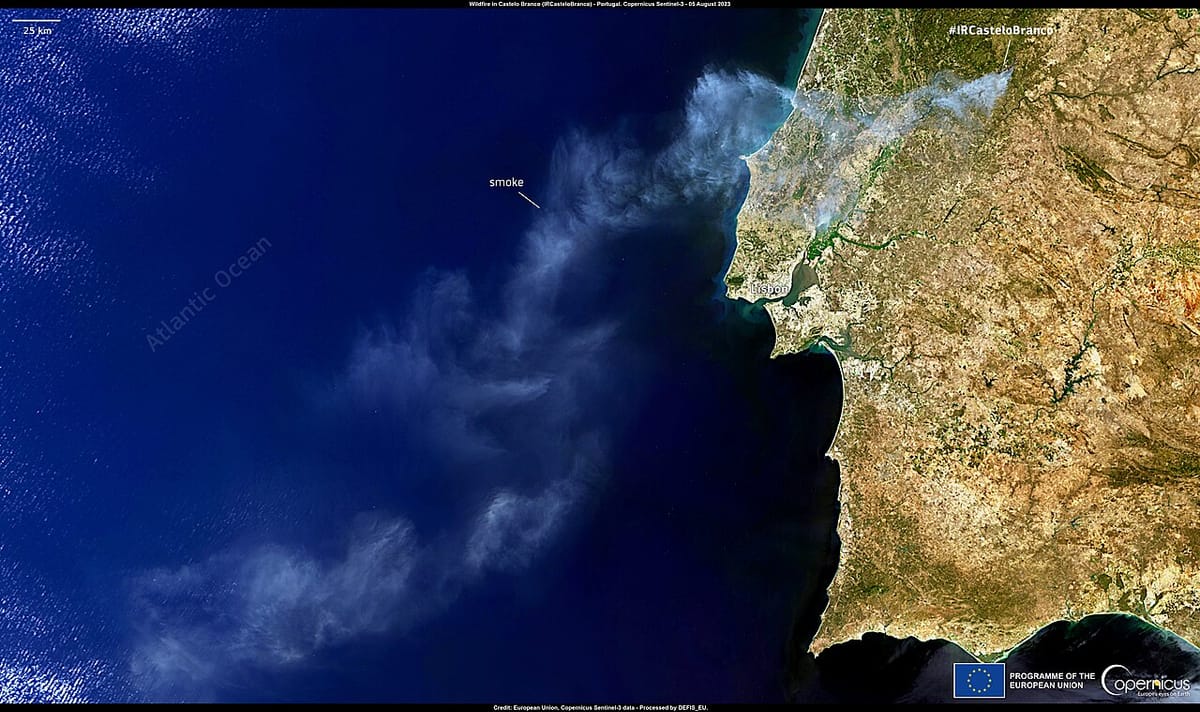
Firefighters in the north-east have finally tamed the largest blaze of the Portuguese summer so far. The fire that broke out on Tuesday afternoon in the Cabelo area of Ervões, in the municipality of Valpaços (Vila Real district), was declared "dominated" at 04:40 on Saturday after four exhausting days, having burned through more than 16,000 hectares across some 14 municipalities and jumped district lines into Mirandela, Vinhais and Macedo de Cavaleiros in Bragança.
At the height of the final push, the Autoridade Nacional de Emergência e Proteção Civil (National Authority for Emergency and Civil Protection) had around 854 operatives and 289 vehicles on the ground, aided overnight by a welcome drop in temperature and a rise in humidity. Roughly twenty houses were touched by the flames — a mix of primary homes, holiday properties and long-abandoned buildings — and several families were moved to temporary lodging. Vineyards, olive groves and almond orchards, the backbone of the local rural economy in Trás-os-Montes, were also scorched.
A summer that will not cool down
The Valpaços fire is the sharpest flare-up in a season that has kept the country on a near-permanent war footing. Through July and into August the government has repeatedly extended a situação de alerta (state of alert) across interior and southern districts — among them Vila Real, Bragança, Guarda, Viseu, Castelo Branco, Portalegre, Beja and Faro — citing a persistent heatwave, single-digit humidity and the risk of dry thunderstorms and gusting winds.
That alert is not just a warning. It automatically bans entry to and movement through forest areas, prohibits any kind of burning, suspends the use of fireworks and machinery in rural zones, and puts firefighting crews and emergency medical teams on heightened standby. Only essential, unavoidable farm work — feeding animals, irrigation, harvesting — is exempted. Portugal has already called on the EU Civil Protection Mechanism and neighbours for water-bombers this summer, and dozens of municipalities have spent stretches of the season at maximum wildfire danger.
August is historically the country's worst month for fire, and the peak is only beginning. Researchers are racing to help: a University of Leiria team has been building an AI-and-drone system to catch fires at the first spark. But the near-term picture depends on the weather, and the forecast offers little relief for the interior.
What This Means for Expats
- Know the rules of an alert: When a situação de alerta is in force, barbecues, bonfires, fireworks and forest walks are off-limits in affected districts. Fines are steep, and a stray spark can start a tragedy.
- Check before you travel inland: The official portal fogos.pt and the ICNF fire-risk map show live incidents and daily danger levels by municipality. Plan hikes and countryside drives around them.
- Protect the vulnerable: Smoke and extreme heat are a dangerous mix. Two heatwaves this summer were already linked to roughly 123 excess deaths, almost all among the over-85s.
- Rural property owners: Portugal's gestão de combustível rules require clearing vegetation around buildings. Confirm your home insurance covers fire, and keep an evacuation plan ready.
With Valpaços contained but the thermometer refusing to fall, civil-protection officials are urging residents and visitors alike to treat every warm, windy afternoon as a potential ignition day. The next few weeks will test whether Portugal can get through its most dangerous month without another Valpaços. On the compensation side of the file, the natural-catastrophe declaration that opened the €10 million farm-recovery call sets out the 32 parishes across nine councils the despacho actually names, the 30 percent damage threshold, the 100 / 80 / 50 support scale that turns on whether you hold agricultural insurance, and the 17:00 deadline on 27 October.