Portugal Places Twenty-Three Municipalities at Maximum Wildfire Danger as the Summer Heat Intensifies
The ICNF placed 23 municipalities across five interior districts at maximum wildfire danger on 21 July, with roughly 80 more at 'very high' risk, as IPMA warns temperatures will keep climbing through the week and Civil Protection enforces a raft of fire-season bans.
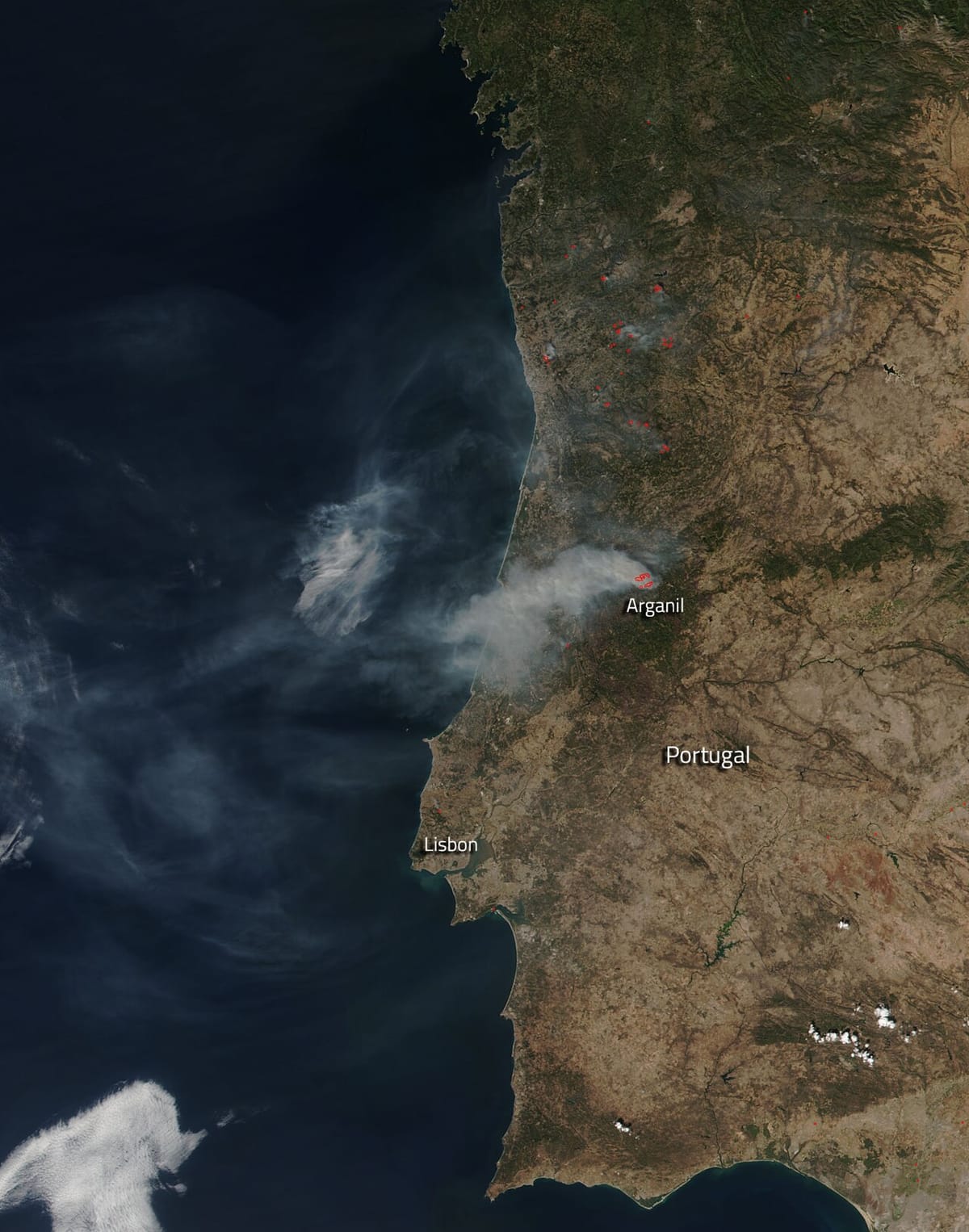
Portugal has entered one of the tensest stretches of the summer for wildfire risk. On 21 July the Institute for Nature Conservation and Forests (Instituto da Conservação da Natureza e das Florestas, ICNF), working from IPMA weather data, placed 23 municipalities across five districts — Vila Real, Bragança, Guarda, Castelo Branco and Faro — at the maximum level of rural fire danger, the top of a five-point scale. Roughly 80 more municipalities, spread across eleven districts, were rated at “very high” danger, meaning the alert now covers a broad band of the interior north, centre and eastern Algarve.
The trigger is heat. IPMA, the Portuguese Institute for the Sea and the Atmosphere (Instituto Português do Mar e da Atmosfera), reports that maximum temperatures climbed above 30°C at the start of the week and are set to rise further day by day, with the hottest air pooling in the Tejo valley and the Alentejo. A ridge of high pressure sitting to the north-west of the Azores, combined with hot, dry air drawn up from North Africa, is expected to push the mercury higher still and keep fire danger elevated from Wednesday into the early part of next week. Several interior districts have been placed under yellow weather warnings for the heat.
With the landscape parched, the Civil Protection authority (Autoridade Nacional de Emergência e Proteção Civil, ANEPC) has reminded residents that a string of everyday activities are banned outright in municipalities at maximum or very high danger. Agricultural and forestry machinery may not be used without spark arrestors and fire extinguishers to hand; brush-cutters and chainsaws are off-limits; and barbecues, portable gas stoves and any burning of cut vegetation are prohibited in or near woodland except in specifically authorised sites. Fireworks and sky lanterns need a municipal permit, and smoking or lighting any open flame in rural areas is not allowed while the alert holds.
The health service is issuing its own guidance. The Directorate-General of Health (Direção-Geral da Saúde, DGS) is urging people to stay out of the sun between 11am and 5pm, drink water regularly even without feeling thirsty, wear light, loose cotton clothing and a high-factor sunscreen, and cut back on alcohol and heavy meals. Particular attention is asked for the groups most exposed to heat stress — babies and young children, the over-65s, pregnant women, people with chronic illness and anyone working outdoors — who should be checked on through the hottest hours.
For residents and newcomers, the practical takeaway is that the restrictions carry real legal force: lighting a fire or using the wrong equipment on a maximum-danger day can bring heavy fines and, if a blaze results, criminal liability. The situation map is updated daily, and a municipality can move in or out of the maximum-danger band from one morning to the next, so anyone planning garden work, rural travel or time outdoors should check the current rating before setting out. Portugal has already logged dozens of heatwave days this year, and the summer’s most demanding fire-weather window may still be ahead.
The warnings arrive as Portugal leans ever harder on early-detection tools; only last week authorities unveiled a new platform tracking the Iberian Peninsula’s living-forest moisture to sharpen wildfire forecasting. Technology, though, only buys time; on a maximum-danger day, the difference is still made by whether people put off the strimmer and the barbecue for another week. Separately, our guide to when you may lawfully burn cut vegetation, and when you may not sets out the 4-square-metre pile rule, the difference between a queima and a queimada, the days on which all open-air fire is banned, and the fines that follow when the paperwork is missing.