São Tomé Contests Seizure of Its Central Bank's Account in Portugal Over a €5.5 Million Hydro Debt
São Tomé and Príncipe's finance minister says a central bank account seized in Portugal by creditor Synergies is protected by sovereign immunity, and that the government had already offered to pay off the old hydroelectric debt early.
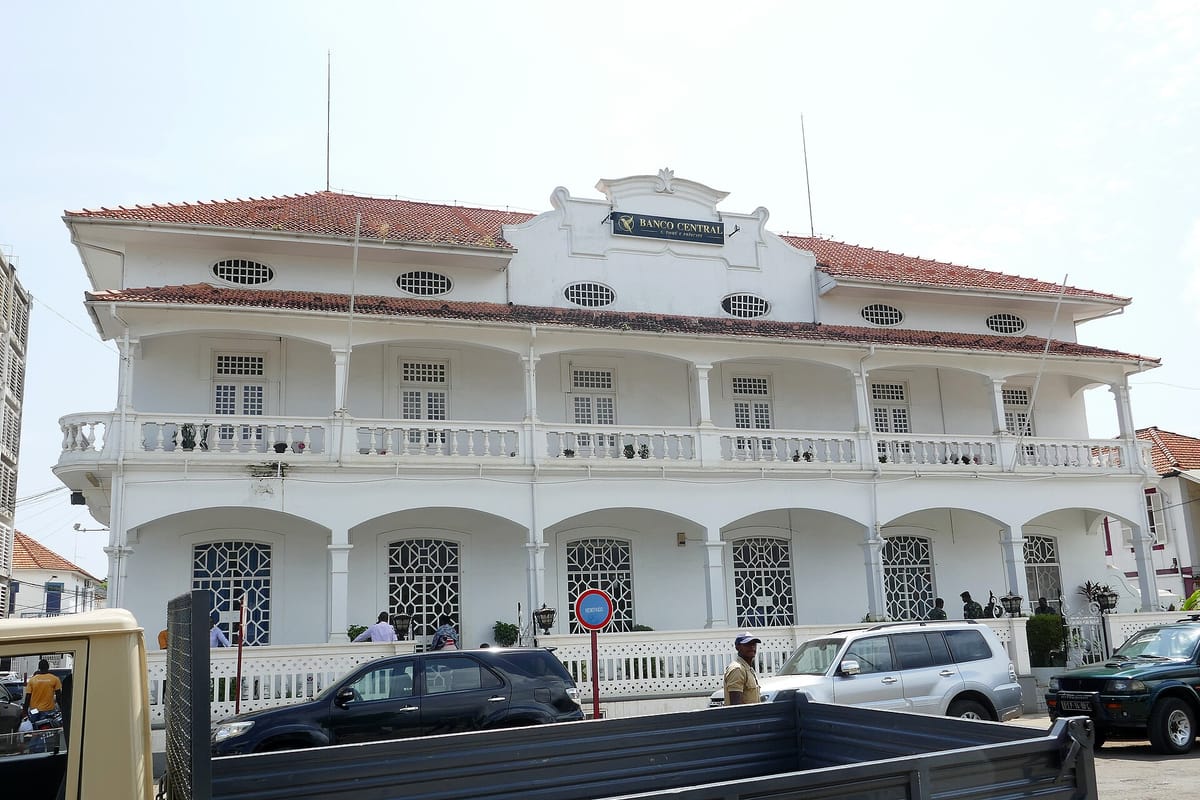
São Tomé and Príncipe's finance minister has attacked the penhora (a court-ordered seizure of funds to pay a debt) of a Banco Central de São Tomé e Príncipe account in Portugal. The creditor is Synergies Investments Limited. Its claim of about €5.5 million goes back to a hydroelectric contract that São Tomé cancelled two decades ago.
Gareth Guadalupe, the minister for economy and finance, spoke to journalists in São Tomé on Friday 6 November, according to Lusa, as published by Notícias ao Minuto.
Where the claim comes from
Lusa, citing a Portuguese business paper, reports that Synergies has brought an execução (an enforcement action to collect a debt) in Portugal against the São Tomé state for €5,486,835.59. The dispute concerns the operation of the Rio Contador hydroelectric plant. An international arbitration tribunal set compensation in 2009, and the amount now claimed includes interest and other charges built up since then.
Guadalupe accepted the dispute exists, dating it to 2004 or 2005, when the government of the day cancelled a contract its predecessor had signed.
The government's argument
The minister cited the United Nations convention on the jurisdictional immunities of states and their property. In his reading, that convention bars seizing a state's sovereign assets, "and even less a state's accounts". He accepted that the central bank has financial, administrative and operational autonomy. He argued that its accounts are still protected because the bank provides the foreign-exchange cover the state needs to buy medicines, fuel and other imports.
He also said the government, through Prime Minister Américo Ramos, had already offered the creditor a deal before the seizure:
- paying the overdue €1 million instalment from May 2026;
- paying early the €1 million due in May 2027 and the €650,000 due in May 2028;
- closing the whole debt that way. The government says it is waiting for Synergies' reply.
Guadalupe said the seized accounts are not linked to the public treasury, so the government can still receive and make payments. He said the central bank has hired a legal team to argue that the accounts cannot be seized. The treasury, he added, will move to pay the arrears and remaining instalments so the seizure can be lifted.
Why it matters in Portugal
Portugal has a formal role in backing São Tomé's currency. Under an economic cooperation agreement signed in São Tomé on 28 July 2009 and approved by Decreto n.º 7/2010, Portugal provides a limited credit line of up to €25 million to support São Tomé's balance of payments. Its preamble ties the deal to "the sustainability of the exchange rate regime", and the Banco de Portugal and São Tomé's central bank both sit on the committee that oversees it. The central bank's own rate table for 5 November quotes the euro at 24.50 dobras for both buying and selling, which reflects that fixed link.
We found no public comment from the Portuguese government or the Banco de Portugal by Saturday morning, and no statement on the São Tomé central bank's website.
What it means for you
For São Toméans in Portugal and anyone who sends money between the two countries, the government says payments and receipts are working normally because the seized money is not treasury money. Nothing in the minister's comments points to a change to the euro peg or to ordinary transfers. If you send money home, watch for any notice from your bank or from the Banco Central de São Tomé e Príncipe while the case goes on. Recruitment links are active too: more than 600 people in São Tomé recently applied for 100 construction jobs in Portugal.