Two Summer Heatwaves Are Tied to About 123 Excess Deaths, Almost All Among Portugal's Over-85s
Portugal's two early-summer heatwaves are now tied to roughly 123 excess deaths, below the projections health authorities had feared. More than 70% were among people aged 85 or older, with no measurable excess mortality below 70, the Directorate-General of Health said.
Portugal's two early-summer heatwaves are now tied to roughly 123 deaths above what would normally be expected — a heavy toll, but a lighter one than health authorities had braced for. Rita Sá Machado, the head of the Direção-Geral da Saúde (Directorate-General of Health, or DGS), said this week that the combined excess mortality from the June and July heat episodes had come in below the projections issued by the Instituto Nacional de Saúde Doutor Ricardo Jorge (Doutor Ricardo Jorge National Health Institute, or INSA), the country's public-health research body.
The pattern in the data is stark and familiar. The first heatwave, which began around 10 June, produced roughly 60 excess deaths, close to what modellers had predicted. The second, more intense spell pushed the running total to about 123 by early July. Crucially, more than 70% of those additional deaths were among people aged 85 or older, and the DGS reported no measurable excess mortality at all below the age of 70.
A slow-moving emergency
Heat does not kill the way a storm or a flood does. Its effects unfold over days and linger after temperatures fall. Sá Machado cautioned that a full accounting takes around 10 to 15 days, because the frail and chronically ill often deteriorate well after the hottest afternoon has passed. That lag is why officials are reluctant to declare the danger over even once the forecast cools.
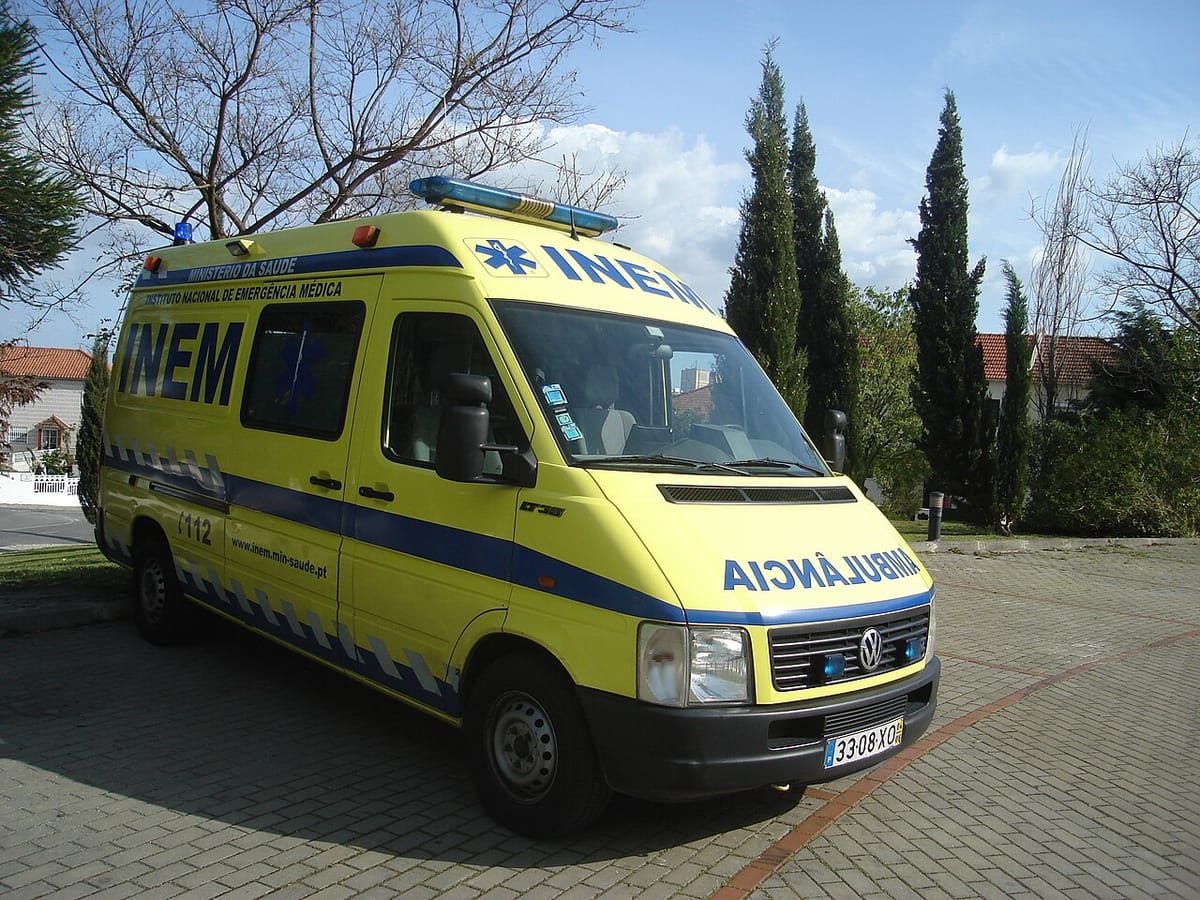
The strain showed up first in the emergency system. INEM (National Institute of Medical Emergency), the state ambulance service, fielded more than 5,200 calls a day at the peak, and the DGS raised its heat-health contingency to level 2. The government's response leaned on familiar tools: reinforced staffing rotas, public-health messaging aimed at the elderly, and networks of air-conditioned public spaces where vulnerable residents could shelter during the worst hours.
Behind the mortality figures sits an uncomfortable housing reality. International research consistently finds that air conditioning cuts heat-related deaths by around 30%, while its absence raises the risk — and surveys suggest a large share of Portuguese households still report their homes are not adequately cool in summer. That gap helps explain why a country with a mild reputation keeps recording triple-digit heat death tolls. It also connects to the wider strain on the health system, from the recent overhaul of INEM's governance to rising hospital costs, and to the broader energy squeeze behind Europe's doubling home-cooling demand.
What This Means for Expats
- Check on older neighbours and relatives: The mortality burden is overwhelmingly among the over-85s. If you have elderly parents or neighbours living alone, a daily check during heat alerts is the single most effective precaution.
- Housing matters more than you think: Many older Portuguese homes hold heat badly and lack cooling. If you are renting or buying, treat summer ventilation, shutters and the option to install AC as health features, not luxuries — a theme that runs through this summer's water and climate pressures.
- Know the warning signs: Confusion, dizziness, a rapid pulse and stopping sweating are red flags. Portugal's health line, SNS 24 (dial 808 24 24 24), offers guidance before you decide whether to call 112.
- Plan around the lag: The risk does not end when the forecast improves. Keep hydrating and avoiding midday exertion for a week or so after a heatwave breaks.
With climate models pointing to hotter, longer Portuguese summers, the DGS's message is that the country got off relatively lightly this time — not that it can count on doing so again. The harder questions, about housing stock, cooling access and an ageing population, are only becoming more urgent.