Portugal Was Europe's Only Fully Private Grid Operator, and the Energy Minister Says Brussels Understood Why the State Bought Back In
Maria da Graça Carvalho told journalists in Brussels that the European Commission accepted the State's 13.7 percent return to REN on security and sovereignty grounds. The purchase still needs the Court of Auditors and an ERSE opinion.
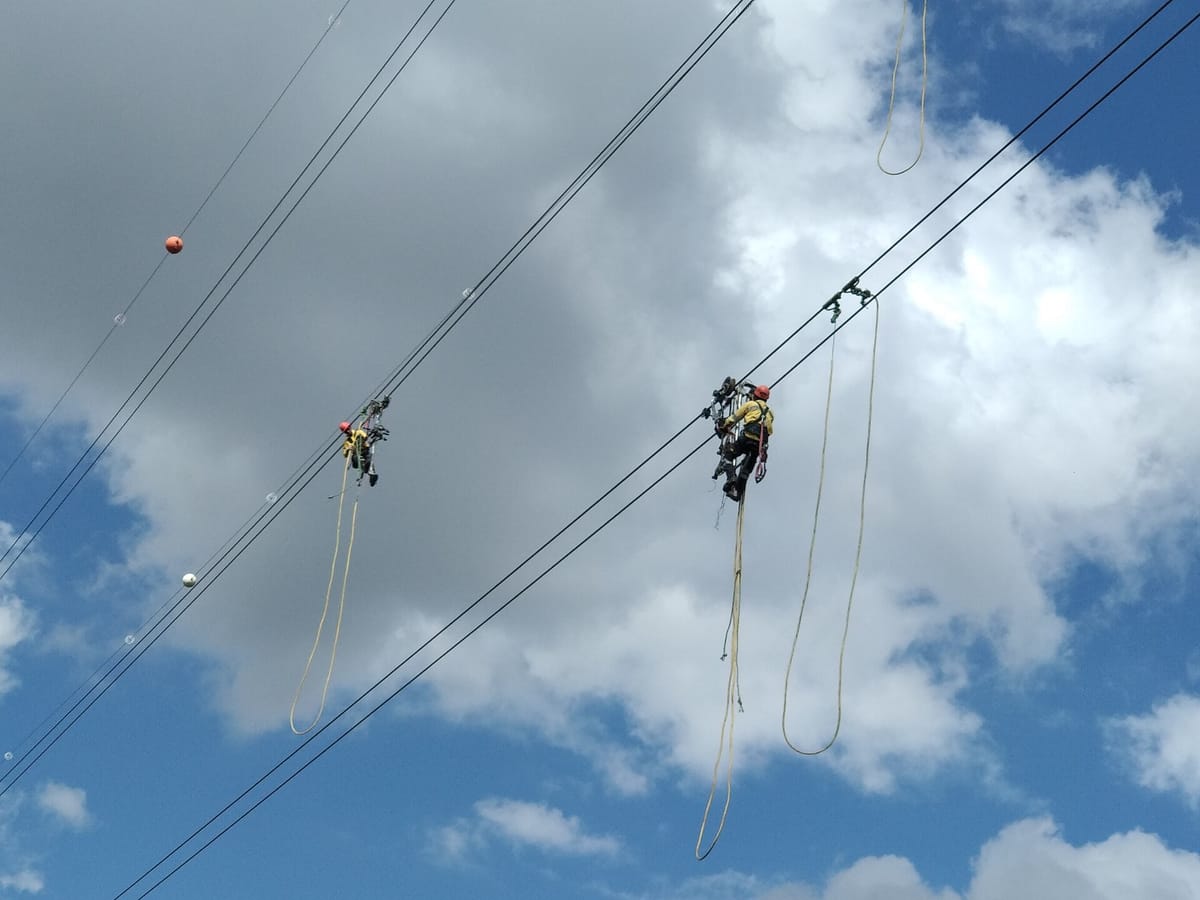
Portugal's energy minister spent Tuesday in Brussels explaining why the State has bought back into the company that owns the national high-voltage grid, and came out saying the European Commission had raised no objection. Maria da Graça Carvalho told Portuguese journalists, after meeting Céline Gauer of the Commission's energy directorate, that the return to the shareholder register of REN, Redes Energéticas Nacionais (National Energy Networks), was "well accepted" and the security argument behind it "very well understood".
Her framing was not about tariffs but about sovereignty. "I explained that in an electricity transmission network company, therefore high voltage, State participation is of crucial importance for sovereignty and for security, and that is one of the main reasons for this decision," she said, adding that the move had been "studied and planned since we have been in Government, since 2024, coordinated by the prime minister".
The comparison she took to Brussels
The argument rested on a single statistic. Among the transmission operators that make up the European network, she said, Portugal was the only country whose grid company was completely private, while 18 of the 40 transmission companies across 34 European countries are wholly public, Denmark, Sweden and Norway among them. "So there could be no other reaction from the European Commission."
The transaction itself was disclosed in mid-August. Parpública, the State holding company, contracted to buy 91,723,676 REN shares, about 13.7 percent, from Pontegadea, the vehicle of Amancio Ortega, founder of the group that owns Zara. Neither side published a price; at the closing price on the day of the filing the stake was worth roughly 325 million euros, a market estimate rather than the agreed figure. It ends twelve years in which the State held nothing directly, having exited in the 2014 privatisation carried out under the bailout.
Two approvals still outstanding
The deal is not done. It remains conditional on the prior audit of the Tribunal de Contas (Court of Auditors), which vets major public commitments, and on a pronouncement from ERSE, the energy regulator. Carvalho would not be drawn on a future increase in the stake or on board seats, pointing to the Finance Ministry and a later stage. REN is a listed company, she noted, and the purchase had been handled "with the greatest care and confidentially so as not to disturb REN's operation".
That reticence matters. The government has still not said what it paid, how the purchase is financed, or what it intends to do with 13.7 percent of a company where that holding confers influence rather than control. Ministers have variously called the objective cheaper energy, a seat at the strategic table, and a sound dividend investment. Those are three different aims and they do not all point the same way. They also land in a network already carrying heavy commitments, including a storage plan targeting 3.9 gigawatts of pumped hydro by 2030.
What This Means for Expats
- No immediate bill change. REN runs the transmission network; your retail tariff is set through ERSE, not by REN's shareholder register. Analysts doubt a minority stake moves prices, and the regulator has separately proposed spreading grid-stabilisation costs across every household.
- Grid resilience is now an explicit policy goal. Expect security of supply to weigh more in network investment decisions, which are recovered through regulated charges. The system has changed fast: solar was the largest single source of Portuguese electricity in July, and the siting map for new solar and wind has been cut back sharply.
- Watch the Court of Auditors. Until the visto is granted the purchase cannot complete, and that scrutiny is where the price becomes public.
- This is a template, not a one-off. The stake is the first step toward the sovereign investment vehicle the prime minister has floated.
Brussels not objecting is not the same as Brussels approving, and no formal decision was announced on Tuesday. The binding tests remain domestic: the auditors' sign-off, the regulator's opinion, and the harder question of what a 13.7 percent shareholder actually does once it is in the room. Update: on 9 October 2026, the State agreed to buy Fidelidade's 5.3 percent of REN taking its stake in the grid operator to 19 percent, and the government said its goal was met.