Portugal's State Moves to 19% of Grid Operator REN by Buying Fidelidade's 5.3%, and Says That Is Enough for Now
Parpública agreed on Friday to buy the Fosun-controlled insurer's 35.5 million REN shares, subject to the Court of Auditors. The price is undisclosed, State Grid keeps 25 percent, and the government says its goal for the grid operator is met.
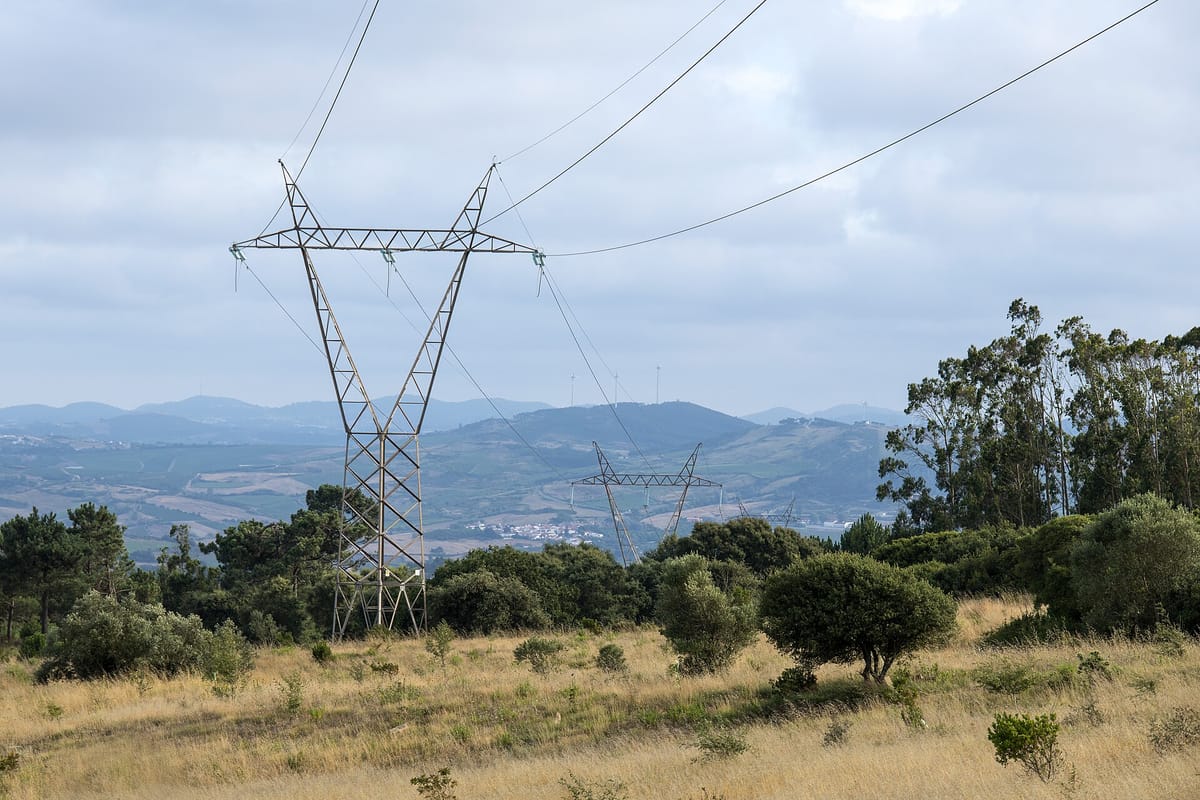
The Portuguese State is set to own 19 percent of REN, Redes Energéticas Nacionais (National Energy Networks), the company that runs the country's high-voltage electricity grid and its gas transmission network. On Friday, 9 October, Parpública (the State holding company) agreed to buy the whole of the insurer Fidelidade's stake, and the Finance Ministry said that, "at this stage", the government considers its objective for REN to have been met.
The government had mandated Parpública to buy up to 20 percent. It now plans to stop at 19.
What the State is buying
REN told the market on Friday that Fidelidade and four companies in its group had agreed to transfer 35,496,424 shares, about 5.32 percent of the company, to Parpública. Fidelidade itself holds 35,176,796 of them. The sale depends on prior approval from the Tribunal de Contas (Court of Auditors).
It follows the first and larger purchase. Parpública completed the purchase of 91,723,676 shares, 13.7 percent, from Pontegadea, the investment company of the Zara founder Amancio Ortega, on 7 September, after the Court of Auditors approved it on 31 August. Added together, the two blocks come to 127,220,100 of REN's 667,191,262 shares, or 19.07 percent. We reported the first agreement in August.
The price is not public
Neither side disclosed what Parpública will pay. In a statement reported by Lusa and ECO, the Finance Ministry said more details would come when the Court of Auditors grants its approval. The same happened with the first deal: documents later sent to the court showed, according to Lusa, that the State paid 389.8 million euros for Pontegadea's 13.7 percent, or 4.25 euros a share. The government has said that price included a 15 percent premium over the average share price of the previous six months.
Two reference points, as our own arithmetic and not the agreed price: at 4.25 euros a share, Fidelidade's block would be worth about 150.9 million euros. At Friday's closing price of 3.535 euros, reported by ECO, it would be worth about 125.5 million. ECO and Observador put the market value at around 125 million euros, and Observador calculates that the State's total investment in REN will pass 500 million euros.
Why Fidelidade is selling
Fidelidade is controlled by the Chinese group Fosun: REN's half-year report attributes the insurer's holding to Fosun companies and to Guo Guangchang. According to ECO, the insurer bought into REN in 2014, when the State sold its last shares, paying about 70 million euros for 4.7 percent and adding to it the following year.
In its statement, quoted by ECO, Fidelidade said the stake had always been "essentially financial" and was first meant to last about two years. It listed its reasons for selling now: the shares have gained more than 40 percent in two years, the State wanted up to 20 percent, and REN's shareholder register now has more strategic investors. It said the sale, if completed, could bring "an adequate return" on its investment and help its solvency capital.
Who owns REN now
REN's half-year report lists its qualifying shareholders at 30 June 2026:
- State Grid Corporation of China: 25.0 percent, through State Grid Europe
- Pontegadea: 13.7 percent (since sold to Parpública)
- Fidelidade group: 5.32 percent (now agreed for sale to Parpública)
- Corporación Masaveu: 5.0 percent
- Redeia, the owner of Spain's grid operator: 5.0 percent
Once the second sale closes, the Portuguese State will be the second-largest shareholder behind State Grid. In a communiqué on 22 September, the Finance Ministry said it had told the Chinese government that the State's entry did not imply any change to State Grid's 25 percent, and that Portugal wants State Grid to stay on as a reference shareholder.
What the State says it wants
The government's case, set out in that communiqué, is about strategy rather than control. It said Portugal was the only EU country where the State was not a shareholder in the company running the national grid, and that a minority qualifying stake gives "a set of governance rights" to follow and influence REN's strategic direction, while preserving regulatory stability. It also argued the stake pays: REN's dividend yield was around 6 to 7 percent between 2021 and 2024 and 5 percent in 2025, against a cost of 3 to 3.5 percent for issuing public debt. On Friday the ministry added that the deal "aims to defend the public interest and preserve a strategic asset", according to ECO.
The energy minister put the same argument to the European Commission in September, as we reported at the time. The first purchase has drawn opposition questions over its price; its advisers' fees, the Finance Ministry said, came to 100,000 euros.
What it means for your bills
The deal does not change how your electricity bill is worked out. Every consumer pays the network access charge inside their bill, and ERSE (the energy services regulator) sets the tariff for each regulated activity, including electricity transmission, to cover the revenue it allows. That process, explained in ERSE's 2026 tariff structure document (Portuguese only), does not depend on who owns REN's shares.
What the State gains is a seat among the owners when REN decides how to expand and protect the grid, which the government links to electrifying the economy and attracting data centres.
What is still not known
- The price, until the Court of Auditors rules.
- Board seats: the government has not said whether the State will seek directors on REN's board, or how many.
- The final 1 percent: the mandate allowed up to 20 percent, and the ministry's "at this stage" leaves the door open without committing to more.