The Portuguese State Reclaims a Stake in the Power Grid, Taking 13.7% of REN From the Owner of Zara
Parpública has agreed to buy 13.7% of REN, the national grid operator, from Amancio Ortega's Pontegadea, putting the Portuguese State back into the power grid it left more than a decade ago. The price was undisclosed and the deal awaits Court of Auditors approval.
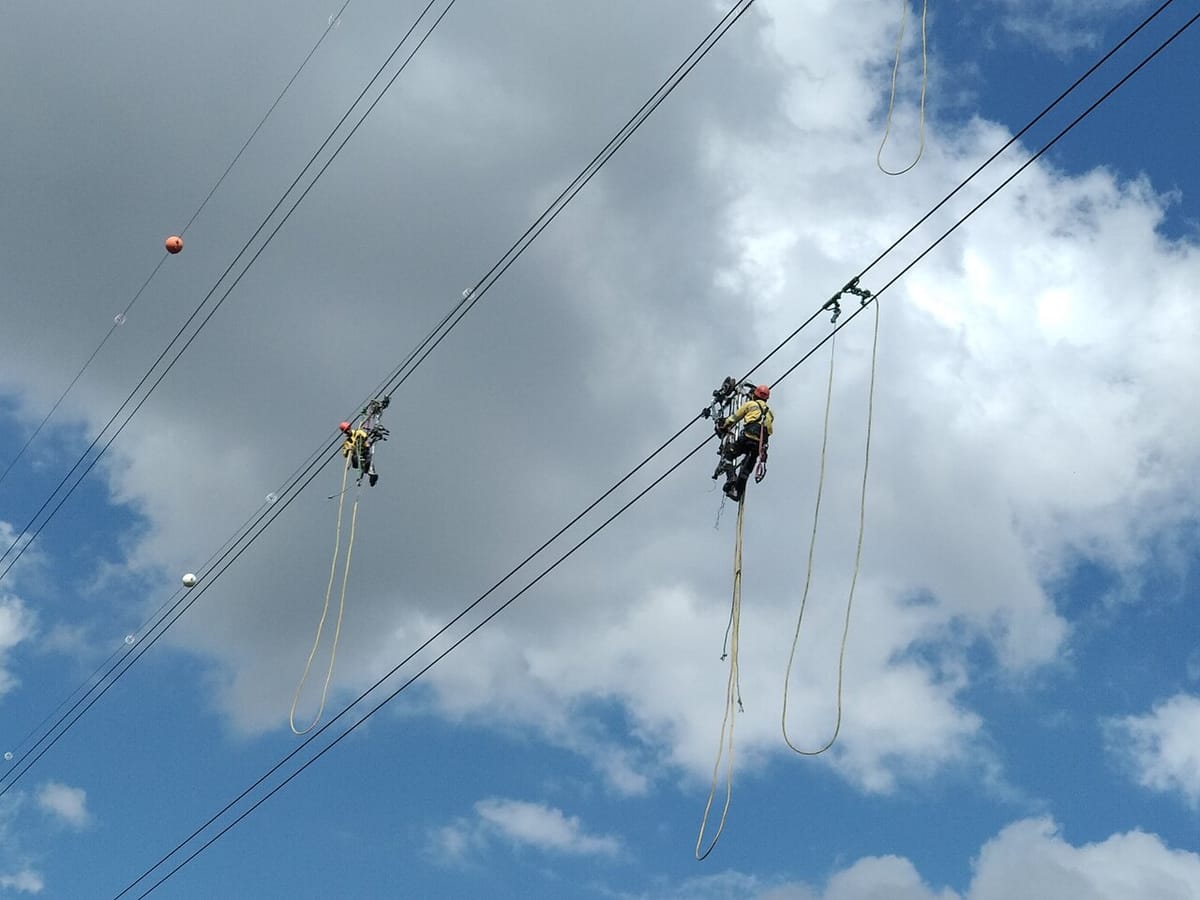
More than a decade after it sold out of the company entirely, the Portuguese State is buying its way back into the national power grid. The state holding company Parpública has signed a contract to acquire 91,723,676 shares in REN — Redes Energéticas Nacionais (National Energy Networks), the operator of Portugal's high-voltage electricity and gas transmission systems, amounting to about 13.7% of the company. The seller is Pontegadea, the investment vehicle of Amancio Ortega, the Spanish billionaire who founded the Zara owner Inditex.
The deal was disclosed to the market regulator, the CMVM (Securities Market Commission), on Friday and confirmed the same evening by Prime Minister Luís Montenegro at the Festa do Pontal, the Social Democrats' traditional start-of-season rally in the Algarve. It is one of the most consequential moves in Portuguese state ownership in years — and, by the government's own account, not a nationalisation.
Price undisclosed, but a strategic stake
Neither side put a figure on the transaction; the price was left out of the regulatory filing. At Friday's closing share price the stake was worth roughly €325 million, though that is a market estimate rather than the agreed sum. Pontegadea is selling its entire direct holding in REN, exiting a position it first built in July 2021 when it bought around 12% from Oman's Mazoon (the former Oman Oil stake) and later topped it up. The Ortega family holding had been REN's second-largest.
Crucially, the contract is not yet closed. It is conditional on the visto (prior approval) of the Tribunal de Contas (Court of Auditors), the body that vets major public spending, so the purchase will not complete until that sign-off arrives.
Why the State wants back in
Montenegro was careful to draw a line between taking a stake and taking control. "We are doing this not to renationalise the company, but to be inside it to safeguard the strategic interest in the electricity infrastructure," he told the rally. Being a shareholder, he argued, lets the State "take part in the investment decisions and the strategic decisions, so that we can bring down energy prices," and he framed critical grid infrastructure as a matter of "security and protection."
He also pitched it as a sound investment: REN pays its shareholders a dividend of about 4.5% a year, and the returns, he said, would be "applied to public policies." The purchase is the first concrete step toward a sovereign wealth fund Montenegro has floated for investing in strategic companies, with the state debt agency IGCP mooted as its manager and REN named as a target.
There is an evident tension in the timing. The stake sits under the Finance Ministry, led by Joaquim Miranda Sarmento, and only weeks ago — on 29 July — the same minister was defending the State's plan to exit 17 companies to "clarify Parpública's role." Buying back into REN runs in the opposite direction, and the Finance Ministry had offered no further explanation by the time the news broke.
Who owns REN now
The State left REN's capital during the troika-era privatisations more than a decade ago, when it sold its holding as part of the bailout programme. The largest shareholder today is State Grid Corporation of China, which holds 25% from that same privatisation. Other reference shareholders named alongside it include Fidelidade — itself controlled by China's Fosun — the Spanish grid operator Red Eléctrica de España, and a fund managed by Lazard. Parpública's 13.7% would make the Portuguese State one of REN's largest owners, though still behind the Chinese state grid.
Because the announcement came on a Friday evening, there was no immediate reaction on the Lisbon stock market, and no fresh opposition response. The far-left Bloco de Esquerda (Left Bloc) and the Communist Party have long argued for bringing REN back into public hands, and will now be watching how far this stake goes.
What this means for residents
- Your electricity bill: REN runs the transmission backbone, not your retail supply, so nothing changes on your fatura (bill) today. The government's argument is that a seat at the table could, over time, steer grid investment and network costs — a claim that will take years to test.
- Energy security: The stated goal is keeping strategic control of critical infrastructure in Portuguese hands. For residents, the practical stake is the reliability and future cost of the grid that everyone depends on.
- Nothing is final yet: The deal still needs the Court of Auditors' approval before it completes, so treat it as signed but not sealed.
- A policy pivot to watch: After years of the State selling down its corporate holdings, this is a move in the other direction. It signals a government more willing to hold strategic assets — worth tracking if you follow Portugal's energy or investment climate.
For now, Portugal has agreed to become a shareholder in its own power grid again. Whether that translates into cheaper energy or simply a steadier dividend is the question the coming months, and the Court of Auditors, will begin to answer. On the Portuguese banking and lusophone-Africa tape, our report on Banco BPI selling its last 33.35 percent of Banco de Fomento de Angola to the Carrinho group's Congolian Financial for 388.5 million euros, twenty-four years after founding the bank sets the latest reference. On Portugal's interconnection file, our report on the Portugal to Morocco power cable, which the environment minister now says will only be built with private or European money, and which she justifies by the need to restart the grid alone after a blackout sets the latest reference. Update: on 9 October 2026, the State agreed to buy Fidelidade's 5.3 percent of REN taking its stake in the grid operator to 19 percent, and the government said its goal was met.