Persistent Poverty in Portugal Climbs Back to Its 2021 Level of 9.5 Percent, and Over-65s Have the Highest Rate of Any Age Group
In 2025, 9.5 percent of residents had been below the poverty line in at least three of the last four years, up from 7.1 percent in 2024. That is about six in ten of everyone counted as poor, and people aged 65 and over have the highest rate of any age group.
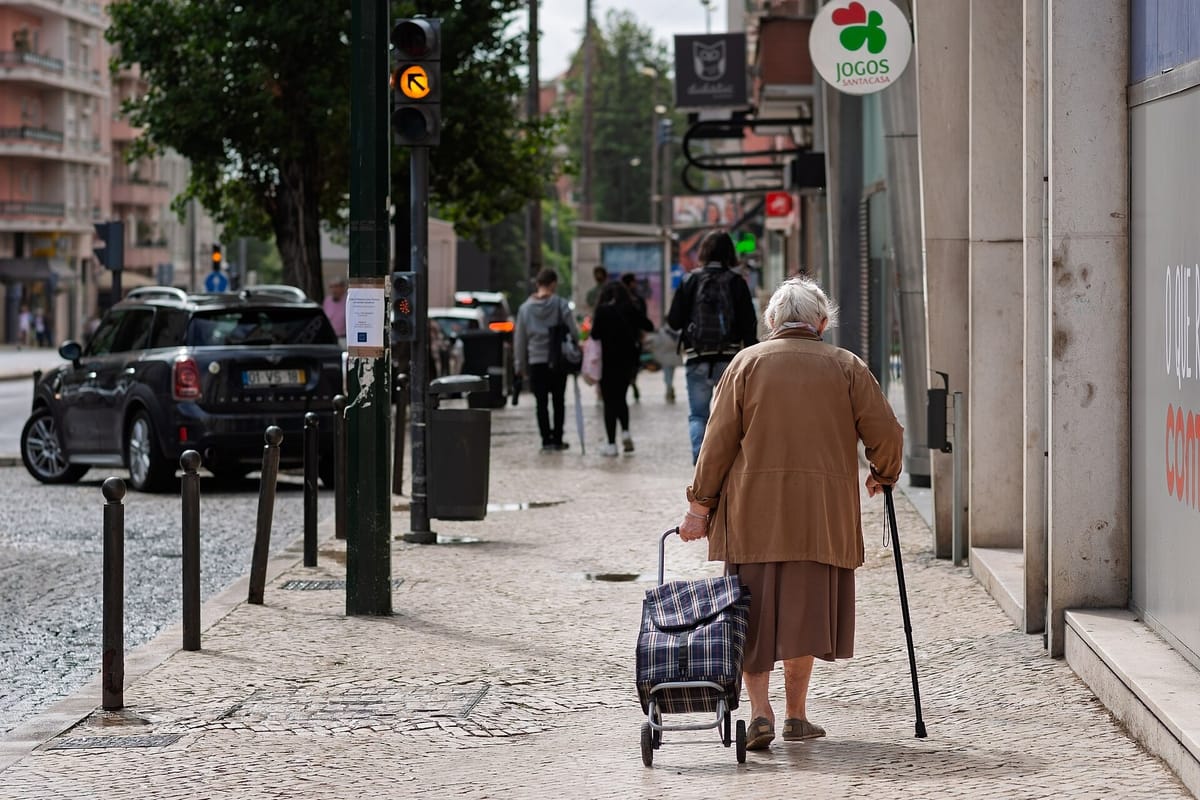
Almost one in ten people living in Portugal, 9.5 percent, were in persistent poverty in 2025, up from 7.1 percent a year earlier, the lowest in Eurostat's series for Portugal. The figure, published by Eurostat, is the centre of a study released on 14 October by the Portugal, Balanço Social (Portugal Social Balance) project at Nova SBE, the economics and business school of Universidade Nova de Lisboa. The rise puts the rate back where it stood in 2021, and people aged 65 and over now have the highest rate of any age group.
Two numbers that measure different things
The 9.5 percent is a share of the whole resident population. A person counts as persistently poor if their household income is below the poverty line this year and was also below it in at least two of the three years before: in practice, poor in at least three of the last four years.
The 61.7 percent quoted in some reports is a share of poor people only. In the 2025 survey, 15.4 percent of residents were at risk of poverty; 9.5 percent were persistently poor, so about six in ten of the people below the line had been there for most of the previous four years.
The line is 60 percent of median income adjusted for household size. In the 2025 survey it was 8,679 euros a year for a single adult, about 723 euros a month, and 18,226 euros for a couple with two children under 14. The survey asks about the previous year's income, which is why the Instituto Nacional de Estatística (INE, Statistics Portugal) reports the same 15.4 percent as a 2024 figure.
Older people now have the highest rate
Eurostat's breakdown shows how the profile has shifted:
- 65 and over: 10.6 percent, up from 8.9 percent in 2024.
- Under 18: 9.3 percent, roughly half the 18.1 percent of 2015, but nearly double the 4.7 percent of 2024.
- 18 to 64: 9.0 percent, up from 6.5 percent.
- Women: 10.0 percent, against 9.0 percent for men.
Portugal is now just below the EU average of 9.8 percent, after sitting well under it in 2024.
How long people stay poor
Following a sample of 6,057 people from 2022 to 2025 in the Inquérito às Condições de Vida e Rendimento (Survey on Income and Living Conditions), the Nova SBE researchers found that 25.6 percent of the population was at risk of poverty in at least one of the four years, as Observador and RTP (citing Lusa) reported the study. That quarter breaks down as 8.8 percent of the population poor for one year, 5.3 percent for two, 4.6 percent for three and 6.9 percent for all four. The other 74.4 percent were never below the line.
Material and social deprivation, which measures whether a household can afford basics rather than its income, followed a similar pattern: 21.4 percent went through it in at least one year and 3.4 percent in all four. The most lasting hardships were financial: 25.4 percent persistently could not afford a week's holiday away from home, and 20.7 percent persistently could not meet an unexpected expense.
What it means for readers
The researchers say a single year's poverty rate hides very different paths, and that long spells are where exclusion can be hardest to reverse. For older people on low incomes, the main targeted benefit is the Complemento Solidário para Idosos (Solidarity Supplement for the Elderly), whose income floor rises to 720 euros a month in 2027. Households on qualifying benefits also get the electricity social tariff, worth 33.8 percent off the regulated price, without having to apply.