Advice on Portugal's Return to the Electricity Grid Operator Came to 100,000 Euros, and the Finance Ministry Answered a Front Page on Saturday to Say So
Caixa Banco de Investimento and Servulo e Associados billed that between them for the 13.7 percent REN stake. The ministry also explains the four million euro gap between what it lent Parpublica and what was paid.
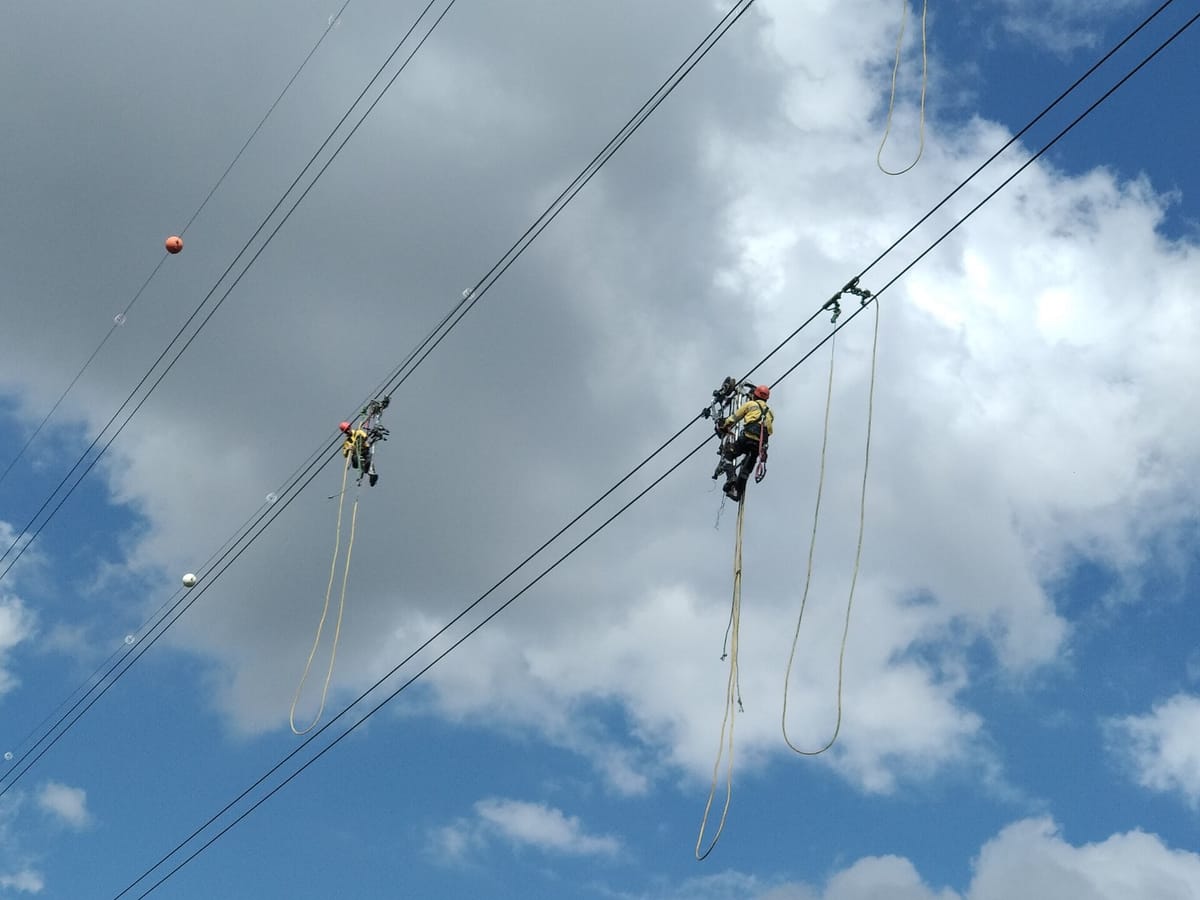
The advice that took the Portuguese state back into the country's electricity grid operator cost 100,000 euros, the Finance Ministry said on Saturday morning. Caixa Banco de Investimento, the investment bank inside the state-owned Caixa Geral de Depósitos group, handled the financial side; the law firm Sérvulo e Associados handled the legal side. The two together billed that amount for the purchase of 13.7 percent of REN, Redes Energéticas Nacionais (National Energy Networks).
The figure came out in a clarification published on portugal.gov.pt at 11.46 on Saturday, issued in response to what the ministry called a "false and slanderous" front page in that morning's Correio da Manhã. The government does not normally itemise adviser fees on a Saturday, and the fact that it did says something about how contested this purchase has become.
Where the missing four million euros went
The ministry's second point answers the arithmetic that prompted the headline. The state financed Parpública, the holding company that made the purchase, to the tune of roughly 393 million euros. The price actually paid was 389.8 million. The 4 million euro gap is not a commission, the ministry says: a maximum was committed at the outset, "as is usual in this type of process", and the remainder sits with Parpública. The ministry added that the operation has no effect on the budget balance or on public debt.
The route to the stake is also set out. The cabinet decided to acquire up to 20 percent of REN's capital, but the daily trading volume in the shares made buying that quantity on the Lisbon market impracticable. So the government approached Pontegadea, REN's second-largest shareholder and the investment vehicle of the Inditex founder Amancio Ortega, and negotiated for its 13.7 percent block directly. That sale was announced in mid-August.
The opposition wants the paperwork
The Socialists have been pressing since Tuesday. The PS deputy Marcos Perestrello told reporters at parliament that the state is paying "almost double" what it received when it sold its last REN holding in 2014, and that the price included "an unjustified bonus of more than 50 million euros" to the seller. He filed a request for all the documentation behind the acquisition, plus a list of everyone who took part in it, so that it can be established whether the government went to the shareholder or the shareholder came to the government.
The PS also says it will table a bill in the coming weeks to tighten the rules on state purchases of assets, bringing them closer to the regime that governs privatisations: a mandatory economic and financial viability study, a documented technical and political justification, and at least two independent valuations of anything being bought.
Reaching the full 20 percent would cost more again. The government has mandated Parpública to keep buying, and the 13.7 percent block is described in the file as the first phase.
What this means for residents
- Your grid bill is downstream of this. REN runs the high-voltage electricity network and the national gas system, and its regulated revenue is recovered through the access tariffs that sit inside every electricity and gas bill in the country. Who owns it does not change your next invoice, but it changes who sits on the other side of the table when the tariffs are set.
- The money is public money. Parpública borrowed from the state to buy the stake. The ministry's position is that this is an asset swap rather than spending, which is why it says the budget balance is untouched.
- The scrutiny is only starting. A parliamentary request for documents is not an inquiry, but it is the step that usually precedes one, and the PS bill would apply to every future purchase of this kind.
Portugal was, until August, the only country in Europe with a fully private grid operator. The argument about whether it should have stayed that way will run well past the receipts published on Saturday.