Diesel Tax Falls Another Cent on Monday, and the Prime Minister Refuses to Go Further: 'I Am Not Going to Be the Father of Austerity'
Friday's gazette order sets the extraordinary rebate at 10.88 cents a litre on diesel and 7.42 on petrol. Montenegro put the measures at 2,300 million euros this year and ruled out the deeper cut Iniciativa Liberal wants.
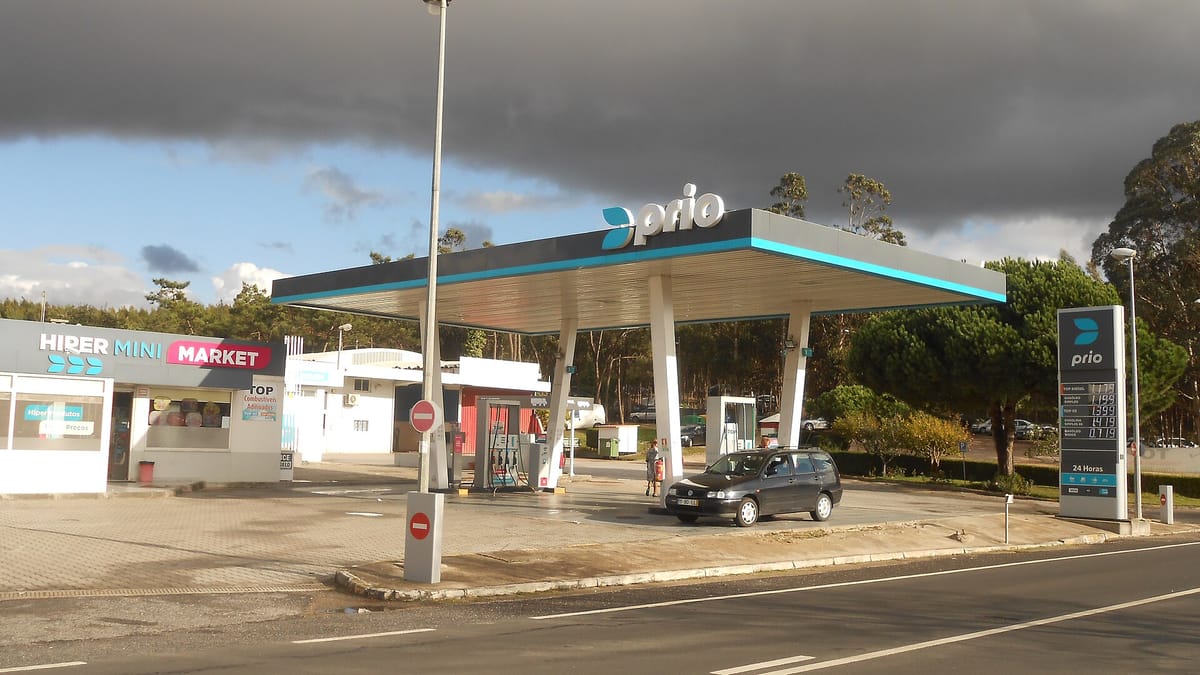
The fuel tax rebate widens again on Monday. An order published in Friday's gazette supplement sets the extraordinary discount on the Imposto sobre os Produtos Petrolíferos e Energéticos (Tax on Petroleum and Energy Products), the ISP, at 108.82 euros per 1,000 litres of road diesel and 74.22 euros per 1,000 litres of unleaded petrol. That is 10.88 cents on a litre of diesel and 7.42 cents on a litre of petrol, up from the 9.76 cents on diesel that took effect a week ago.
Portaria n.º 432-A/2026/1, signed by the Environment and Energy Minister Maria da Graça Carvalho and the Secretary of State for Tax Affairs Cláudia Melo de Carvalho, comes into force on 21 September. It fixes the mainland ISP rate for unleaded petrol at 423.30 euros per 1,000 litres, including the 87 euro road service contribution, and for diesel at 252.78 euros per 1,000 litres, including 111 euros.
How the mechanism decides
The rebate is not discretionary week to week. It triggers when the pump price of a fuel rises more than 10 cents a litre above the reference week of 2 to 6 March, and it returns the extra VAT the state collects on the higher price by cutting the ISP by the same amount. For the week beginning 21 September the order records that the condition is met on both road diesel and unleaded petrol, and that prices are expected to rise again.
That is the machinery. The politics sat about 350 kilometres north of it.
"I am not going to be the father of austerity"
Speaking to reporters in Esposende on Saturday, the Prime Minister Luís Montenegro put the ISP discounts in force from Monday at 25 cents a litre, a total that runs wider than the extraordinary component the gazette order covers, and said the measures adopted against rising prices should reach 2,300 million euros in public spending by the end of the year.
He then refused to go further. He would not "sell the illusion" that government help can cancel out a price rise driven by instability in the Middle East, he said, and asked whether "another 5 or 10 cents of discount" on fuel tax was really capable of completely changing anyone's life. Unbalancing the accounts, he argued, makes money more expensive, and that bill also has to be paid. "I am not going to be the father of austerity," he said.
Asked about Portuguese drivers crossing into Spain to fill up more cheaply, Montenegro said Portugal has to live with competition rules, but suggested Spanish citizens might want to ask themselves about the debt and deficit accumulating on their side of the border. Portugal's overall financial position, he said, is the more favourable one.
The party that wants 30 cents
Iniciativa Liberal (Liberal Initiative) takes the opposite view. Its leader Mariana Leitão, speaking at the party's youth academy in São Pedro do Sul on Saturday, said the state "never makes the effort" while asking households to. Her party's proposal, approved as a parliamentary resolution, would cut the ISP to remove what it calls double taxation and align Portugal's fuel tax burden with its purchasing power within the European Union. Leitão puts the effect at 30 cents a litre and says implementation is now the government's to carry out.
What this means at the pump
- Monday's change is a tax change, not a price forecast. The rebate widens precisely because wholesale prices are expected to rise, so it cushions an increase rather than producing a fall.
- The mechanism is due to expire. The cabinet agreed on 17 September to ask parliament to extend the regime to 31 December 2026. The extension itself does not trigger any new automatic cut.
- Other help is already fixed. The same package carried a cut in income tax, a one-off pension supplement in December, 38 million euros for hauliers, buses, taxis, fire brigades and social sector bodies, and the extension of the 20 euro Green Rail Pass to Lisbon and Porto commuter trains.
- Two more bills are pending. Proposals to cut VAT on fuel and food reach parliament on 24 September, and neither can take effect before January.
For anyone budgeting a household here, the practical reading is that the weekly order is now the single most reliable indicator of what next week costs, and that the government has drawn its line: the rebate follows the formula, and there is nothing beyond it.