A Court Gave the Education Ministry Three Working Days to Put a Child With Special Needs in a School Near Home, and It Took One
The Almada administrative court ordered 100 percent of the resources named in the boy's assessment. By Saturday the schools agency said he was placed at Escola Basica das Lagoas with the staff assigned.
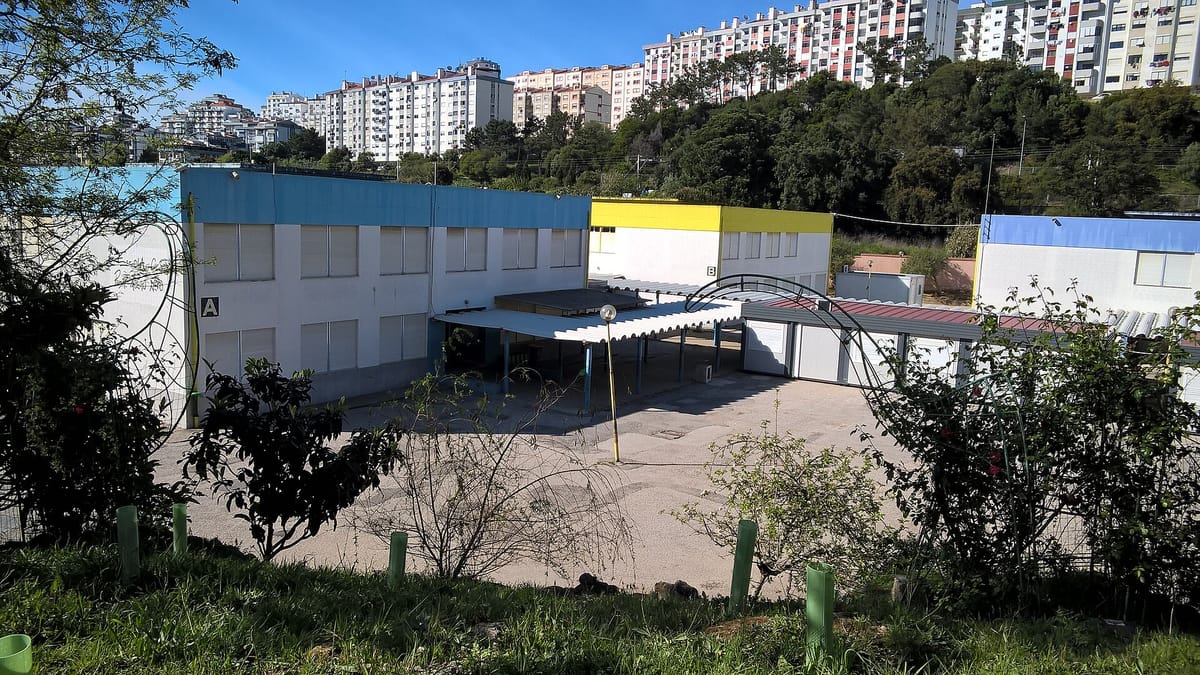
A court in Almada gave the Education Ministry three working days to put a child with special educational needs into a school in the municipality where the family lives, with every support the child's assessment calls for. The ministry needed about one. On Saturday the Agência para a Gestão do Sistema Educativo (Agency for the Management of the Education System) confirmed that the pupil "is already placed at Escola Básica das Lagoas", and that the staff needed to provide the accompanying educational support have been assigned.
The ruling by the Tribunal Administrativo e Fiscal de Almada (Almada Administrative and Tax Court) became known on Friday. It came out of an action brought by the child's parents, who wanted their son placed at a school in his area of residence with the teaching resources he is entitled to. The case was made public by the Movimento para a Inclusão Efetiva (Movement for Effective Inclusion), whose coordinator Lourenço Santos told the Lusa news agency that the court ordered "100 percent of the necessary resources" identified in the relatório técnico-pedagógico, the technical and pedagogical report that sets out an individual pupil's learning and inclusion measures. A specialist teacher is one of the things such a report can require.
Three working days is the unusual part
Placement disputes in Portuguese schools are common enough. What is not common is a deadline measured in days and a state body reporting compliance the next morning, with the court formally notified that the steps have been taken.
The reason the deadline bites is that the school year is already running. A child who has no school in September is not waiting for an administrative decision in the abstract; every week is a week of teaching missed, and the support measures in a technical and pedagogical report are cumulative by design. Once the court accepted that the placement had to happen in the municipality of residence rather than wherever a vacancy could be found, the timetable followed.
A system under strain at exactly this point
The agency that answered on Saturday is new. It absorbed the functions of the old DGEstE regional education directorates, and families in the Lisbon area told us earlier this month that the reorganisation removed the people who used to place difficult cases by hand. A separate group of parents whose children still showed as "Não Colocado" on the enrolment portal after term started was preparing its own legal action.
The Almada judgment does not fix that. It settles one child's placement. But it establishes, in a concrete case, that the obligation is not satisfied by any school anywhere: it is a school in the area of residence, with the identified resources actually in place.
What this means for families here
- The technical and pedagogical report is the document that matters. It is what a court can enforce. If your child has been assessed and measures were written down, those measures are the standard, not a best effort.
- Area of residence is part of the entitlement. An offer of a place at a distant school is not automatically compliance, as this ruling shows.
- The administrative courts move faster than their reputation. The action produced a ruling with a three-day deadline and compliance within a day. For foreign families used to being told that legal routes in Portugal take years, this is a useful counterexample: urgent administrative proceedings are a different track from ordinary litigation.
- Keep the paper. The assessment, the enrolment record and any written refusal are the material a case is built on.
The Movement for Effective Inclusion has said it is following other cases. The Education Ministry has made no wider commitment, and the underlying shortage of specialist teachers is not something a court order can create. What the Almada decision does is set the price of leaving a child unplaced: a deadline, in working days, that someone has to meet.