Portugal Hands Back 9.76 Cents a Litre of Diesel Tax From Monday, and the Order Doing It Appeared in a Friday Night Gazette Supplement
Protesters marched on the prime minister's house in Espinho over fuel prices on Saturday. The night before, a portaria had already cut the fuel tax again, as it has done every week since 16 March, by exactly the extra VAT the higher price brings in.
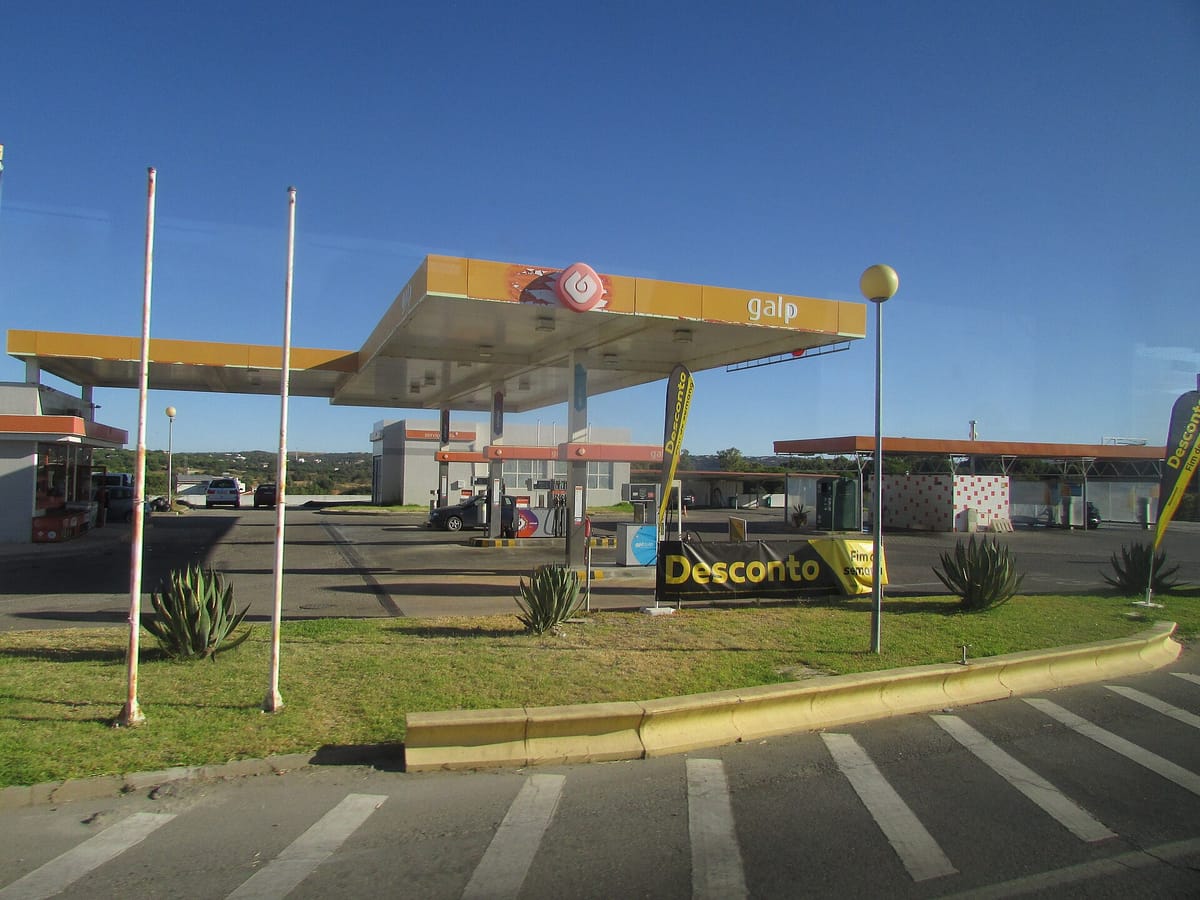
About eighty people gathered in Espinho on Saturday to march on the prime minister's private house over the price of fuel. Organised by three businessmen, they drove in slow convoy from Santa Maria da Feira and then walked to the Espinho casino, a few metres short of Luís Montenegro's front door, where the police stopped them. It was the second such protest in a week, after a slow march that blocked traffic in Sines on 7 September.
The night before, in a supplement to the official gazette published after most people had stopped reading it, the government had already moved. Portaria n.º 430-A/2026/1 de 11 de setembro reset the tax on road fuel again, with effect from Monday 14 September.
The mechanism, in the government's own words
Since 16 March, Portugal has been running a temporary discount on the Imposto sobre os Produtos Petrolíferos e Energéticos (Tax on Petroleum and Energy Products), the ISP, and through the summer it has been reset by a fresh order every Friday. Each order is signed by the Minister for Environment and Energy and the Secretary of State for Tax Affairs under paragraph 1 of article 92 of the excise duty code, Decreto-Lei n.º 73/2010 de 21 de junho.
The rule is mechanical. When the pump price rises more than 10 cents a litre above where it stood in the week of 2 to 6 March, the government cuts the ISP by the amount of extra VAT that higher price generates. In the gazette's phrasing, the discount corresponds "to the return of the additional VAT tax revenue". Every Friday the ministers look at the coming week's expected prices and reset the rate accordingly.
The chain is unbroken and each order names the one it replaces. The standing rates were fixed by Portaria n.º 427-A/2025/1 de 28 de novembro at 497.52 euros per 1,000 litres of unleaded petrol and 361.60 euros per 1,000 litres of road diesel. Every order since 16 March has cut into those two numbers and left them formally intact.
Six months of weekly adjustment
The first discount, on 16 March, was 26.99 euros per 1,000 litres on petrol and 49.97 on diesel. By the week of 10 August it was 35.39 and 59.16. On 24 August, 53.98 and 81.61. On 31 August prices eased and the discount shrank, to 51.62 and 71.63. On 7 September it jumped to 75.48 and 96.49.
From Monday it is 65.92 euros per 1,000 litres on petrol and 97.58 on diesel, because the ministers expect diesel to rise next week and petrol to fall. That leaves the actual rates at 431.60 and 264.02 euros per 1,000 litres.
Translated to the forecourt, the diesel discount is 9.76 cents a litre before VAT and about 12 cents after it. On a 50-litre fill, roughly six euros. On petrol it is 6.59 cents a litre, about 8.1 cents with VAT. The diesel discount is now 27 percent of the full rate; the petrol one is 13.3 percent.
Montenegro put the cumulative bill at "approximately 700 million euros" so far in 2026, speaking at the Dão wine fair in Nelas on 4 September. "The State is not collecting an extra cent in VAT because of fuel price increases," he said, adding that the government remains "available to adopt whatever measures seem most appropriate" if the swings continue. Diesel was then around 2.12 euros a litre and petrol 95 around 2.10.
What this means for drivers
- The discount is already in the price you pay. It is not a rebate to claim. It arrives as a lower tax on the fuel delivered from Monday, which is why it is invisible at the pump.
- It does not travel. The orders apply to the mainland only. The Azores and Madeira set their own rates.
- It cannot fix the underlying price. A 10-cent rise in the crude-linked price is returned only to the extent it generated extra VAT, so roughly 23 percent of it. The other 77 percent stays with the driver.
- The road levy is untouched. Every order keeps the contribuição de serviço rodoviário (road service levy) at 87 euros per 1,000 litres on petrol and 111 on diesel, because that money is earmarked for the road network.
- A larger increase is already scheduled. From 2028, fuel suppliers must buy carbon permits for every litre burned in cars and homes, a cost that will land on the same pump price this mechanism is currently trimming.
Six months into a measure the gazette still calls "temporary and extraordinary", the weekly portaria has become the most consequential piece of Portuguese tax policy that is decided, published and forgotten inside the same Friday evening.