Portugal's Life Expectancy Edges Up to 81.85 Years, Longest in the North, While the 2027 Retirement Age Stays at 66 Years and 11 Months
INE puts life expectancy at birth at 81.85 years for 2023 to 2025, highest in the North at 82.31. Life expectancy at 65 is unchanged at 20.19 after the population revision, so the 2027 pension age stays at 66 years and 11 months.
A baby born in Portugal can now expect to live 81.85 years, according to the mortality tables for 2023 to 2025 that the Instituto Nacional de Estatística (INE, the national statistics office) published on Friday. That is 0.28 years, or about 3.4 months, more than in 2022 to 2024. INE also rebuilt its earlier tables on the new population estimates released in June, and the revision left untouched the one figure that sets the state pension age.
Men, women and the over-65s
At birth, men can expect 79.22 years and women 84.26, gains of 3.4 and 3.1 months on the previous period. At 65, the national figure is 20.19 more years, up about two months: 18.49 for men and 21.55 for women, a gap of 3.06 years.
INE's figures are averages built on three years of deaths. They describe current mortality, not a forecast for any one person.
The North on top, the islands at the bottom
Of the nine NUTS II regions, the North has the highest life expectancy at birth, at 82.31 years (79.83 for men, 84.57 for women), and also at 65, at 20.49 years. The mainland regions follow in this order:
- Centre: 82.11 years at birth, 20.41 at 65
- Greater Lisbon: 81.91 and 20.22
- Oeste and Vale do Tejo: 81.44 and 19.74
- Algarve: 81.39 and 19.92
- Setúbal Peninsula: 81.03 and 19.71
- Alentejo: 80.67 and 19.67
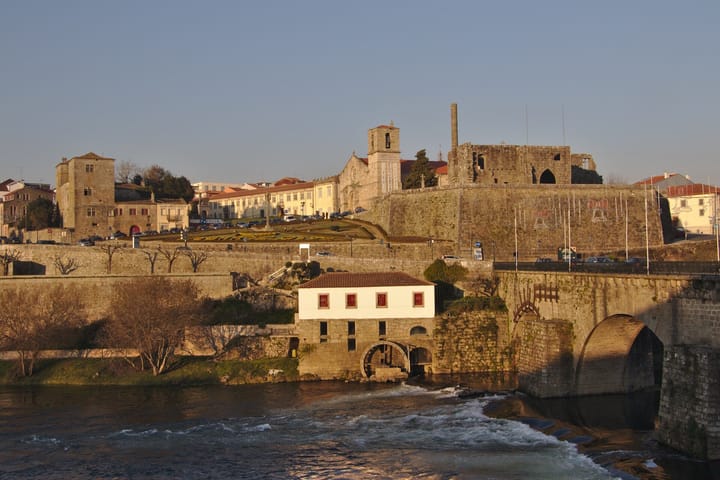
Madeira (80.06 at birth) and the Azores (78.69) come last. The widest gap between the sexes at birth is in the Azores, where women can expect 6.21 more years than men. Among the smaller NUTS III areas, Cávado, around Braga, leads at birth with 83.06 years, while Baixo Alentejo and the Azores fall short of 79. At 65, Cávado (21.28) and the Coimbra Region (20.99) lead.
Why the retirement age does not move
Under Decreto-Lei 187/2007 (Decree-Law 187/2007), the normal age for a Social Security old-age pension follows life expectancy at 65. Each year's gain adds two thirds of that gain, converted into months, to the 2014 base of 66. A Portaria (ministerial order) sets the age two years ahead.
Portaria 476/2025/1, published on 29 December 2025, set the 2027 age at 66 years and 11 months, two months more than in 2026. It used life expectancy at 65 of 20.02 years for 2024 and 20.19 for 2025. In the revised series both values are unchanged, because the population revision mainly affected people under 65, INE says. So 66 years and 11 months stands, as Jornal de Negócios reported.
The same order fixes the sustainability factor at 0.8237 for pensions starting in 2026, a cut of about 17.6 percent. Under Decreto-Lei 119/2018 it does not apply to pensions taken at or after the normal age or the personal age. That personal age is four months lower for each year of contributions beyond 40, but never below 60. Two early-retirement routes are also exempt: the flexible scheme and the scheme for very long careers.
What happens next
The 2028 age will depend on INE's provisional life expectancy at 65 for 2024 to 2026. Notícias ao Minuto reports that this figure normally comes out in November; RTP reported the 2025 figure on 27 November last year. A Portaria follows. No official source gives a 2028 figure yet. INE's next full mortality tables are due in September 2027.
Anyone planning to stop work can check their own entitlement on Segurança Social Direta. More people are already working past 65: INE counted 281,300 in the second quarter. Meanwhile, the insurance and pension funds supervisor wants workers signed up to workplace pensions by default.