Portugal Puts Its Electricity Storage Plan Out for 20 Days of Public Consultation, Targeting 3.9 Gigawatts of Pumped Hydro and 3 Gigawatts of Batteries by 2030
The National Storage Strategy is now on Participa.pt and anyone can file a comment. It wants pumping at 3.9 GW and batteries at 3 GW by 2030, rising to 5.26 and 4.5 by 2040. The 2030 pumping number rests on one project, and Brussels still has to approve that half.
Portugal has opened a 20-day public consultation on how it intends to store electricity, and the document under discussion asks the country to roughly double its stored power twice over: once by 2030, and again by 2040.
The Ministério do Ambiente e Energia (Ministry of Environment and Energy) announced on Saturday that the Estratégia Nacional de Armazenamento (National Storage Strategy) is now on Participa.pt, the government's public consultation portal, where any citizen, company or association can file comments or upload documents. The window runs for 20 days.
The two numbers the consultation is really about
The strategy sets targets on two horizons and for two technologies: pumped hydro, which moves water back uphill into a reservoir when power is cheap and releases it when power is dear, and batteries.
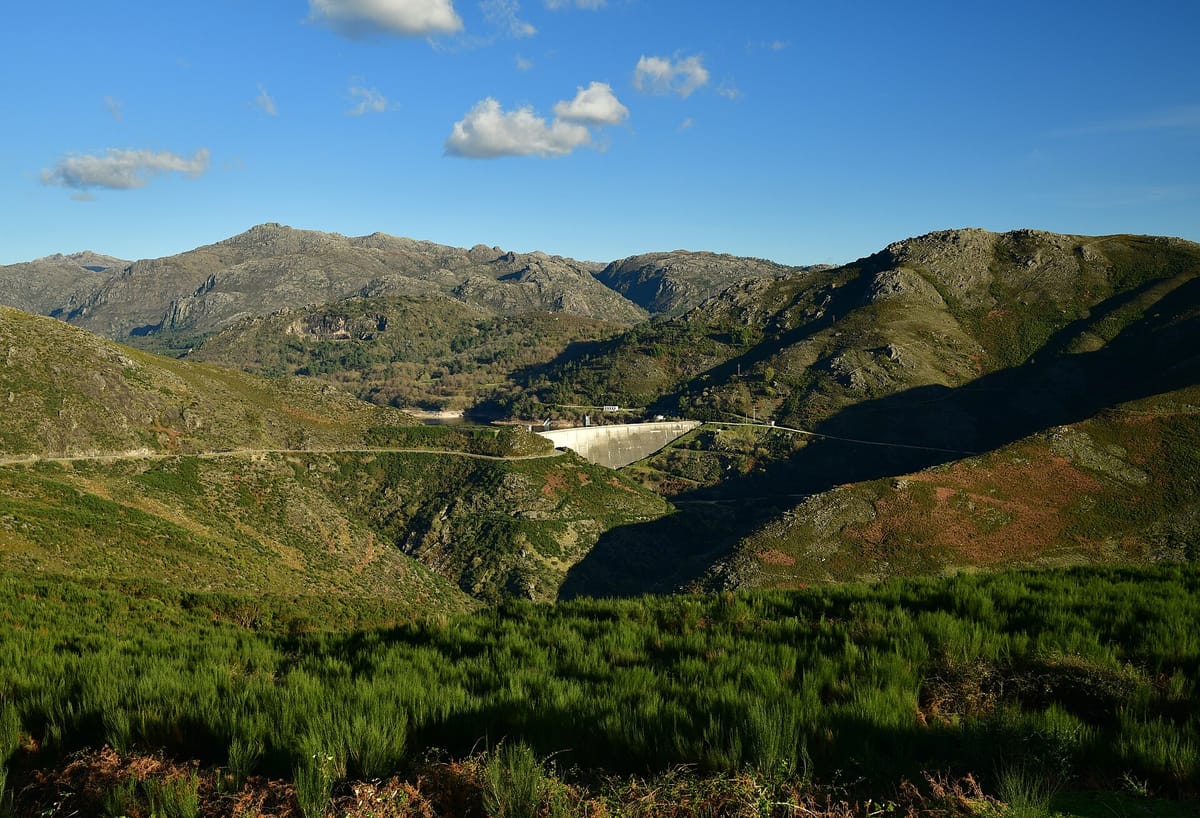
By 2030 the aim is 3.9 gigawatts of pumped hydro and 3 gigawatts of batteries. Portugal has roughly 3.5 GW of pumping capacity today and about 1.6 GW of batteries in development, so the pumped-hydro number is a modest step and the battery number close to a doubling. Because reservoir conversions take years, the 2030 pumping projection leans on a single project: the conversion of the Alto Lindoso dam on the Lima river. By 2040 the targets rise to 5.26 GW of pumping and 4.5 GW of batteries.
The strategy was built on technical studies from INESC-TEC and the Instituto Superior Técnico, and it does not present one path. It sets out scenarios for 2026 to 2030 and 2026 to 2040, and the minister, Maria da Graça Carvalho, has said the point of the consultation is to choose between them. Whichever is chosen will mix batteries and water. She has also flagged one constraint that no consultation response can lift: the hydro storage component requires authorisation from Brussels.
Why the state wants it
The government's case is written in three words that recur in its own material: deficit periods, sovereignty and price stability. Solar output peaks when demand does not, and without somewhere to put it, that electricity is simply lost. Store it and it comes back in the evening, when the alternative is burning gas. Less imported energy, fewer expensive hours, a system that holds together when the wind drops.
The consultation is not the only thing moving. An auction is due on 14 September for 750 MW of standalone storage plus 300 MW of surplus capacity attached to renewable projects that already include a storage component. Under Decreto-Lei n.º 130/2026, published on 29 June alongside the strategy's presentation, municipalities take a share of the annual revenue rather than only a construction-phase windfall: 30 percent of the auction revenue for standalone projects, 70 percent for the surplus-capacity ones, plus 2.5 percent of promoters' net revenue. Projects with an agrivoltaic component get a 20 percent scoring boost. Our earlier report covered how that revenue-share rule became the scoring criterion.
What this means for you
- Your bill, eventually. Storage is the government's answer to price spikes, and Portuguese wholesale power rose by a third in the second quarter. None of this reaches tariffs before 2030.
- You can actually respond. Participa.pt takes submissions from individuals, not just industry. Twenty days is short.
- If you live near a reservoir or a substation. Alto Lindoso is the named 2030 project, and the September auction will site large battery parks in specific councils, each with a revenue stake.
- Grid costs are a separate fight. The regulator has already proposed that every household share the cost of stabilising the grid.
Portugal has been buying storage in pieces for a year and a half, from a €180 million battery programme to auctioning the last coal plant's spare grid capacity at Pego. This is the first attempt to say how much of it the country actually wants, and by when. On the mechanics of objecting to something like this, how to file in a Portuguese public consultation, and the reply the state owes you sets out the three consultation regimes, the statutory windows of 30, 20, 15 and 10 days, the fact that nationality is not a criterion in any of them, and the reasoned written reply a council is obliged to give anyone who invokes one of the three grounds in article 89(3) of the RJIGT.