Taking Part in a Public Consultation in Portugal in 2026: A Practical Guide to Who May Object, the 30 Day Clock, and the Reply the State Owes You
Nationality is not a criterion in any of the three regimes. A guide to the environmental impact clocks, the municipal planning reply you can compel under article 89(3), the 30 days on a draft regulation, and what to do when you are ignored.
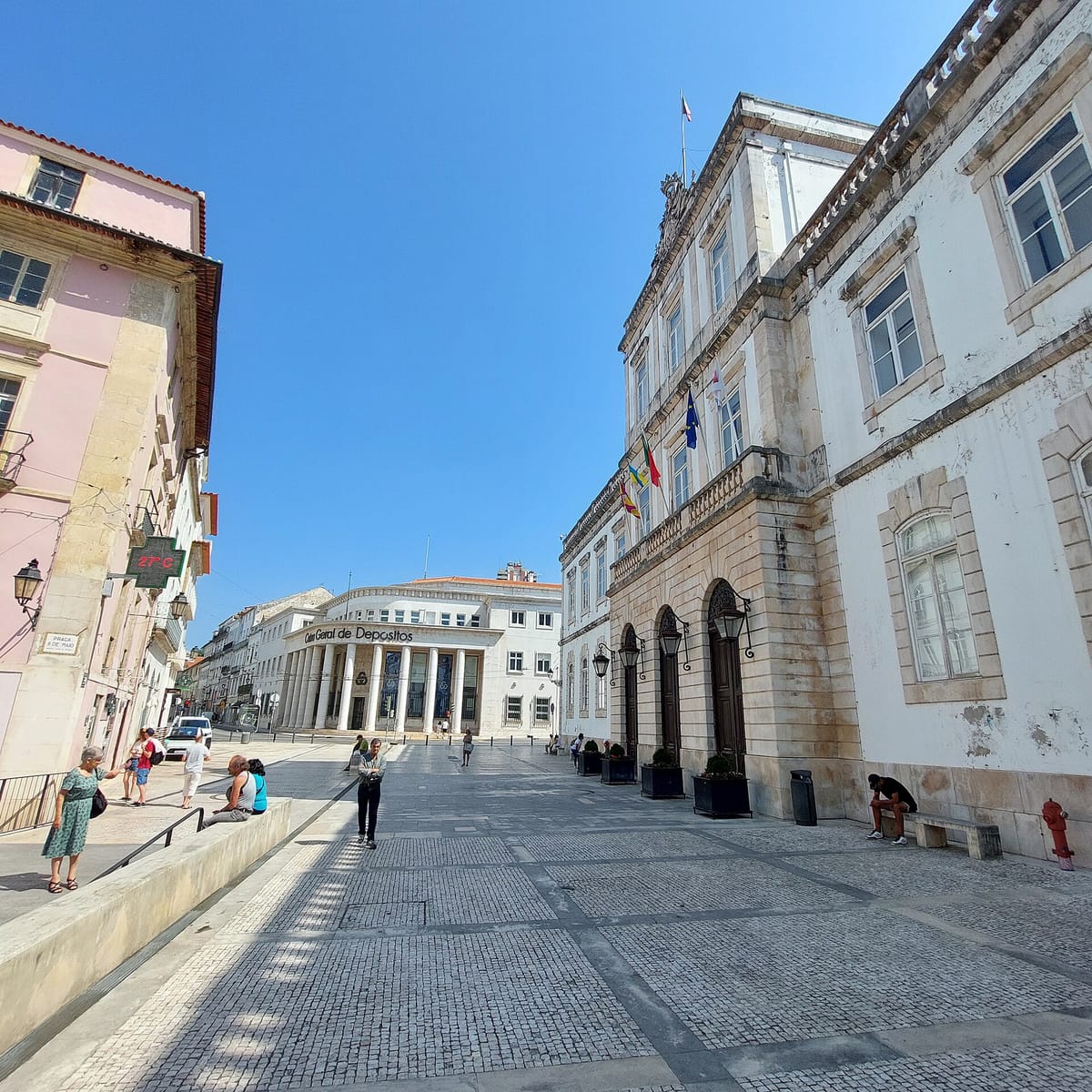
Somebody is going to build something near you. A tram line, a data centre, a solar farm, a quarry, a rewritten municipal plan that changes what can be put up on the field behind your house. In Portugal, almost all of it passes through a consulta pública or a discussão pública: a fixed window in which anyone can write in, and at the end of which the authority has to say, on the record, what it did with what it received.
Most people never use it, on the assumption that objecting is for lawyers, for Portuguese nationals, or for people with a direct legal interest. None of those things is true. This guide sets out the three regimes you are most likely to meet, who may take part in each, how long you get, and what the state is legally obliged to do with your submission.
The three families of consultation
They look similar from the outside and run on different laws, different clocks and different websites.
- Projects. A specific thing being built at a specific place: this runs through the environmental impact assessment regime, Decreto-Lei n.º 151-B/2013 (the RJAIA). The authority is usually the Agência Portuguesa do Ambiente (APA, the Portuguese Environment Agency).
- Plans and programmes. Municipal master plans, urbanisation plans, detail plans and their regional and national equivalents: Decreto-Lei n.º 80/2015 (the RJIGT, the legal regime for territorial management instruments). The authority is usually your câmara municipal.
- Draft rules. A regulation any public body proposes to adopt, from a municipal by-law to a ministerial rulebook: the Código do Procedimento Administrativo (CPA, the Administrative Procedure Code), approved by Decreto-Lei n.º 4/2015.
There is also an older, broader statute sitting underneath all three, Lei n.º 83/95, which is dealt with further down and which matters more than its age suggests.
Family one: a project near you
Who may write in
Article 29(2) of the RJAIA gives the right of participation to the público interessado. The two definitions in article 2 are the ones to read carefully. "Público" means one or more natural persons, legal persons under public or private law, and their associations, representative organisations or groupings. "Público interessado" means the holders of subjective rights or legally protected interests within the decisions taken in the assessment procedure, together with the public affected or liable to be affected by that decision, expressly including environmental non-governmental organisations.
Read that again and note what is absent: nationality, residence status, and voting rights. If the project affects you, or is liable to, you are within the definition. A Brazilian tenant on the street being dug up is as much público interessado as the Portuguese freeholder next door.
How long you get
The clocks are fixed by statute, not by the agency's convenience.
- 30 days for the main consultation on the environmental impact study, under article 15(1). This is the one people mean when they say a project is "in consultation".
- 15 days for the optional scoping consultation on the proposta de definição de âmbito, the document that decides what the impact study will even examine, under article 12(5). This one is easy to miss and unusually valuable, because it shapes what gets studied.
- 15 days for the consultation on the RECAPE, the report that checks the detailed design against the environmental decision already issued, under article 20(6).
- 10 days where the procedure has been interrupted for the promoter to reformulate the project and the consultation has to be repeated, under article 16(5). This is the shortest window in the regime and the one most likely to catch you out.
Where the documents are
Article 28 sets the baseline: the assessment procedure is public, and all of its elements and case papers are available at the assessment authority, with narrow carve-outs for industrial or commercial secrecy including intellectual property, national security, and the protection of natural and cultural heritage.
Article 30(1) then requires a list of documents to be published on the electronic single desk within five days, including the impact study and its Non-Technical Summary, the consultation reports, the opinions and studies produced during the procedure, the RECAPE, the conformity decision and the monitoring reports. In practice APA runs these consultations on the government's Participa portal, and that is where you file.
If you would rather work on paper, article 31(2) requires that during the consultation period the scoping proposal, the impact study and the RECAPE also be available at the assessment authority, at the national assessment authority, at the CCDR for the area, and at the câmara municipal of the area where the project is to be built.
Start with the Non-Technical Summary. Article 2(t) defines it as the document whose purpose is to support public participation, written in language and presentation accessible to the general public. It exists for exactly this.
What the state has to do with your submission
Article 29(3) lets the authority decide the form the consultation takes, according to the nature and complexity of the project, its likely impacts, and how contentious it is likely to be. Article 29(4) then requires the results to be set out in a report describing the means chosen for publicising the project and for participation, together with a synthesis of the predominant opinions expressed and how representative they were.
That report is not optional and it is not private. Under article 15(2) the authority sends it to the evaluation committee within seven days of the consultation closing, and under article 16(1) the committee has to take it into account when drafting the final technical opinion.
The obligation that gives the whole exercise teeth is in article 18(3)(c). The declaração de impacte ambiental, the decision on the project, must contain a summary of the result of the public consultation and of the way in which it was taken into account in the decision. The authority does not have to agree with you. It does have to say, in the decision document, what it did with what you sent.
Family two: plans and municipal planning
Who may take part
Article 6(1) of the RJIGT is the most generous participation clause in Portuguese planning law: all persons, natural and legal, including associations representing environmental, economic, social and cultural interests, have the right to participate in the preparation, amendment, revision, execution and evaluation of territorial programmes and plans. Again, no nationality test, no residence test, no requirement of direct interest.
Article 5 pairs it with a right to information that includes consulting the files, including the background studies that underpin the choices made, obtaining copies of the minutes of deliberative meetings and certified copies of approved instruments, and being told which easements, administrative servitudes and public-utility restrictions apply to a given piece of land.
How long you get
Article 89(2) sets the minimum periods for the discussão pública of a municipal plan: not less than 30 days for a plano diretor municipal, the master plan, and not less than 20 days for a plano de urbanização or a plano de pormenor. The period must be announced at least five days before it opens.
The announcement is a notice published in the Diário da República and publicised through the media, the collaborative territorial management platform and the council's website. It must state the period, how interested parties may submit their complaints, observations or suggestions, any public sessions being held, and where the proposal and the accompanying opinions can be inspected. Article 6(5) requires that the notice provide for electronic means of participation.
National and regional programmes run on their own periods: a minimum of 30 days for the national territorial policy programme, announced at least 15 days in advance, and a minimum of 20 days for sectoral and special programmes.
The reply you can compel
This is the part of Portuguese planning law that is worth knowing by heart. Under article 89(3), the câmara municipal must weigh the complaints, observations, suggestions and requests for clarification submitted, and is obliged to give a reasoned reply to anyone who invokes one of three things:
- non-conformity or incompatibility with territorial programmes and plans, or with projects that have to be weighed at the drafting stage;
- non-conformity with applicable legal and regulatory provisions;
- harm to subjective rights.
Article 89(4) requires that reply to be communicated in writing to the person concerned. A general expression of unhappiness does not trigger it. A submission that says, in terms, that the proposal conflicts with a named plan, or breaches a named provision, or harms a specific right of yours, does. Framing your objection so that it falls inside one of those three heads is the single most useful thing you can do with a planning submission.
Two further provisions are easy to overlook. Article 89(7) makes all meetings of the câmara municipal and of the assembleia municipal concerning the preparation or approval of any municipal plan mandatorily public. And article 6(4) imposes a general duty to weigh the proposals submitted and to give reasoned replies to requests for clarification.
If they ignore you anyway
Article 7 lists the guarantees available to interested parties in planning matters, alongside the general guarantees in the Administrative Procedure Code: the right of ação popular, the right to complain to the Provedor de Justiça (the Ombudsman), and the right to complain to the Ministério Público (the Public Prosecution Service). The last two cost nothing and require no lawyer.
Family three: a draft regulation
When a public body proposes to adopt a regulation, the CPA takes over.
Article 98 requires the opening of the procedure to be published on the body's website, stating which organ decided to start it, the date, the subject matter, and how a person may become a formally constituted interested party and submit contributions. Becoming an interessado at this stage is what secures your place later.
Article 99 requires the draft to be accompanied by a reasoned explanatory note that must include a weighing of the costs and benefits of the measures proposed. If that note is thin, saying so is itself a substantive objection.
Article 100 then requires that where a regulation contains provisions directly and immediately affecting citizens' rights or legally protected interests, the draft be submitted to a hearing of the constituted interested parties for a reasonable period, and in no case less than 30 days. The hearing may be written or oral. There are four escapes in article 100(3): urgency, a reasonable expectation that the hearing would compromise the regulation's execution or usefulness, a number of interested parties so large that a hearing becomes impracticable, in which case a public consultation must be held instead, and the case where the interested parties have already spoken on the relevant questions. Where an escape is used, article 100(4) requires the final decision to state the grounds for not holding the hearing.
Article 101 covers the public consultation route. The draft regulation is published in the second series of the Diário da República or in the body's own official publication, and on its institutional website, with visibility adequate to understanding it. Interested parties then have 30 days from publication to send their suggestions in writing to the organ with regulatory competence. Article 101(3) requires the preamble of the eventual regulation to record that the draft went to public consultation.
Draft legislation from central government is gathered on the ConsultaLex portal at consultalex.gov.pt.
The older law underneath: Lei n.º 83/95
Lei n.º 83/95 of 31 August is thirty years old and still in force, and it does two jobs. It defines who holds the right of popular participation and of ação popular, and it imposes a hearing requirement on large public works.
Article 1(2) names the protected interests: public health, the environment, quality of life, consumer protection of goods and services, cultural heritage and the public domain. Article 2(1) gives the rights to any citizens in enjoyment of their civil and political rights, and to associations and foundations defending those interests, whether or not they have any direct interest in the claim. Article 2(2) extends them to local authorities in respect of interests held by residents of their area. Article 3 sets the conditions an association or foundation must meet: legal personality, an express statutory object covering the interests at stake, and no professional activity competing with firms or independent professionals.
Article 4(1) is the substantive one. The adoption of development plans for public administration activity, of urbanism plans, of master and territorial planning plans, and the decision on the siting and execution of public works or other public investments with relevant impact on the environment or on the economic and social conditions and general life of the population of a given area, must all be preceded, during the investigation phase, by a hearing of the interested citizens and of the entities defending the interests liable to be affected.
Article 4(3) defines what counts as relevant impact, and it does so in a currency that no longer exists: public works or investments costing more than one million contos, or works of lower value which significantly influence the living conditions of the population of a given area. A conto was a thousand escudos, so a million contos is a thousand million escudos. At the irrevocably fixed conversion rate of 200.482 escudos to the euro, that threshold is just under five million euros, and it has never been restated in euros or indexed since.
The procedure in articles 5 to 10 is a rhythm worth knowing:
- Article 5: notices posted in the customary public places and advertisements published in two daily papers of wide circulation plus a regional paper where one exists, identifying the main characteristics and probable effects and the date the hearing begins. At least 20 days must pass between the notice and the hearing, save in duly justified cases of urgency.
- Article 6: during that period the studies and other preparatory material must be open for inspection, and must include indications of the consequences the plan or decision may have for the property, environment and living conditions of the people affected. You may ask for clarifications, orally or in writing.
- Article 7: within five days of the end of the inspection period you must tell the investigating authority whether you want to be heard orally or to submit written observations, and if you want to speak you must say what subjects you intend to address and the general thrust of your intervention.
- Article 8: interested parties are heard in a public hearing, of which signed minutes are taken.
- Article 9: the investigating authority, or through it the promoter, must reply to the observations made and justify the choices taken, in writing.
- Article 10: where more than twenty hearings would be required, the authority may require interested parties to organise themselves and choose representatives, and identical written observations are grouped so that only the first is heard. Where representatives are used or written observations exceed twenty, replies may be published in the papers rather than sent individually.
Writing a submission that works
None of these regimes asks for legal drafting. What they reward is specificity.
- Say which document and which page. An objection tied to a numbered section of the impact study or the plan proposal is far harder to answer with a form paragraph.
- In a planning consultation, aim at one of the three heads in article 89(3). Name the plan you say the proposal conflicts with, or the legal provision you say it breaches, or the specific right of yours you say it harms. That converts a comment into a reply the council is obliged to give you in writing.
- Describe an effect, not a preference. "I do not want this" carries little weight. "Forty-one on-street parking places are removed on this stretch and the study does not identify replacement capacity" is a point that has to be dealt with.
- Use the scoping window if there is one. Fifteen days on the scoping proposal, deciding what the impact study will examine at all, is worth more than thirty days spent objecting to a study that never looked at your issue.
- Keep the acknowledgement. Filing through the Participa portal generates a record. Keep it, and keep a copy of what you sent.
- Write in Portuguese if you can. There is no legal requirement of Portuguese in these regimes, but the consultation report is written in Portuguese by people reading in Portuguese, and a submission they can quote is a submission more likely to be quoted.
What participation does and does not get you
It does not give you a veto. No provision in any of these regimes lets a majority of objectors stop a project, and a consultation that produces a thousand hostile submissions can still be followed by a favourable decision.
What it gets you is three things. A written, reasoned reply, where you have invoked one of the article 89(3) grounds in a planning consultation, or asked for clarification under the RJIGT or Lei 83/95. A public record: the consultation report under RJAIA article 29(4), and the summary in the environmental decision under article 18(3)(c), which together mean your point exists in the file whether or not it prevailed. And a foundation for what comes next, because an objection properly made and demonstrably ignored is the raw material of a complaint to the Provedor de Justiça or the Ministério Público, or of an ação popular.
That last route is more accessible than most people assume. Under Lei 83/95, you do not need a direct interest in the claim. You need to be a citizen in the enjoyment of your civil and political rights, or an association or foundation that meets the article 3 conditions. The costs and the mechanics are a separate subject, but the door is not locked.
A short checklist
- Projects: participa.pt. Main window 30 days, scoping 15, RECAPE 15, repeat consultation 10.
- Municipal plans: the câmara's website, the Diário da República notice, and the collaborative territorial platform. 30 days for a PDM, 20 for an urbanisation or detail plan, announced 5 days ahead.
- Draft regulations: the body's own website, the Diário da República second series, and consultalex.gov.pt for central government. 30 days.
- Paper copies of project files: the CCDR and the câmara municipal for the area, during the consultation period.
- Nationality is never a criterion in any of the three regimes.
- If you are ignored: Provedor de Justiça, Ministério Público, ação popular.
This guide is for general information and reflects the position in 2026; it is not legal advice. Deadlines and procedures can change, and a specific consultation notice always governs its own timetable, so read the notice before you rely on the general rule.
Sources
This guide is written from official Portuguese and EU sources.
- Diário da República, Decreto-Lei n.º 151-B/2013, regime jurídico da avaliação de impacte ambiental, consolidated text (Portuguese only)
- Diário da República, Decreto-Lei n.º 80/2015, Regime Jurídico dos Instrumentos de Gestão Territorial, consolidated text (Portuguese only)
- Diário da República, Decreto-Lei n.º 4/2015, Código do Procedimento Administrativo, consolidated text (Portuguese only)
- Diário da República, Lei n.º 83/95, direito de participação procedimental e de acção popular, consolidated text (Portuguese only)
- Governo de Portugal, ConsultaLex, the portal for public consultation on draft legislation (Portuguese only)