Lisbon to Porto Main Line Is Offered 66 Million Euros in EU Funds for European Train Control and Rail Radio, With a Decision Expected by June 2027
Infraestruturas de Portugal can apply until 19 March 2027 for up to 65.98 million euros of Cohesion Fund money to fit European train control between Granja and Gaia, rail radio from Campanhã to Entroncamento, and prepare Entroncamento to Souselas.
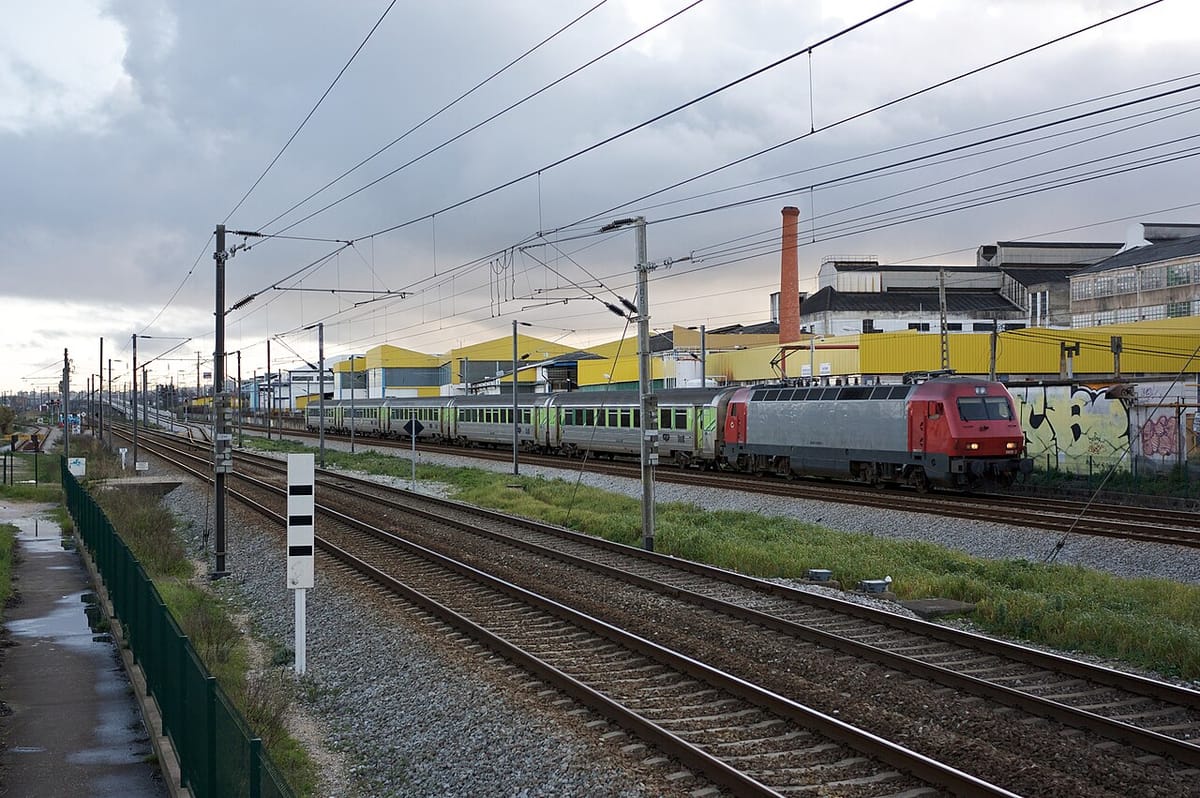
Infraestruturas de Portugal (IP, the state company that runs the rail network) has been invited to apply for up to 65.98 million euros of European Cohesion Fund money to modernise signalling and radio communications on the Linha do Norte, the main line between Lisbon and Porto. The call for applications, PACS-2026-27, was published on 12 October by Sustentável 2030 (the EU-funded programme for climate action and sustainability) and announced by three ministries in a joint statement on Saturday.
The money will pay for the European Rail Traffic Management System (ERTMS) on parts of the line. ERTMS is the EU's common standard for automatic train protection, which the European Commission describes as a safety system that makes trains comply with speed restrictions and signals.
What the money covers
According to the call document, the investment has three parts:
- Granja to Gaia: installation of ETCS Level 2, the train control part of ERTMS, on this stretch south of Porto.
- Campanhã to Entroncamento: GSM-R, the dedicated mobile radio system that links trains with traffic control centres, along this much longer section.
- Entroncamento to Souselas: preparation for ETCS Level 2 at a later date, by modernising and replacing the signalling systems and interlockings.
The document says the works should improve control of train movements, increase the line's operating capacity and make communications more efficient and secure. Its stated aim is to bring the Linha do Norte into line with European interoperability requirements and to prepare it to connect with the future Porto to Lisbon high-speed line. The Commission explains that ETCS relies on in-cab equipment that supervises a train's maximum speed at all times, monitors the driver's response and can apply the emergency brakes if necessary.
Who pays, and when
The Cohesion Fund can cover at most 85 percent of eligible costs. If the whole allocation were used at that maximum rate, it would match eligible spending of about 77.6 million euros (our calculation). The call names IP as the only eligible applicant; it is an invitation rather than an open competition because IP is the only body that can carry out the work. The call was approved by a deliberation dated 9 October.
- Applications are open until 18:00 on 19 March 2027.
- Assessment runs from 22 March to 16 June 2027, and the decision must be communicated by 23 June 2027.
- To be approved, IP must already have awarded the public contract for the largest action in its application by the time it applies.
The call does not give a start date for the works or a completion date. Its results will be measured by the length of line fitted with ERTMS and the number of passenger and freight trains using the upgraded track in the first year of operation.
What it means for passengers
In the joint statement, reported by RTP, the Minister for Infrastructure and Housing, Miguel Pinto Luz, said the government wants "a safer, more modern and more reliable railway" that meets the needs of passengers and businesses. The Minister for the Economy and Territorial Cohesion, Castro Almeida, said rail must become more efficient to attract more traffic.
This is separate from the high-speed project itself. As we reported on 16 October, high-speed trains are due to reach Lisbon on the existing Linha do Norte until a final link from Carregado is built, which is one reason the older line's signalling matters. IP also has a separate project, worth 95 million euros under the Recovery and Resilience Plan (PRR), to replace signalling at Campolide, Oriente, Alverca and Azambuja for the same purpose.