Portugal Sends the Last Coal Plant's Spare Grid Capacity to Auction, Offering 300 MW at Pego to Renewables Only
The government is auctioning 300 MW of grid-connection capacity at the Pego node — where Portugal's last coal plant closed in 2021 — reserved for renewables only. It sits alongside a 750 MW battery-storage auction, part of a post-blackout push for grid resilience.
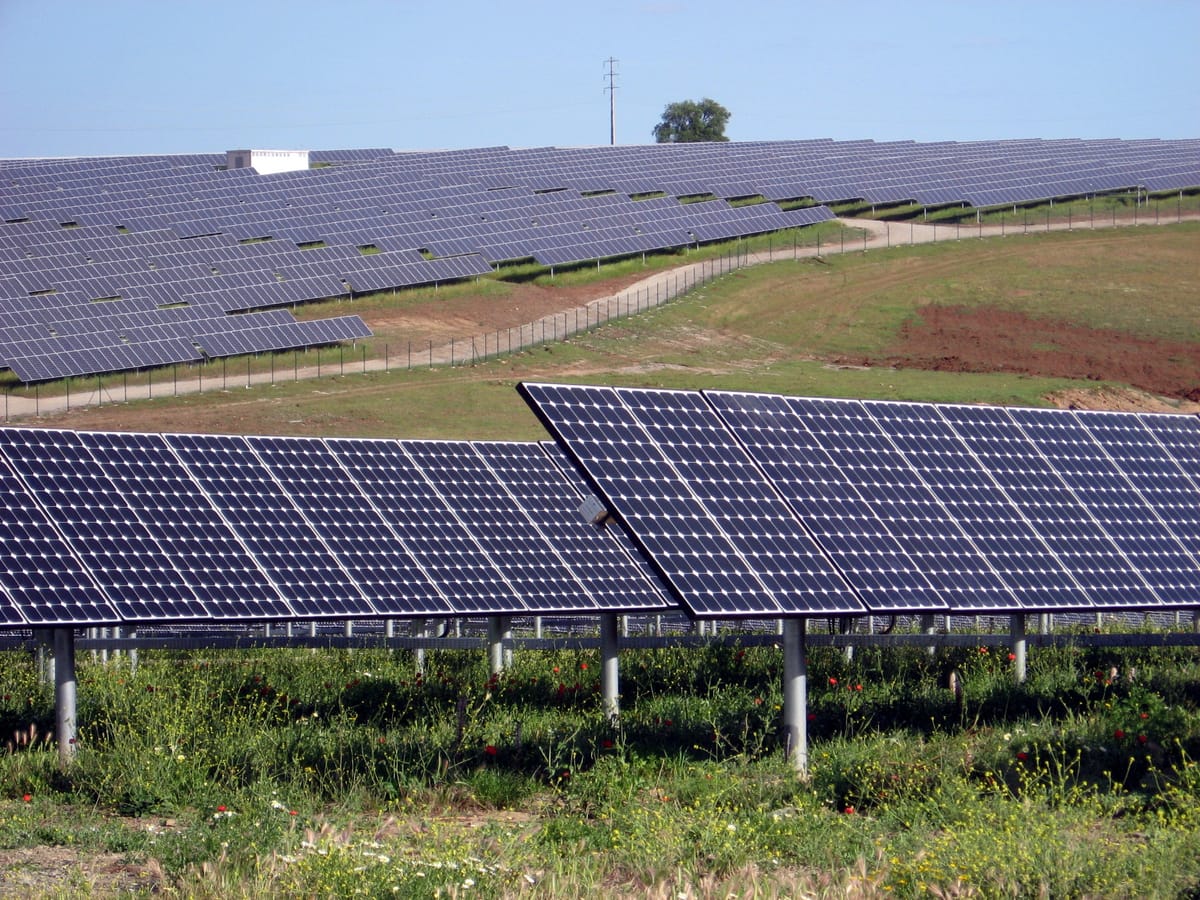
The site of Portugal's last coal-fired power station is being handed a new job. The government is advancing an auction for 300 megawatts (MW) of grid-connection capacity at the Pego node, in the municipality of Abrantes, and the capacity will be reserved exclusively for renewable electricity. It is a small but symbolically loaded step: the same wires that once carried power from burning imported coal will now be offered to solar, wind and storage developers competing to plug into an increasingly congested grid.
The DGEG (Directorate-General for Energy and Geology) first flagged the 300 MW tender in mid-2025, then pushed it into 2026 as the rules were finalised. The capacity comes from the spare room left at Pego's connection point, a legacy of the roughly 600 MW the coal plant fed into the high-voltage network before it shut in November 2021 — the moment Portugal became one of the first European countries to quit coal for power generation.
Why grid access is the prize
In Portugal's energy transition, the binding constraint is no longer the appetite to build solar and wind farms — it is finding a physical point on the grid to connect them. Injection capacity at established substations has become a scarce and valuable commodity, which is why the state is auctioning it rather than allocating it administratively. Pego is attractive precisely because the grid infrastructure is already there, sized for a large thermal plant that no longer runs.
Part of that spare capacity has already been claimed. In 2022, Endesa won the rights to develop the Pego site itself, using about 224 MW of the connection for a hybrid project combining solar panels, wind turbines and green hydrogen, an investment put at roughly €600 million. The new 300 MW auction covers the capacity that remains, opening the door to additional independent developers at the same node.
- What is on offer: 300 MW of grid-injection capacity at the Pego connection point, renewable sources only.
- The precedent: Endesa's ~224 MW hybrid solar-wind-hydrogen project, worth about €600 million.
- The wider push: a separate national auction of 750 MW of battery-storage capacity, budgeted at €100–200 million, is also moving through the pipeline for 2026.
Storage and the blackout lesson
The emphasis on batteries alongside new generation is not incidental. After the large-scale power failure that swept the Iberian Peninsula in 2025, resilience and storage climbed to the top of the policy agenda, and ministers have framed a wave of auctions and grid investment as insurance against a repeat. Pairing renewables with storage at nodes like Pego helps smooth the intermittency of solar and wind and eases the strain on a system that already runs on a very high share of clean power. Portugal now counts among the countries where renewables cover more than three-quarters of the grid and wholesale prices sit near €42, and each new connection deepens that lead.
Cross-border capacity is the other half of the story: more renewable generation is only useful if the power can move to where it is needed. That is why Lisbon and Madrid recently switched on a €128 million interconnection that lifts exchange capacity by 1,000 MW, and why the storage auctions matter for keeping the grid stable as the renewable share climbs.
A just-transition footnote
Pego's reinvention has a human dimension. When the plant closed, the government tapped the Fundo Ambiental (Environmental Fund) to guarantee wages for former workers during the transition, part of an effort to soften the blow to the Abrantes region. Turning the site into a renewable-energy hub is meant to anchor new investment and jobs where the old ones disappeared.
What This Means for Expats
- Electricity bills: More renewable capacity plugged into cheap grid points reinforces the structural reasons Portuguese wholesale power is among Europe's lowest — a tailwind for household and business costs over time.
- Investment openings: If you run a business or invest in energy, grid-capacity auctions are now the main gateway to building solar or storage in Portugal. Watch DGEG tender notices for terms and deadlines.
- Grid reliability: The storage build-out is a direct response to the 2025 Iberian blackout. Expect fewer stability scares as batteries come online at nodes like Pego.
- Regional property and jobs: The Abrantes area is being positioned as a renewables cluster, which could lift local employment and demand well beyond Lisbon and the coast.
The Pego auction will not, on its own, transform Portugal's energy map. But it captures the direction of travel: a country retiring fossil fuels faster than most of its neighbours, and scrambling to build the grid access and storage that a renewable-heavy system demands. On Portugal's interconnection file, our report on the Portugal to Morocco power cable, which the environment minister now says will only be built with private or European money, and which she justifies by the need to restart the grid alone after a blackout sets the latest reference.