Why Portugal Has Some of Europe's Cheapest Electricity: Renewables Cover 78.5% of the Grid as Wholesale Prices Hover Near €42
Portuguese wholesale electricity averaged about €41.9/MWh in early 2026 — while most of Europe sat above €90. Renewables supplied 78.5% of the grid, third-highest in Europe behind Norway and Denmark, with solar output up 25%. Cheap power, though household bills lag the spot market.
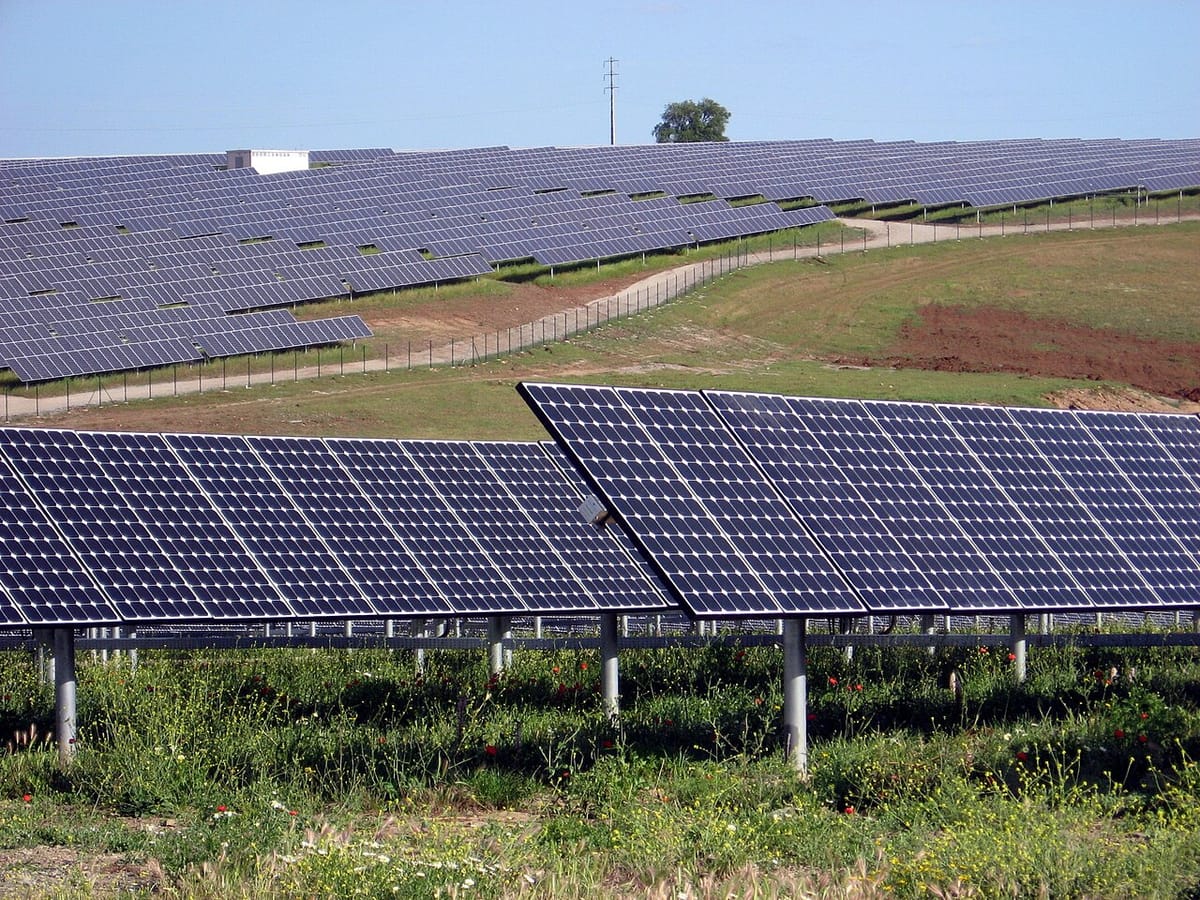
As much of Europe frets over volatile energy bills, Portugal has quietly become one of the cheapest places on the continent to buy electricity — and the reason is written into the country's landscape of dams, wind ridges and solar fields. In the first quarter of 2026, wholesale power on the Iberian market averaged around €41.9 per megawatt-hour in Portugal, while most European markets were trading north of €90. Behind that gap sits a grid that increasingly runs on weather rather than fuel.
A grid that runs on wind, water and sun
Renewable sources supplied roughly 78.5% of the electricity generated in mainland Portugal over the first three months of the year, placing the country third in Europe for the share of clean power in its mix, behind only Norway and Denmark. Hydropower and wind have long done the heavy lifting, but the fastest-moving piece is solar: photovoltaic output has been climbing at around 25% a year as new farms come online across the Alentejo and the south. When the wind blows and the sun shines together, Portugal can meet the bulk of national demand without burning a molecule of imported gas.
That matters because gas is what sets the price at the margin across most of Europe. Countries that lean on gas-fired plants to balance their grids inherit the price swings of a globally traded commodity. Portugal, by contrast, can increasingly displace those expensive marginal hours with near-zero-fuel-cost renewables, dragging the wholesale average down and decoupling — at least partially — from the shocks that ripple through the rest of the continent.
Cheap power, but not automatically cheap bills
The caveat is that wholesale prices and household bills are not the same thing. Retail tariffs bundle in network charges, taxes and supplier margins, and they move far more slowly than the spot market. So while a €42 wholesale average is genuinely striking, families are unlikely to see their monthly invoice halve overnight. The bigger prize is structural: sustained low wholesale prices strengthen the case for locating energy-hungry industry — and, increasingly, data centres — in Portugal rather than in higher-cost neighbours.
The risks beneath the record
A weather-driven grid also carries weather-driven risks. Dry years sap hydro reservoirs, and long windless spells force the system back onto gas and imports, which is why Portugal still occasionally buys power from Spain and beyond. Building out storage — batteries and pumped hydro — and reinforcing interconnections with the rest of Europe are the unglamorous investments that determine whether today's cheap, clean quarter becomes a permanent feature or a fair-weather headline. For now, though, Portugal is offering a rare piece of good news in European energy: a modern economy quietly proving that a grid built on renewables can also be a cheap one.