For the First Time, Solar Was Portugal's Largest Source of Electricity in July
Solar covered 19% of national output last month, edging past hydro and wind to top the mix for the first time, according to grid operator REN.
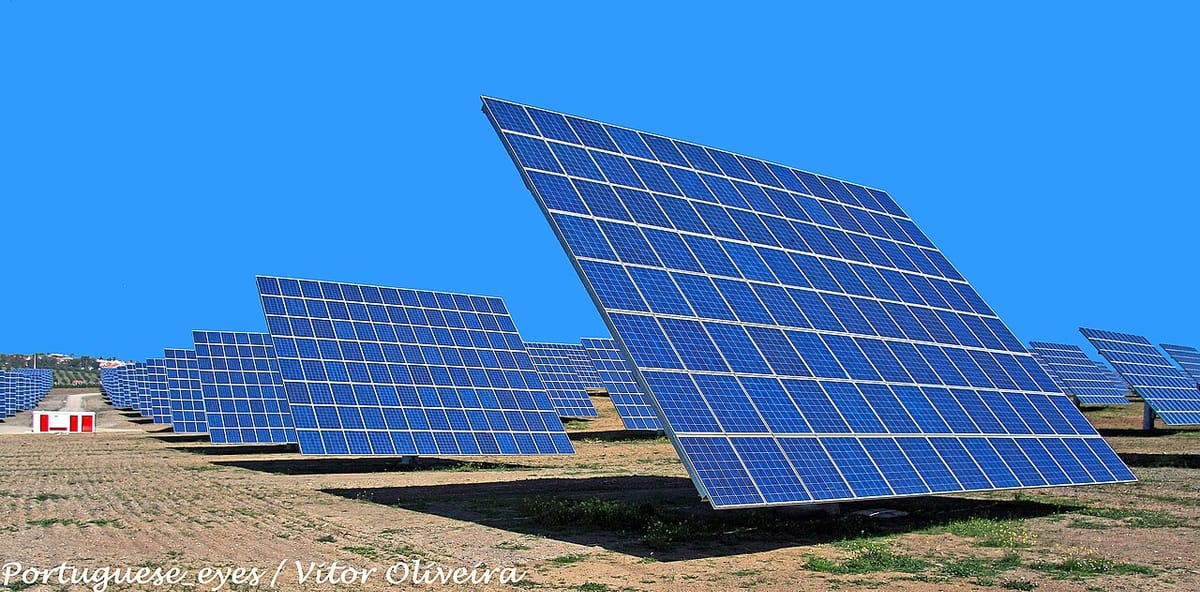
Portugal crossed a symbolic threshold in July: for the first time in the country's history, photovoltaic panels generated a larger share of the nation's electricity than any other single source. Data published on Sunday by REN (Redes Energéticas Nacionais, the national grid operator) shows solar accounting for 19% of electricity generated during the month, nudging ahead of the two technologies that have traditionally led the field.
Hydroelectric power supplied 16% of July's output and wind 13%, with biomass adding a further 5%. Taken together, renewable sources covered 53% of the electricity consumed nationally over the month. Non-renewable generation contributed 13%, while imported electricity made up the remaining 34% — a reminder that Portugal still leans on its neighbours during periods of high summer demand.
The milestone reflects years of rapid expansion in solar capacity. Sun-drenched July, with its long days and clear skies, is the technology's natural peak season, and installed capacity has climbed steeply across the Alentejo and Algarve. Solar production hit an all-time instantaneous high of roughly 3,800 megawatts on 29 June, and the sector has been setting fresh records with growing regularity.
Demand up, gas down
Electricity consumption rose 3% year on year in July, or 1.8% once adjusted for temperature and the number of working days — unsurprising in a month marked by heatwaves and heavy air-conditioning use. At the same time, natural gas consumption fell 7.3% compared with the same month last year, as cheaper renewable output continued to displace fossil-fired generation.
The single-month record does not yet translate into an annual crown. Across the first seven months of 2026, hydroelectric power remains the leading source at 27% of consumption, followed by wind at 24% and solar at 12%. Natural gas accounted for 14% over the period and imports 18%, while renewables collectively supplied 68% of the electricity Portugal used between January and July.
Why it matters
For residents, the shift underpins the government's long-standing pledge to reach a fully renewable-powered grid and helps explain the periods of very low — occasionally negative — wholesale prices seen during sunny, windy stretches this summer. It also strengthens Portugal's hand in European debates over energy independence, at a moment when the country is courting data centres and an AI "gigafactory" that would draw heavily on cheap, clean power.
The challenge now is storage. Solar's output collapses after sunset, and Portugal still imports a third of its power, so the record underlines both how far the transition has come and how much battery and pumped-hydro capacity will be needed to keep the lights on once the sun goes down. REN's next monthly bulletin will show whether August, another high-sun month, can repeat July's feat. On Portugal's interconnection file, our report on the Portugal to Morocco power cable, which the environment minister now says will only be built with private or European money, and which she justifies by the need to restart the grid alone after a blackout sets the latest reference. On where the national emissions line actually went, our reading of the 2026 EDGAR release, which puts Portugal's emissions up 1.6 percent in 2025 against a falling European total, with gas-fired power and industrial burning carrying 72 percent of the rise sets the latest reference.