Portugal Is Preparing to Pay Hunters for Every Wild Boar They Shoot, and Eleven Médio Tejo Councils Have Already Asked to Go First
The agriculture minister says a pilot scheme will compensate hunters per animal culled where the population is excessive. The sum, the rules and the territories are unpublished. The ICNF puts the mainland population near 300,000 and its own plan says the current cull is too small.
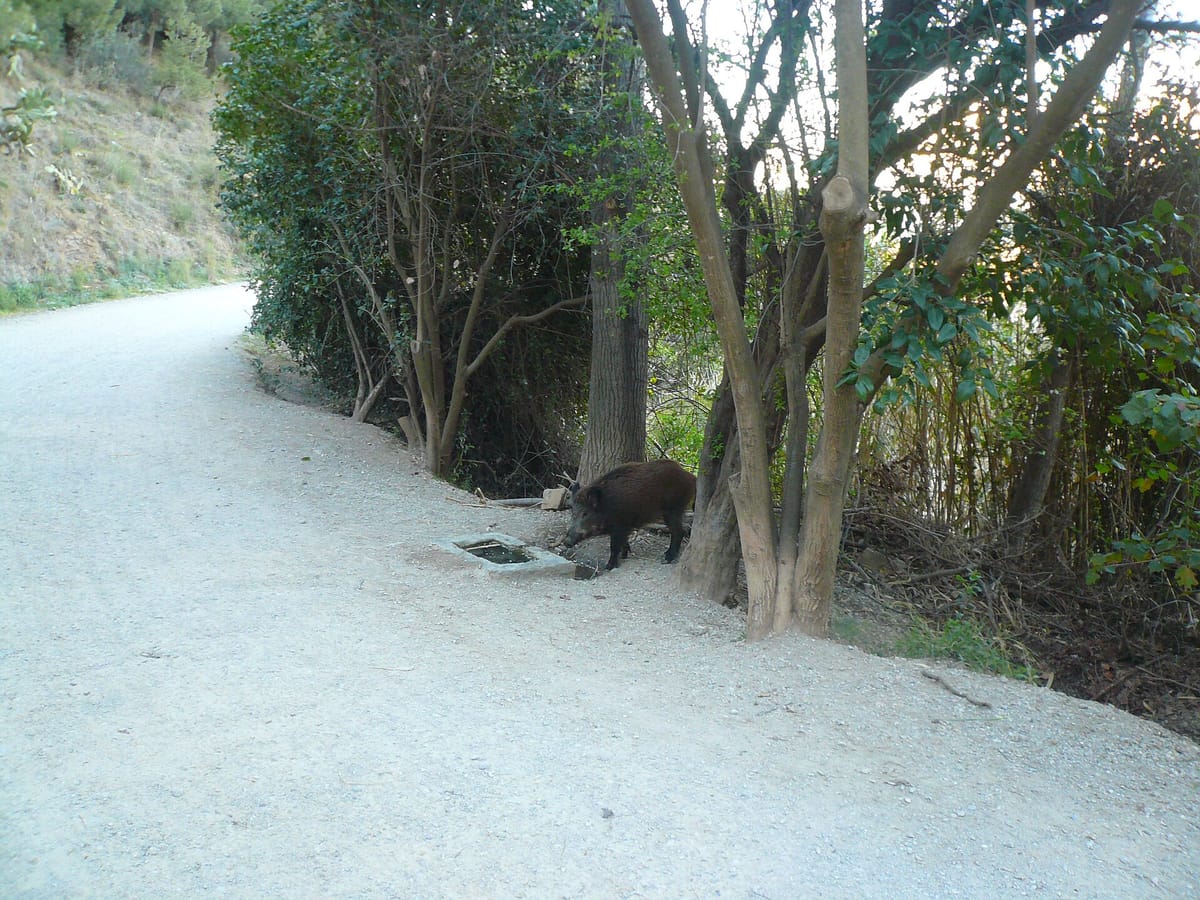
The Portuguese state is preparing to put a price on a dead wild boar. The minister of agriculture and sea, José Manuel Fernandes, has said the government is drawing up a pilot scheme that would pay hunters a set sum for every javali (wild boar) shot in areas where the population has been identified as excessive. The amount, the rules and the territories covered have not been published.
That last sentence is the whole of what is officially settled, and it has not stopped councils queueing up. On Thursday the Comunidade Intermunicipal do Médio Tejo (Médio Tejo Intermunicipal Community) agreed to send the government a formal submission asking that all eleven of its municipalities be included in the pilot. Two of them, Sardoal and Mação, spent Friday in separate meetings with the Instituto da Conservação da Natureza e das Florestas (ICNF, the Institute for Nature Conservation and Forests) and with local hunting associations, trying to work out what they can do in the meantime.
Three hundred thousand animals, and a plan that says the cull is too small
Nobody counts wild boar directly. The reference figure comes from the Plano Estratégico e de Ação do Javali em Portugal (Strategic and Action Plan for the Wild Boar in Portugal), commissioned by the ICNF and drawn up at the University of Aveiro, which reported in December 2022. It put the mainland population at 277,385 animals, with a range running from 163,157 to 391,612 depending on how the local estimates are averaged.
Carlos Albuquerque, the ICNF's regional director for nature conservation and forests in Lisboa e Vale do Tejo, told the Lusa news agency in August that the study needs updating after four years and that he takes the current mainland population to be around 300,000.
The more useful sentence in that plan is not the headcount. It is the verdict on the cull: the extraction rate is low and, in its present form, does not look sufficient to control the wild boar population or the damage it causes. The plan's recommendation was to increase the hunting effort. Four years later, a payment per animal is the government's answer to how.
What the damage looks like from a council office
Pedro Rosa, the mayor of Sardoal, put the problem in the plainest terms available to him. "There are more and more animals," he told Lusa, and for two or three years the increase has been exponential. He named Alcaravela, Valhascos and Santiago de Montalegre as the worst affected parts of his municipality, all of them places where subsistence smallholdings sit close to the tree line.
The list of damage is familiar to anyone who has farmed in the Portuguese interior: vines, vegetable plots and other crops turned over, and animals coming closer and closer to houses and to the bins outside them. Rosa put that down to three things running together: more boar, less food in the forest, and the abandonment of farmland further from the villages.
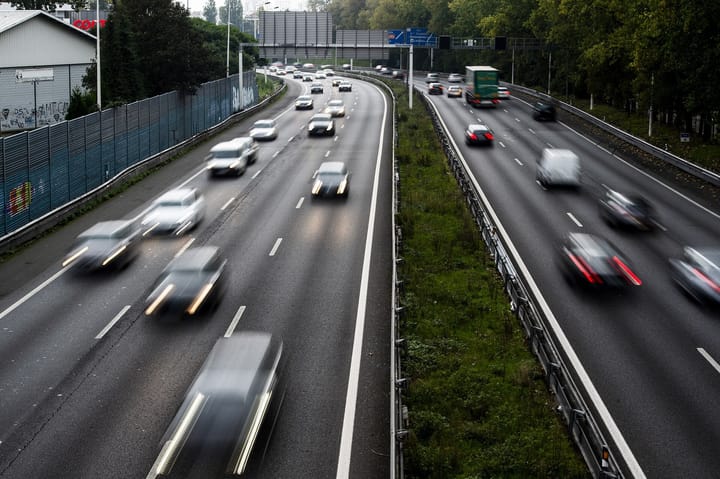
Road safety is the part that reaches people who have never planted anything. Rosa reported several collisions with boar in the municipality, including a recent one that left a car practically destroyed. He was careful to say the animal is not normally dangerous to people, though it can behave unpredictably when injured or accompanied by young.
He also raised something that cuts against the whole logic of controlling a population through sport. The carcass has lost its value. One hunter told him he had shot fifteen or sixteen animals this year, and the economic return on that work has fallen far enough that interest in doing it is falling with it. A payment per animal is, in effect, an attempt to replace a market that has gone.
Two meetings, three weeks apart
Sardoal has called its Conselho Cinegético Municipal (Municipal Hunting Council) for 29 September, with the ICNF and the municipality's hunting associations at the table. What Rosa says he wants out of it is a way for the council to support those associations in carrying out density-control work, which is a polite way of saying he expects the municipality to pay for some of it.
Mação got there first. Its meeting took place on Friday, bringing the council together with the ICNF and eight of the nine hunting associations active in the territory. The mayor, José Fernando Martins, was blunt about the outcome. "Today, at this meeting, we did not reach effective conclusions or effective working measures. We concluded that we have to work, and we have to work a great deal, to be able to carry out this correction of wild boar densities." A second meeting is set for 25 September, at which an action plan for extraordinary density correction is supposed to be drawn up.
Rosa's view of the national pilot was supportive and guarded in the same breath: it "could be a solution", he said, as long as it does not turn out to be a palliative given the size of the problem.
The places where hunting is not an option at all
The Médio Tejo is farmland and forest, and the pilot as described is built around hunting. It is worth setting that against the other kind of problem area, because the two need different instruments.
In August the ICNF told Lusa that at least 141 wild boar were culled in the Parque Natural de Sintra-Cascais during the 2025/26 hunting year. For the municipality of Sintra as a whole, including the rural areas and the Serra da Carregueira, the institute logged 22 requests for red seals, the authorisation used for density correction, and issued 131 of them; and five requests for yellow seals, used for ordinary hunting, of which 70 were issued. A single request can generate several authorisations.
Albuquerque's explanation of why Sintra-Cascais works differently is the useful part. "In the case of Sintra-Cascais, where we do not even have hunting and where neither the population density nor the built-up areas allow us to have conventional hunting activity, we have to resort to density correction, and if owners want to go for cage-type solutions, we have nothing against it." Landowners in the Serra de Sintra have been asking for exactly that, on the grounds that shooting near houses on a hillside full of walkers is not a serious proposal.
The same logic applies to the boar that have been walking Arrábida's beaches and Setúbal's streets, which residents there have said is beyond the point where a licensed shoot answers it.
What is still missing
Five things are unknown about the pilot, and all five decide whether it works: the sum paid per animal, the conditions for claiming it, the start date, the list of territories in the first phase, and who verifies that the animal on the claim form is the animal that was shot. The selection of areas is to be made on technical criteria and on the existing studies of where the species is concentrated, which points back at the same 2022 plan that said the current cull is too small.
There is a precedent worth watching. Portugal already runs a compensation scheme for livestock killed by wolves, and shepherds in Miranda do Douro spent a day last week saying it pays two years late, or not at all. A per-animal payment is only as good as the administration behind it.
Anyone thinking of taking part should start with the rules that already exist rather than the ones that do not: who may shoot, where, on which days, and how close to a house. Those are set out in our guide to the Portuguese hunting season, and none of them change because a subsidy is coming.