Portugal Will Pay 50 Euros for Every Extra Male Wild Boar Shot and 70 for a Female, in a 500,000 Euro Pilot Across 65 Municipalities
Hunting zones in 65 municipalities can now sign up to an ICNF pilot that pays for every wild boar killed above their own three-season average, up to 2,000 euros a zone. The rules demand seals, three photos and a hair sample for each animal.
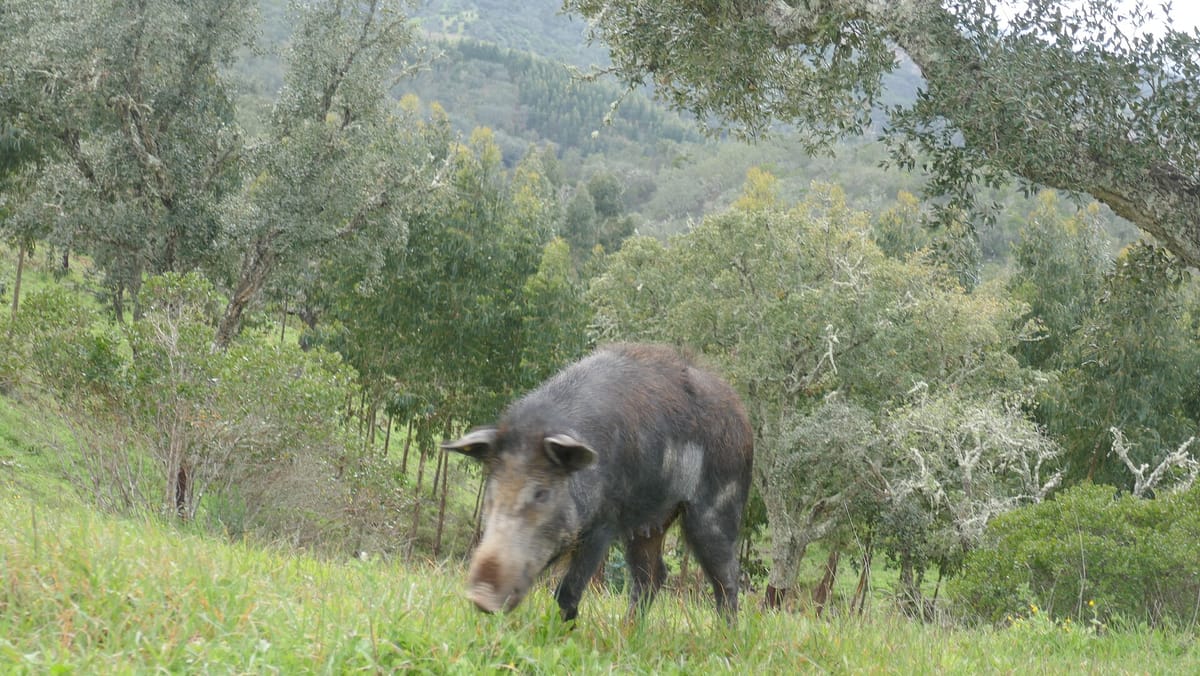
The Portuguese state has put a price on a wild boar. On Wednesday the Instituto da Conservação da Natureza e das Florestas (ICNF, the Institute for Nature Conservation and Forests) opened pre-registration for a pilot that pays 50 euros for every additional male javali (wild boar) killed in a hunting zone, and 70 euros for every additional female, in 65 mainland municipalities. The scheme has a budget of 500,000 euros and runs until 31 May 2027.
When the agriculture minister first floated the idea in September, as we reported on 12 September, the amount, the rules and the territory had not been published. All three now have been, in the ICNF's Aviso de Abertura n.º 1/2026 (opening notice no. 1/2026), signed on 14 October by its vice-president, Paulo Salsa. The rules turn out to be narrower than "a bounty for hunters": the money goes to the bodies that run hunting zones, and only for animals killed above each zone's own historical average.
Who gets paid, and for which animals
The beneficiaries are the holders of associative and tourist hunting zones and the managers of municipal and national hunting zones, provided the zone is active and stays active for the whole pilot. Individual hunters are not paid directly. Each zone must have its tax and Social Security affairs in order, an account on RUBUS (the ICNF's online hunting records system), and its hunting results for past seasons filed with the ICNF.
The payment applies only above a "reference threshold": the average number of boar the zone took in the 2022/2023, 2023/2024 and 2024/2025 seasons, rounded to the nearest whole animal. The threshold is never lower than 10, and 10 is also the figure for zones with no records. Animals up to the threshold earn nothing. The notice gives its own examples: a zone that averaged 30 boar a season and takes 45 during the pilot is paid for 15; a zone with no history that takes 18 is paid for eight.
On top of the 50 or 70 euros, a zone gets an extra 10 euros for each eligible animal sent to an approved game-handling establishment, where the meat is inspected and can be sold. Each zone can receive at most 2,000 euros, and an animal that would take it over the cap earns nothing at all; there are no part payments. If valid claims add up to more than the 500,000 euros, every payment is cut proportionally, and the ICNF can end the pilot early once the money runs out.
Any lawful method counts, including the montaria (a driven hunt with beaters and dogs), waiting at a stand, stalking, and density-correction operations authorised by the ICNF.
Photographs, seals and a tuft of hair
Most of the notice is about proof. Every animal put forward must carry a seal from a special series bought for the pilot, under the existing sealing rules of Portaria n.º 185/2018 (Ordinance 185/2018). Within 15 days of the kill it must be registered individually on RUBUS with the seal number, date, place, sex, hunting method and where the carcass went.
Each animal also needs three original photographs carrying their date and location data: one that shows its sex, one that shows the seal with its number legible, and one of the whole carcass. Hunters must pull a tuft of hair, about five centimetres square, from the back of each animal, put it in its own envelope marked with the seal number, and hand it in at an ICNF office within 15 days together with the seal stub. Edited, repeated or blurred photos rule the animal out, and the notice asks zones to keep people, number plates and addresses out of the frame.
A montaria whose animals will be claimed has to be notified to the ICNF at least eight days ahead, with the date, place and person in charge, so that the ICNF and the Direção-Geral de Alimentação e Veterinária (DGAV, the national veterinary authority) can attend or take samples. The hunt does not need their permission to go ahead.
Why the state is paying
The ICNF says the aim is to bring boar numbers back to levels compatible with farming, forestry, biodiversity and the safety of people and property. The 65 municipalities, spread over 15 districts, were picked on seven criteria: damage to crops and woodland, hunting pressure, favourable habitat, sightings in towns and parks, road collisions, the health risk near pig farms and the border, and the species' spread as mapped in a University of Aveiro study.
The health risk the notice names is African swine fever, a viral disease that kills domestic pigs and wild boar. The notice requires hunters to clean and disinfect equipment, boots and vehicles used to carry carcasses, to stay away from pig farms after a hunt, and to report any boar found dead, or behaving strangely before it was shot, to the DGAV straight away. Offal must not be left near livestock, water points or roads, or used as bait.
For anyone eating the meat at home, the rule in the notice is plain: wild boar kept for private consumption must be tested for Trichinella, a parasite that can pass to people in undercooked meat, before it is eaten.
Where it applies
The notice's Annex I is a map marking the 65 municipalities by number, without naming them on the page. On the map they run from the north-eastern corner of Trás-os-Montes down through the hills of the centre and the Tagus valley to the south-west coast and the western Algarve, with smaller groups north-west of Lisbon and on the Setúbal peninsula. According to the Lusa news agency, which cites the ICNF, more than 1,300 hunting zones are covered, and the Santarém district list includes Abrantes, Chamusca, Coruche, Golegã, Mação, Salvaterra de Magos, Santarém and Sardoal. Of the 11 Médio Tejo municipalities that asked in September to take part, Lusa reports that only Abrantes, Mação and Sardoal made the cut.
Hunting zones join through the ICNF platform at javalicontrol.icnf.pt, and questions go to [email protected]. The full notice is in Portuguese only. Once the pilot ends, Lusa reports, the model will be assessed as a way to manage the population.
What this means if you live near the woods
The pilot changes nothing about where or when hunting is allowed; it gives zones in the chosen municipalities a reason to hunt more boar this season. If you live or walk in the countryside, expect more driven hunts on hunting days through the winter, and check the signs at the edge of hunting zones. Our guide to the hunting season explains the days hunting is allowed and the distance hunters must keep from homes.
Under the notice, hunting zones must report any boar found dead to the DGAV. Residents of the Setúbal peninsula will know the problem from this summer's boar on the Arrábida beaches.