Each Electricity Customer Lost About 10 Hours to the 2025 Blackout, Yet Payouts for Other Power Cuts Still Doubled to 2.1 Million Euros
ERSE's report on 2025 shows the Iberian blackout cost the average customer 10 hours without power but paid nothing, because exceptional events do not count. Automatic compensation for other long cuts still doubled. What you are entitled to.
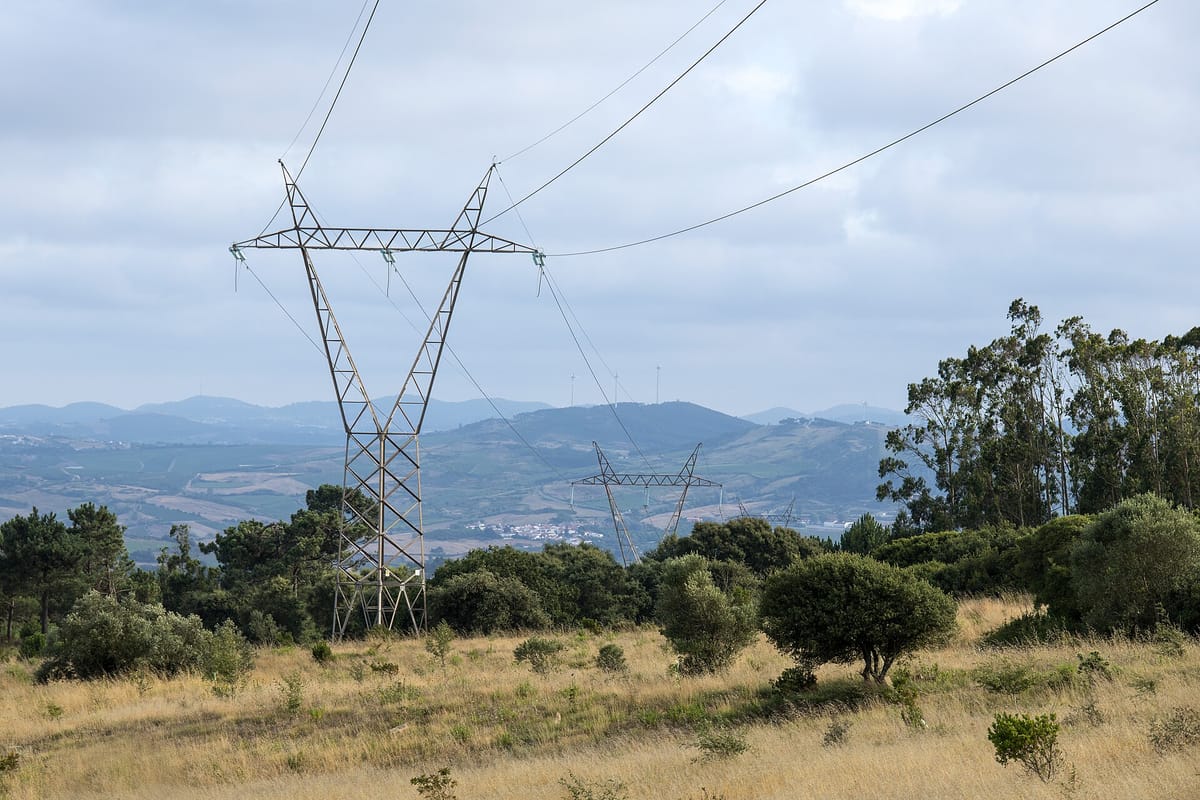
The Iberian blackout of 28 April 2025 left every electricity customer in mainland Portugal in the dark for about 10 hours on average, the Entidade Reguladora dos Serviços Energéticos (ERSE, the Energy Services Regulatory Authority) says in its annual report on the quality of electricity supply, published on 14 October. Yet the blackout earned households nothing in automatic compensation. The money that was paid, for ordinary power cuts that ran past the legal limits, still doubled to about 2.1 million euros.
The report, the Relatório da Qualidade de Serviço Técnica do Setor Elétrico 2025 (Technical Quality of Service Report for the Electricity Sector), was approved on 14 October and covers every grid operator in the country. A second pair of ERSE reports, on customer service by suppliers and network operators, came out the same day.
A year of seven exceptional events
Supply got worse in 2025 on every main measure. On the low-voltage network that serves homes and small businesses, the average customer of E-Redes, the main distribution operator on the mainland, was without power for 751.93 minutes over the year, about 12 and a half hours, against 95.55 minutes in 2024. The average number of long interruptions (those lasting more than three minutes) per customer roughly doubled, from 1.56 to 3.07.
Most of that came from what ERSE classes as eventos excecionais (exceptional events). It approved 279 occurrences as exceptional at E-Redes's request, about 68 percent of what the company asked for, and grouped them into seven major incidents:
- storm Hermínia, 26 to 28 January (398,878 customers affected);
- storm Ivo, 29 to 30 January;
- storm Martinho, 19 to 23 March (more than 1 million customers affected);
- the Iberian blackout of 28 April;
- the wildfires in the north and centre, 13 to 25 August (113,718 customers affected);
- thunderstorms across the mainland on 4 and 5 November;
- storm Cláudia, 12 to 16 November.
The blackout dwarfs the rest. It began at 11:33, cut off all 89 delivery points on the national transmission grid run by REN (Rede Eléctrica Nacional, the national grid company) and 6,395,794 customer installations on the distribution network, and lasted about 36.4 hours in all. On its own it added 601 minutes, or 10 hours, to the average low-voltage customer's annual total. ERSE notes that the event began on the Spanish grid while Portugal was importing power from Spain.
Why the blackout paid nothing
Portugal's Regulamento da Qualidade de Serviço (Quality of Service Code) sets "individual standards" for every customer: limits on how many long interruptions you can have in a year and how long they can last in total, which vary by quality-of-service zone, from zone A (the larger towns) to zone C (the rest of the country). When the network operator breaches one, ERSE's own summary says, the customer is compensated automatically, with no need to ask.
The catch is that interruptions caused by exceptional events are left out when those limits are checked. That is why ERSE's decision to class the blackout as exceptional, which we reported in May, mattered so much to households: the 10 hours do not count towards anyone's limit. The same goes for the five storms and the August fires.
Even so, E-Redes breached individual standards 111,182 times in 2025, about 53 percent more than the 72,461 breaches of 2024, and paid customers 2,094,717 euros, up from 992,686 euros. Almost all of it was for interruptions that lasted too long in total, rather than too many of them. Customers on standard low-voltage contracts (homes and small businesses) accounted for 110,098 of the duration breaches and 1,866,083 euros, an average of about 17 euros each. The compensation for 2025 was paid to customers in 2026. Where a customer's amount would be under 50 cents, it is not paid but deducted from the network access tariffs instead.
In the islands, the figures are far smaller. In Madeira, where storm Emília hit the network on 12 December 2025, the regional operator EEM breached individual standards 252 times and paid 8,228 euros, about four and a half times its 2024 bill. In the Azores, EDA breached them nine times and paid about 84 euros; the only general standard missed anywhere in the country was the number of interruptions in zone A on Faial.
Customer service: phone queues still too long
ERSE's customer service reports for electricity and gas found that 78 percent of calls to suppliers were answered within 60 seconds, still short of the 85 percent the rules require, though better than in 2024. Suppliers answered 93.6 percent of complaints within the deadline, in an average of six working days; network operators managed 88.8 percent, in an average of 11 working days, which ERSE calls a deterioration.
Customers received about 1.6 million euros from network operators for breaches of individual commercial obligations, around 400,000 euros less than in 2024. Two of those obligations are worth knowing:
- Missed appointments. When the network operator needs to visit your home, the visit is booked through your supplier with a window of no more than two and a half hours for the start. If the operator misses it, or you do, 20 euros is due from the side at fault. Either side can cancel or rebook until 17:00 on the previous working day.
- Priority customers. People whose survival or mobility depends on electrically powered equipment are classed as priority customers, and the network operator must keep a register of them so that it can restore their supply first after a fault and warn them individually of planned cuts. ERSE adds that anyone in this position should also have their own plan for an outage.
Most visits are no longer needed in any case: with smart meters, 98.5 percent of remote operations were carried out within ERSE's deadlines in 2025, and 96 percent of customers have a supplier with an in-person service desk.
What to do if your power keeps going off
You do not need to claim compensation for breached individual continuity standards; it is calculated and paid automatically. If you think your supply is unreliable, or you have a complaint about a missed visit, a bill or the service you received, complain first to your supplier or the network operator, which must answer every complaint. ERSE's announcement of the technical report links the full document (in Portuguese, with a short English summary at the front) and a plain-language summary in Portuguese, and its customer service reports are on a separate page.
The blackout's longer tail is the grid itself: the government's 4 billion euro plan to upgrade the network, announced in April, and the 25 million euro tender for backup storage at hospitals and water systems are both meant to make a repeat less damaging.