Covilhã's Master Plan Would Clear 1,400 Cork Oaks for an Industrial Park, and the Council's Own Environmental Report Contradicts Itself About Them
Quercus says the Tortosendo expansion would fell about 1,400 protected cork oaks, dozens of them centuries old, days before the consultation closes on 4 September. Page 368 of the council's report both records cork oak forest and denies finding any.
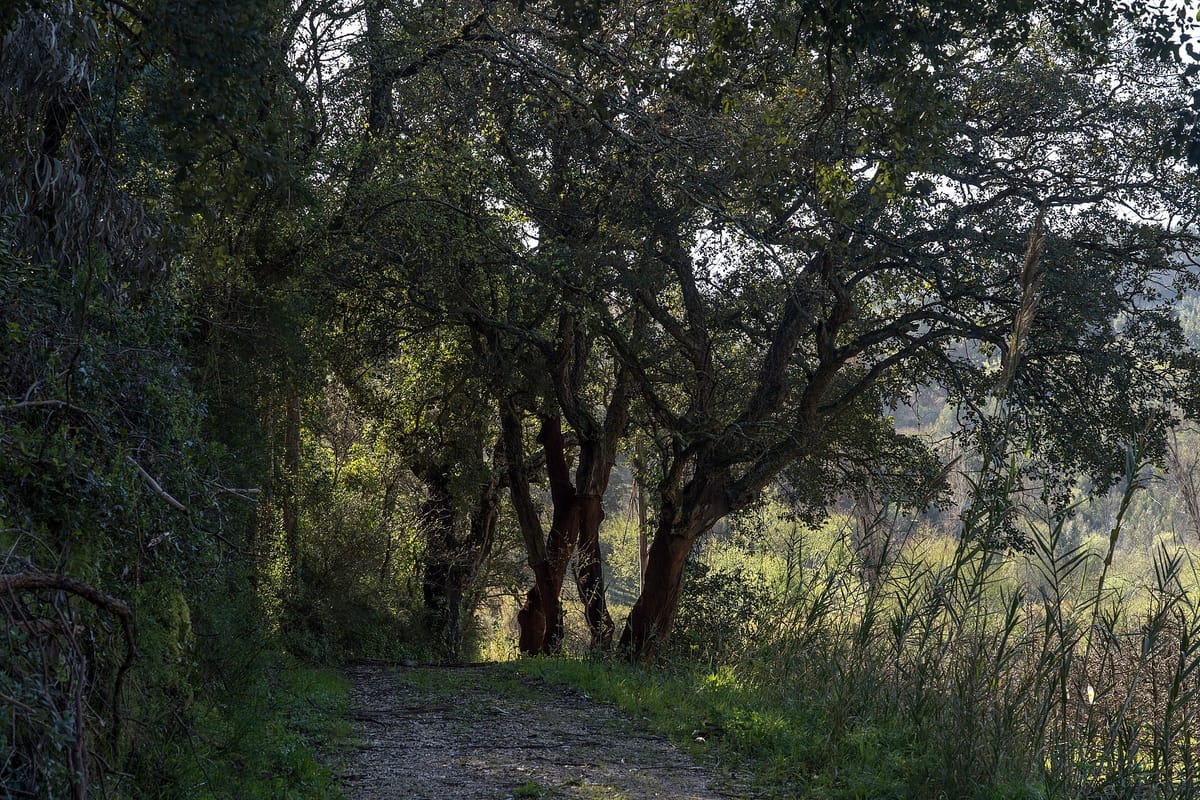
The environmental association Quercus, which objected last month to the Panasqueira mine licence renewal, said on Tuesday that Covilhã's revised master plan would clear about 1,400 cork oaks, dozens of them centuries old, to extend the Tortosendo industrial park. Public consultation closes on Friday, 4 September. The council's own 470-page environmental report is what makes the complaint hard to dismiss, because it contradicts itself about the trees.
On page 368, describing native woodland, the report states that land-cover mapping shows "cork oak forests, chestnut, other oaks and other broadleaves" in Covilhã. The very next sentence reads: "No stands of other protected species, such as cork oak, holm oak or holly, were identified." It then puts cork oak forest at 25.43 hectares, in the south of the council near the River Zêzere.
What the conservation institute asked for
Elsewhere in the same document, the sectoral instructions submitted by the Instituto da Conservação da Natureza e das Florestas (Institute for Nature Conservation and Forests, ICNF) include item seven: put cork oak, holm oak and holly stands on the Planta de Condicionantes, the constraints map, and apply the legal protection, compensation and replacement measures. Quercus says that has not happened, and calls the omission "bad faith".
The association says the expansion would also take in two watercourses and three ponds and require the expropriation of ten homes that are their owners' main residence, at a moment when half the plots in the existing industrial zone stand empty or abandoned. For scale, Porto's new metro line to Gondomar was assessed at up to 533 trees.
The mayor, Hélio Fazendeiro, told Lusa the process has been run "closely and transparently". An industrial land strategy was an election commitment, he said; the 80 hectares had been earmarked for expansion for more than 30 years and are only now being written into the plan; and the council would comply with every applicable rule. The consultation, legally 30 days, was extended to 45 working days, with a municipal assembly session on the topic and briefings in each of the 25 parishes.
Zoning is not permission
Here is the part that is easy to miss. A master plan can zone land for industry. It cannot authorise the felling. Decreto-Lei 169/2001, the cork oak and holm oak protection regime, requires authorisation for cutting or uprooting the species "in a stand or isolated", so the trees are protected individually whether or not they meet the density test for a povoamento, a stand. Our guide to felling trees on your own land sets out the route, the deadlines and the fines.
The law also narrows the grounds. Conversion of a stand is admitted only for undertakings of imperative public utility, agricultural undertakings of relevant and sustainable interest to the local economy, or changes to the coppice regime. An industrial park does not obviously fall into any of those boxes, and the determination sits with the forestry and regional agriculture authorities, not the council. The species is under pressure elsewhere too, since Xylella fastidiosa reached Alentejo cork oaks. Where an illegal clearance occurs, article 5 freezes the land against construction, subdivision and new activity for 25 years, and the freeze runs with the land rather than the person who cut the trees.
What This Means for Expats
- Municipal consultations are the moment to object. Once a revised master plan is gazetted the arguments narrow sharply, as councils found when the national siting map for solar and wind was cut back. Submissions go to the council during the discussion window.
- Buying rural land near a growth zone carries a hidden question. Ask what was standing on the plot, and when, because that freeze runs with the land.
- Zoned does not mean cleared. A plot marked for industry can still be undevelopable if protected trees stand on it and no authorisation is forthcoming.
- Read the environmental report, not the summary. Covilhã's says both that cork oak forest exists locally and that no cork oak stands were identified.
The consultation closes on Friday. Whatever the council resolves, the felling still needs a separate authorisation under a national statute written precisely to stop planning decisions from settling the question in advance. On the protected-areas side of that, the decree closing the Sado Estuary conservation area sets out the building ban on rustic land, the 30-working-day ICNF opinion with silence counting as consent, and the 41,250 euro daily EU penalty that explains its timing.