Porto's New Metro Line to Gondomar Would Fell Up to 533 Trees and Clear 24 Buildings, Its Environmental Study Shows
Metro do Porto's environmental study for the 6.9km Gondomar extension counts up to 533 trees felled — including 89 protected cork oaks — and 24 buildings demolished. Public consultation runs to 15 September.
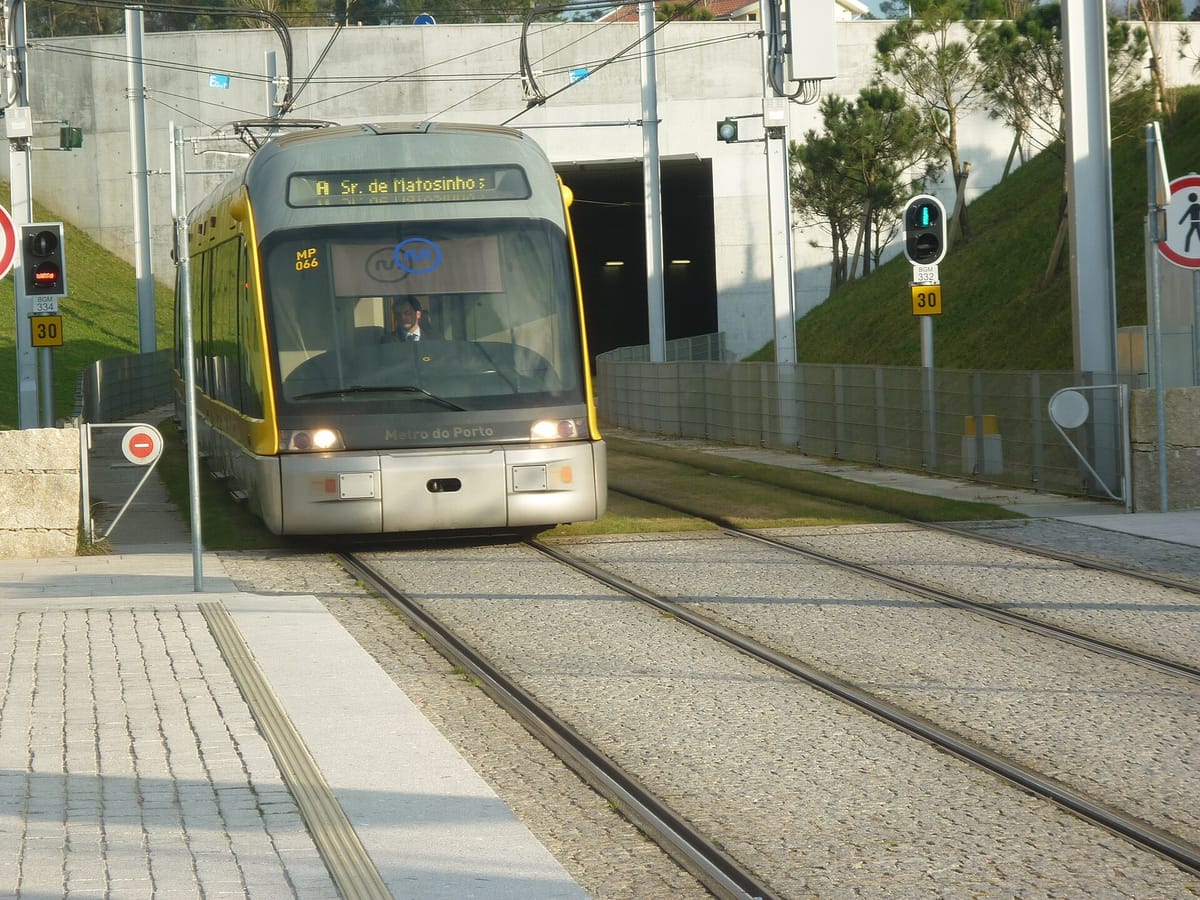
The environmental study for the planned Porto Metro extension to Gondomar puts a price on the project that has nothing to do with money: the felling of hundreds of trees and the demolition of two dozen buildings along a 6.9-kilometre corridor from the edge of Porto into the heart of the neighbouring municipality.
The Estudo de Impacte Ambiental (Environmental Impact Assessment), now in public consultation, was drawn up for Metro do Porto (the Porto Metro operator) as it prepares to build a new line linking the Estádio do Dragão to Souto, in Gondomar. Depending on which of two route alternatives is chosen, the study estimates that between 394 and 533 trees would have to be cut down, and it confirms that 24 buildings stand in the path of the works and would be demolished.
What the study counts
Nine of those demolitions are concentrated around the future Lagoa station, in Gondomar, where the line surfaces and needs room for platforms and access. Among the structures marked for removal is the Anfiteatro do Largo do Souto, an open-air amphitheatre of roughly 247 square metres.
The tree count is politically sensitive because it includes 89 sobreiros (cork oaks), a species protected under Portuguese law: felling one requires specific authorisation, and clearing 89 is not a decision a project can take lightly. The assessment tries to soften the blow by recommending that the number of trees replanted comfortably exceed the number removed, and it rates the overall impact on vegetation as "insignificant" under the first route alternative but "significant" under the second — a distinction that will weigh on which option is finally approved.
A 6.9-kilometre line with nine stations
The extension would run for 6.9 kilometres and add nine stations — São Roque, Cerco, Parque Oriental, Lagoa, Valbom, Hospital Fernando Pessoa, Cosme Ferreira Castro, Oliveira Martins and Souto — carrying the network from Porto's eastern flank across the municipal boundary and into Gondomar's centre, an area long promised rapid transit and repeatedly left waiting.
Metro do Porto has costed the works at about €225 million, drawn from the European Sustentável 2030 programme, with construction expected to take around three years once it begins. The line is one of several the operator is pushing as it simultaneously overhauls how the whole network is run — the government has already launched the contest to run the Porto Metro beyond 2027, and the operator has re-tendered its operating contract at €690 million as four new lines join the network.
The consultation window
The environmental study is open for public comment on the government's participa.pt portal until 15 September. Residents of Gondomar and eastern Porto — including those whose homes appear on the demolition list, and anyone who values the cork oaks and green corridors the line would cut through — have until then to file objections, suggestions or support. The comments feed into the Agência Portuguesa do Ambiente (Portuguese Environment Agency) decision that will ultimately clear, reshape or reject the route.
For a metropolitan area that has spent years debating how far and how fast to extend its light rail, the Gondomar line captures the trade-off in miniature: a faster, cleaner commute for tens of thousands of people, bought at the cost of 24 buildings and up to 533 trees. Which of those numbers the public weighs more heavily is exactly what the next six weeks are meant to test. On the Porto transport file, our report on Porto's mayor setting a 31 December limit for the second phase of the metrobus and naming the contractor as the reason the works on Avenida da Boavista are running late sets the latest reference.