Quercus Opposes Renewing the Panasqueira Mine Licence, Citing More Than a Century of Waste Above Lisbon's Water Supply
The public consultation on a revised environmental licence for Portugal's only working tungsten mine closed on Monday. Quercus filed against it, arguing the file cannot support a decision and that the catchment runs down to the reservoir EPAL treats for 2.6 million people.
The public consultation on a new environmental licence for the Minas da Panasqueira (Panasqueira Mines) closed on Monday, and it closed with an objection. Quercus, Portugal's oldest environmental association, told the Lusa news agency it opposes the renewal outright, citing "uncertainties as to risks and environmental liabilities" that the paperwork on the table does not resolve.
The file is a procedure to revise the Licença Ambiental (Environmental Licence) issued under the integrated pollution prevention and control regime. The Agência Portuguesa do Ambiente (Portuguese Environment Agency, or APA) opened it on the Participa consultation portal on 28 July. The mine straddles Covilhã and Fundão, in the Castelo Branco district, and is operated by Beralt Tin and Wolfram (Portugal), the Portuguese arm of the Canadian group Almonty Industries.
The objection is about what is not in the file
Quercus subscribes to the unfavourable opinion filed by MiningWatch Portugal, a project of the Associação Observatório dos Recursos Naturais (Natural Resources Observatory Association), which calls the documents released "insufficient, outdated and fragmented" for the Entidade Reguladora dos Serviços de Águas e Resíduos (Water and Waste Services Regulatory Authority, or ERSAR) to assess the risks rigorously.
Before the procedure advances, the association wants the environmental liability built up over more than a century of mining resolved, the risk to water quality and to nearby residents assessed, and a closure and recovery plan that is "concrete, scheduled, financially guaranteed and auditable". It also asks APA, ERSAR and the environment inspectorate IGAMAOT to step up monitoring.
Beralt told Lusa this is "a mere administrative, bureaucratic procedure, only because the licence in force was expiring", and that nothing else about how the mine runs has changed.
Why a mine in the Beira Baixa is a Lisbon story
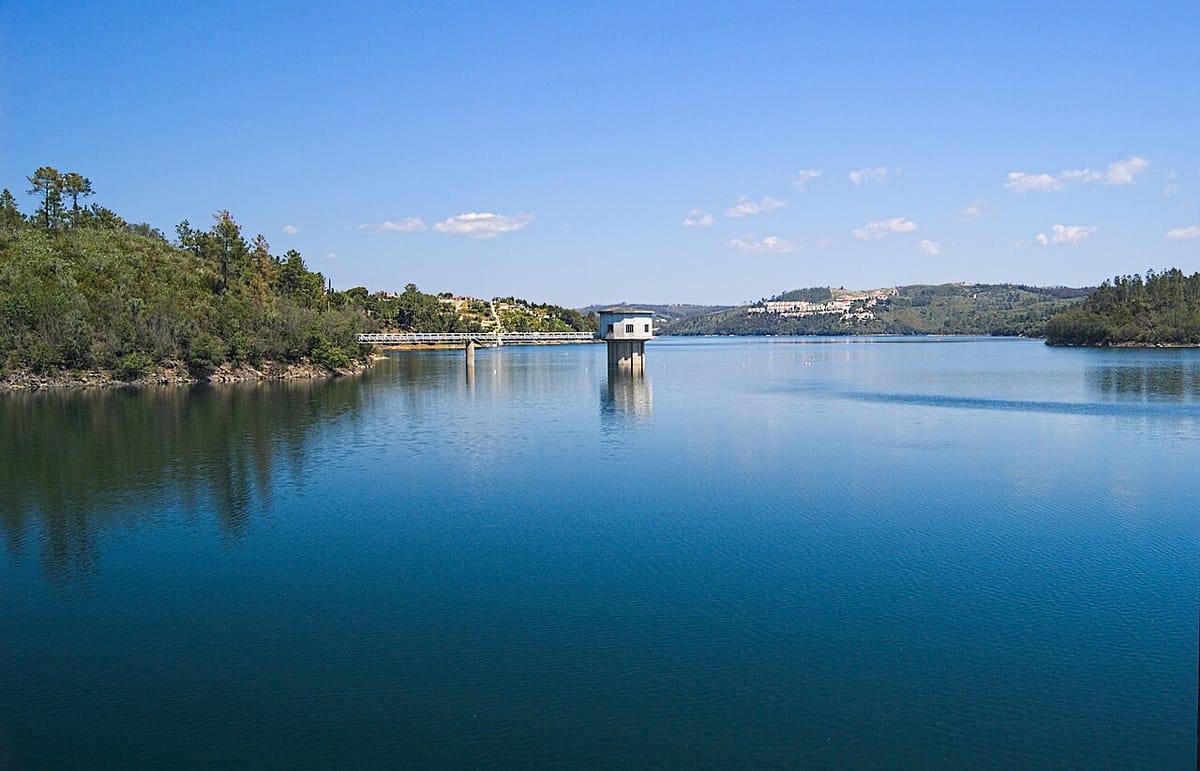
The sharpest line in the Quercus statement is geographical. "This question goes beyond the local Panasqueira basin," it says, "given that the Ribeira do Bodelhão is the same watercourse that feeds the Castelo de Bode reservoir, the main origin of the water captured and treated by EPAL for human consumption in Lisbon and in about 20 municipalities of the Metropolitan Area and the Oeste."
That description is not contested. EPAL, the Lisbon water utility, treats the Castelo de Bode intake on the Zêzere as its principal source, feeding the Asseiceira plant and its roughly 625,000 cubic metres a day. EPAL puts the system's reach at Lisbon plus 19 water entities covering 25 municipalities, around 2.6 million consumers.
There is a recent precedent, too. At the end of January, a slide of mine waste reached the ribeira de Cebola, another Zêzere tributary, and a local intake was suspended. Covilhã council, Águas da Covilhã and the company all said supply and quality were not compromised. In March, Quercus asked APA and ERSAR for periodic testing downstream, citing lead and arsenic found on the banks of the Zêzere.
The awkward part: the metal is one Europe wants
Panasqueira is no marginal operation. It has held a mining licence since 1896 and run almost without interruption since 1901, producing tungsten, which sits on the European Union's critical raw materials list and which the bloc is trying to source inside its own borders. That is the same policy current carrying the Barroso lithium project toward a 2027 start and reviving interest in the Borralha tungsten deposit.
The consultation has surfaced the trade-off underneath that strategy. A licence review is the one moment a regulator can attach conditions to a legacy site, and the argument now in APA's inbox is that a century of tailings in the catchment of the country's most important drinking-water reservoir deserves more than a renewal on the old terms. APA has given no timetable, and its handling of Alentejo drinking-water protection zones this month suggests it draws such conditions narrowly.