Wine Stocks in Portuguese Cellars Shrink 5 Percent to 11.6 Million Hectolitres for a Second Year, as the IVV Forecasts a 12 Percent Bigger Harvest
Portugal's cellars held 11.6 million hectolitres of wine and must on 31 July, 5 percent less than in 2025, IVV stock declarations show. Reds fell 8 percent, whites rose, and the Douro and Port still hold over a third. A 12 percent bigger 2026 harvest is forecast.
Portugal's wine cellars held 11.6 million hectolitres of wine and grape must on 31 July 2026, about 610,000 hectolitres or 5 percent less than a year earlier, according to the stock declarations published this week by the Instituto da Vinha e do Vinho (IVV, the state wine and vine institute). It is the second 5 percent fall in a row. Stocks of wine-based spirits and by-product distillates fell faster, by 14 percent to 333,000 hectolitres.
Despite some reports today, this is not the result of this year's grape harvest (the vindima). The IVV's market note counts what every producer, cooperative and merchant had in its cellars at the close of the wine year on 31 July, before the 2026 grapes were picked. Producers filed 4,939 stock declarations, 7 percent more than in 2025.
Reds fall, whites rise, and the Douro still dominates
Red wine and must make up about 68 percent of the total, at 7.83 million hectolitres, but fell 8 percent. White was the only colour to grow, up 2 percent to 3.03 million hectolitres; rosé slipped 4 percent to 690,000. Certified wine, sold under a protected designation of origin (DOP) or protected geographical indication (IGP), accounts for 83 percent of stocks at 9.53 million hectolitres, down 7 percent. Uncertified wine went the other way, rising 6 percent to 1.93 million hectolitres, driven by a 15 percent jump in uncertified whites.
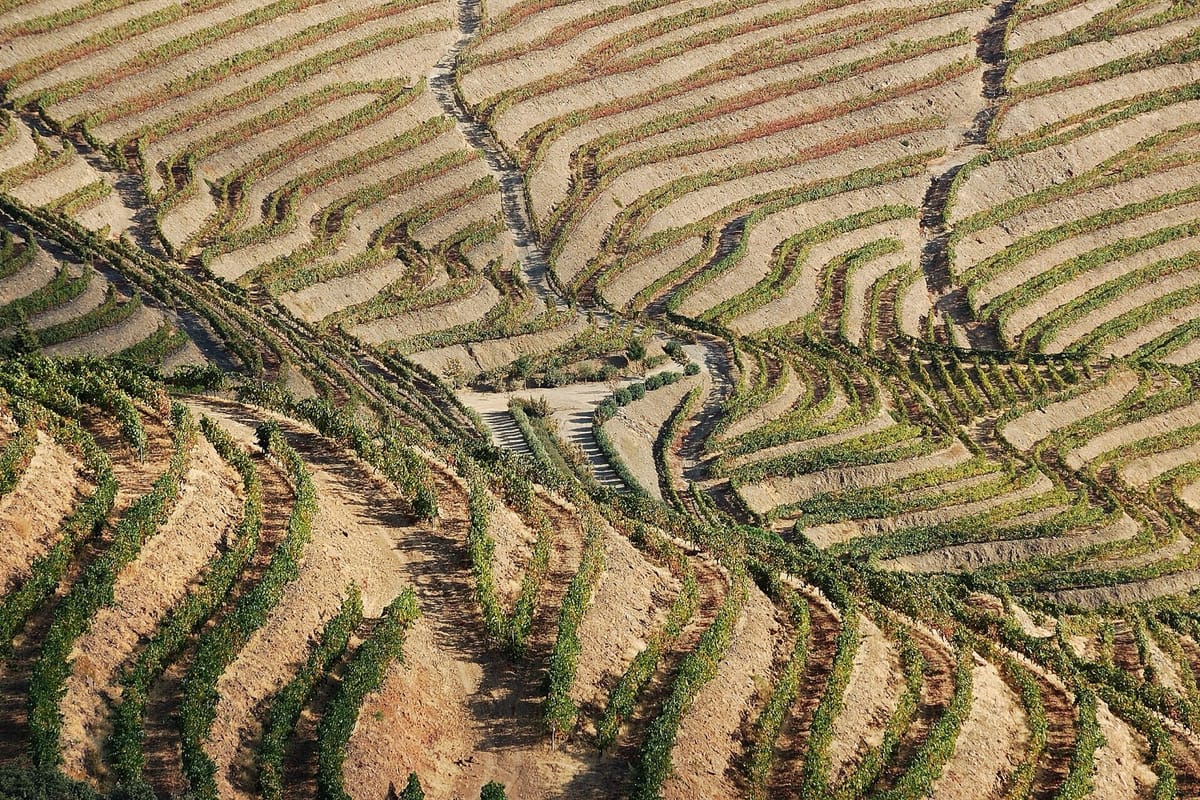
By region, the Douro and Port wine together hold about 4.28 million hectolitres of certified stock, 62 percent of it Port. Port stocks fell 6 percent and Douro table wine 8 percent. The other figures, in hectolitres and against 2025:
- Alentejo: 1.42 million, down 10 percent
- Lisboa: 1.09 million, down 5 percent
- Vinho Verde: 709,000, unchanged
- Península de Setúbal: 445,000, down 7 percent
- Dão: 434,000, down 8 percent
- Tejo: 391,000, down 17 percent
- Bairrada: 245,000, down 10 percent
- Madeira: 233,000, down 1 percent
- Algarve: 47,500, up 39 percent from a small base
What a smaller stock means for growers and drinkers
The drop follows a poor harvest. The IVV's final count for the 2025/2026 campaign, published in December, put production at 5.9 million hectolitres, 14 percent down on the year before. Even so, cellar stocks on 31 July were close to twice that harvest's output. The figures point to a sector working down its stocks, not to a shortage, and the IVV note itself says nothing about grape prices or shelf prices.
Stock is also highly concentrated. Twenty companies each hold more than 100,000 hectolitres, together 43 percent of the national total. At the other end, 2,715 of the 3,398 operators holding stock (80 percent) hold 1,000 hectolitres or less and just 4 percent of the wine.
A bigger harvest is expected to refill them
The cellars are being refilled. The IVV's August harvest forecast expected 6.7 million hectolitres from the 2026 vindima, 12 percent more than last year but still 4 percent below the five-year average. It forecast rises of 25 percent in the Douro and 15 percent in the Alentejo and Península de Setúbal, smaller gains in most other regions, and a 20 percent fall in the Azores after fungal disease.
The real harvest figure will come from the harvest and production declarations (declarações de colheita e produção), which producers had to file by 31 October under Portaria n.º 272/2026/1. Last year the IVV published its final count on 19 December. For shoppers, the wider pressure on prices this autumn is general inflation, which reached 3.8 percent in October. Nothing in the IVV figures points to a wine shortage on top of it.