The Porto Brief — Week of 26 July 2026: A €690M Metro Contract, a Permanent Douro Ferry, and the Dragons Warm Up for a New Season
Your weekly roundup from the Invicta: the government puts a €689.63M price tag on the next Metro do Porto contract, a second Douro ferry turns permanent, the Guindais funicular pauses for its safety paperwork, heavy lorries are barred from the VCI from September, and FC Porto beat Aston Villa before
Welcome back to the Porto Brief — your weekly roundup of what mattered in the Invicta over the past seven days. It was a week about the machinery that keeps a city moving: the government put a price on the next metro contract, a second Douro ferry became permanent, a historic funicular paused for its paperwork, and heavy lorries were told to keep off the ring road come September. Off the streets, the champions warmed up for a new season. Here's what caught our eye.
A price on the metro's future
A week after the Council of Ministers opened the contest to run Metro do Porto from 2027, the numbers arrived. A government resolution authorises €689.63 million over eight years for the new operating subconcession — some 59 percent above the current ViaPorto contract — as the network grows from six lines to ten, absorbing the incoming Rosa and Rubi lines and leaving room for extensions toward Gondomar and Trofa. It is a striking figure, and a reminder that the free-travel headline of a fortnight ago sits atop a decade-scale machine of contracts and construction. Running a bigger, busier metro costs more; the question Porto's taxpayers and the winning operator will now weigh is how much more, and for what standard of service.
A second crossing of the Douro
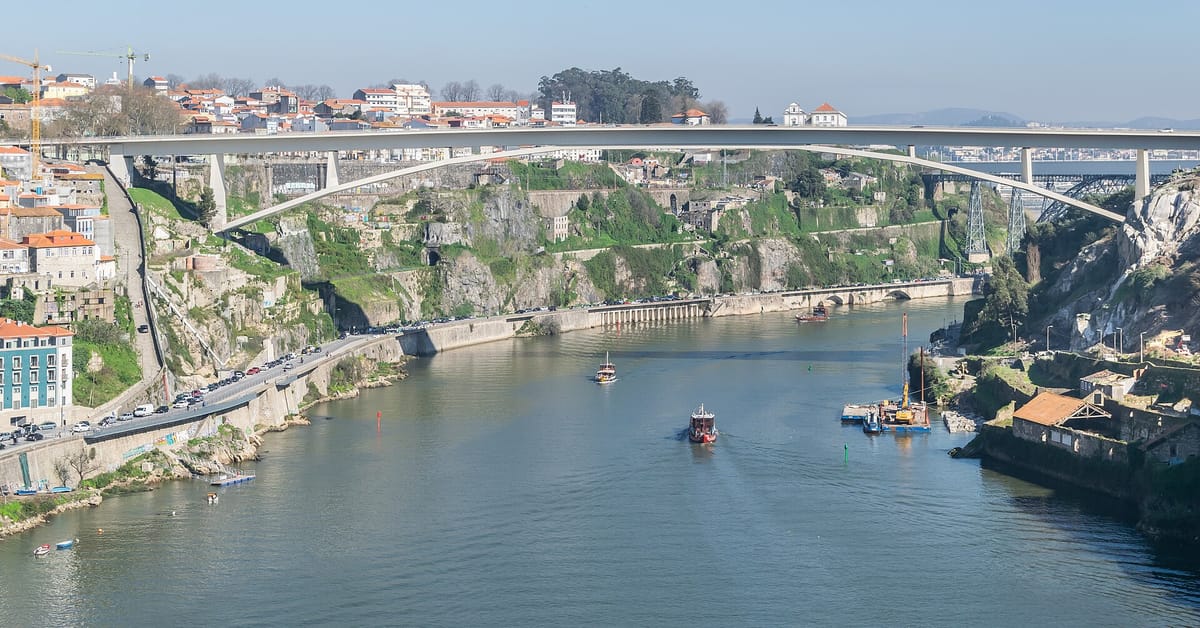
The river itself gained a permanent new link. Two Douro ferry crossings between Porto and Vila Nova de Gaia began permanent service this week, doubling last year's single pilot route. Folded into the Andante pass, a hop costs €3 one-way or €5 return — and nothing at all for residents of Porto or Gaia. The 2025 trial carried close to 200,000 passengers, enough to convince the authorities that a boat can be everyday transport and not merely a tourist novelty. For a city defined by its gorge, adding capacity across the water rather than over it is a quietly elegant piece of planning.
A funicular on pause
Not every piece of Porto's network was expanding. The Funicular dos Guindais — the steep cable line that hauls passengers between the Ribeira and Batalha — has stood idle since 19 July while operator STCP renews its IMT safety certification, a precaution shaped by the audits that followed Lisbon's Glória tragedy. Reassuringly, inspectors found no safety problems; less reassuringly, the line stays shut until a set of pending recommendations is worked through, with no firm reopening date. Visitors climbing between the riverbank and the upper city this summer will, for now, be doing it the old-fashioned way.
Lorries off the ring
Change is coming to the city's busiest road, too. President Seguro has promulgated a decree that will bar commercial heavy-goods vehicles from the VCI — Porto's Inner Ring Road — on weekdays between 07:00 and 21:00, effective 15 September. To keep freight moving, the outer CREP ring becomes toll-free for lorries, nudging through-traffic around the metropolitan edge rather than through its congested heart. For anyone who knows the VCI's daily crawl, it is a bet that fewer trucks at peak times means a smoother run for everyone else.
Beyond the riverbank
A couple of other threads from the wider Porto week. In a nationwide handover of empty public buildings, the State transferred 21 properties to 16 municipalities on 21 July, tied to some €16 million of rehabilitation — and among them, a shuttered Porto nightclub is set to be reborn as a municipal sports hall. It is a small but telling example of a city recycling its own fabric rather than building anew. Meanwhile the Norte's research engine kept humming: hard on the heels of last week's immune-ageing discovery at the i3S institute, the city's laboratories and its soon-to-be Universidade Técnica do Porto continue to draw the students and funding that are steadily reshaping the local economy.
Champions warm up
On the pitch, FC Porto staged their traditional jogo de apresentação — the squad's presentation to season-ticket holders — at a warm Estádio do Dragão on Friday, and sent the crowd home happy with a 2-1 win over Premier League side Aston Villa. William Gomes struck early, inside five minutes; the visitors levelled soon after, before Pepê restored the lead just before the interval — the winning goal arriving, as so many have this pre-season, from a set piece. Coach Francesco Farioli fielded something close to his first-choice eleven, a signal that the tinkering is nearly done. It was the champions' final warm-up before the real thing: Porto open the 2026/27 season in the Supertaça Cândido de Oliveira against Torreense, the Taça de Portugal holders, in Coimbra next Saturday, 1 August. In the Invicta, football never really goes on holiday.
Weekend pick: free music at the Casa da Música
If the July heat sends you looking for something to do after dark, the Casa da Música's free summer programme keeps the esplanade at the Boavista roundabout busy with open-air concerts most evenings through the season — an easy, no-ticket way to spend a warm Porto night, with the option of ducking inside Rem Koolhaas's landmark for the paid bill. Check the day's line-up before you go; the roster leans world music, jazz and Portuguese song.
That's a wrap
From a €690-million metro contract to a new ferry and a champion squad counting down to kick-off, it was a week of Porto lining up the pieces for what comes next. We'll be back in seven days with more from across the city and the wider Norte. Until then, mind the roadworks, and saúde.