Porto and Gaia Gain a Second Douro Ferry Crossing as the Hourly River Service Becomes Permanent
Two Douro river ferry crossings between Porto and Vila Nova de Gaia begin permanent service today, doubling last year's pilot. Folded into the Andante pass, they cost €3 one-way or €5 return and are free for Porto and Gaia residents. The 2025 trial carried nearly 26,000 passengers.
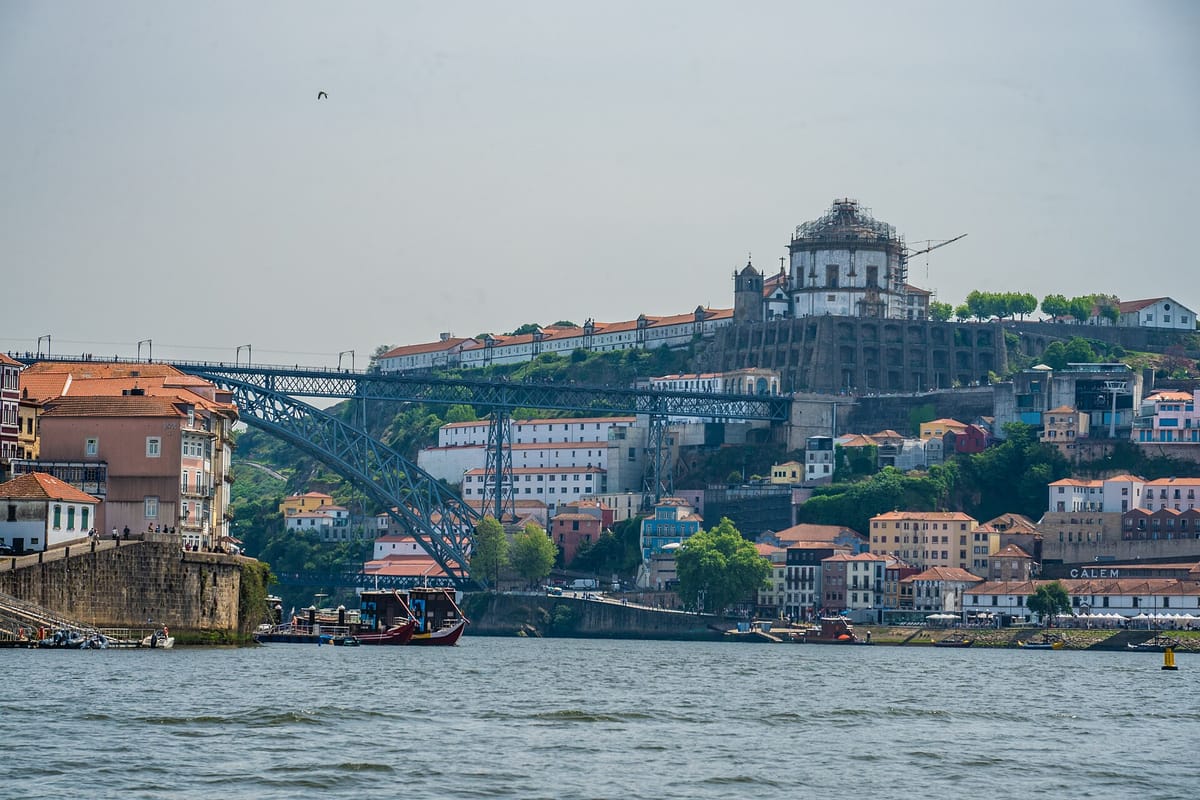
From today, crossing the Douro between Porto and Vila Nova de Gaia by boat becomes a permanent part of the local transport network rather than a summer experiment. Two river ferry routes begin regular service on 22 July, doubling the single hourly crossing that ran as a pilot last year and, for the first time, folding the boats into the region's ordinary public-transport ticketing.
The two links sit at either end of the historic riverfront. One connects Cais do Ouro, on the Porto side, with Afurada, the old fishing quarter of Gaia downstream near the river mouth. The other runs between the Ribeira, Porto's UNESCO-listed waterfront, and the Cais de Gaia, the quay lined with port-wine cellars directly across the water. Together they give people on both banks a way to hop the river without climbing up to one of the bridges.
Crucially, the crossings are integrated into Andante, the Porto metropolitan area's unified transit pass, so a single journey can now chain a metro or bus ride to a boat trip on one fare. Tickets can also be bought on board for those without a pass, at €3 for a one-way trip or €5 for a same-day return. Residents travel free: anyone holding a Porto city card, or Gaia's equivalent Gaia Amiga card, rides at no charge.
The timetable is built for both commuters and visitors. From Monday to Thursday the boats run from 07:30 to 20:00, extending to 22:00 on Fridays. At weekends the first crossing leaves at 09:30, with the last boat at 22:00 on Saturdays and 20:00 on Sundays. The vessels are small — the pilot craft carried around 20 passengers — and the appeal is as much the short, scenic hop across the Douro as the practicality of avoiding a longer land route.
The service grows out of a trial that ran through 2025 and, by the time it wound down, had carried close to 26,000 passengers, enough to convince local authorities that a permanent operation could work. The Área Metropolitana do Porto (the Porto Metropolitan Area, or AMP) had earlier cleared the two councils to tender the crossings, and the launch this week is the result of that process.
River transport is not new to the Douro — tourist cruises and the traditional rabelo boats have plied it for generations — but a scheduled, ticket-integrated commuter ferry is a different proposition. For Gaia residents working in Porto, or Porto residents heading to the beaches and restaurants of the south bank, the boats offer an alternative to the crowded Dom Luís I bridge and the metro line that crosses it. For the millions of tourists who fill the Ribeira each summer, they add another way to experience the river that defines both cities.
Whether the two routes draw enough year-round demand to justify themselves once the novelty fades is the open question, and much will depend on how reliably the boats run through the wetter, windier months when the Douro is less inviting. But by putting the crossings on the Andante card and making them free for locals, Porto and Gaia have signalled they intend the ferries to be treated as everyday transport, not a seasonal attraction — a small but visible addition to how people move around one of Portugal's busiest urban regions. On the Porto transport file, our report on Porto's mayor setting a 31 December limit for the second phase of the metrobus and naming the contractor as the reason the works on Avenida da Boavista are running late sets the latest reference.