The Port of Sines Handles a Record 189,000 Containers in July, Terminal XXI's Busiest Month Since 2004
Terminal XXI at the Port of Sines handled more than 189,000 containers in July, its busiest month since the deepwater harbour opened in 2004, narrowly beating the July 2025 record and capping a fifth straight month above four million tonnes of cargo.
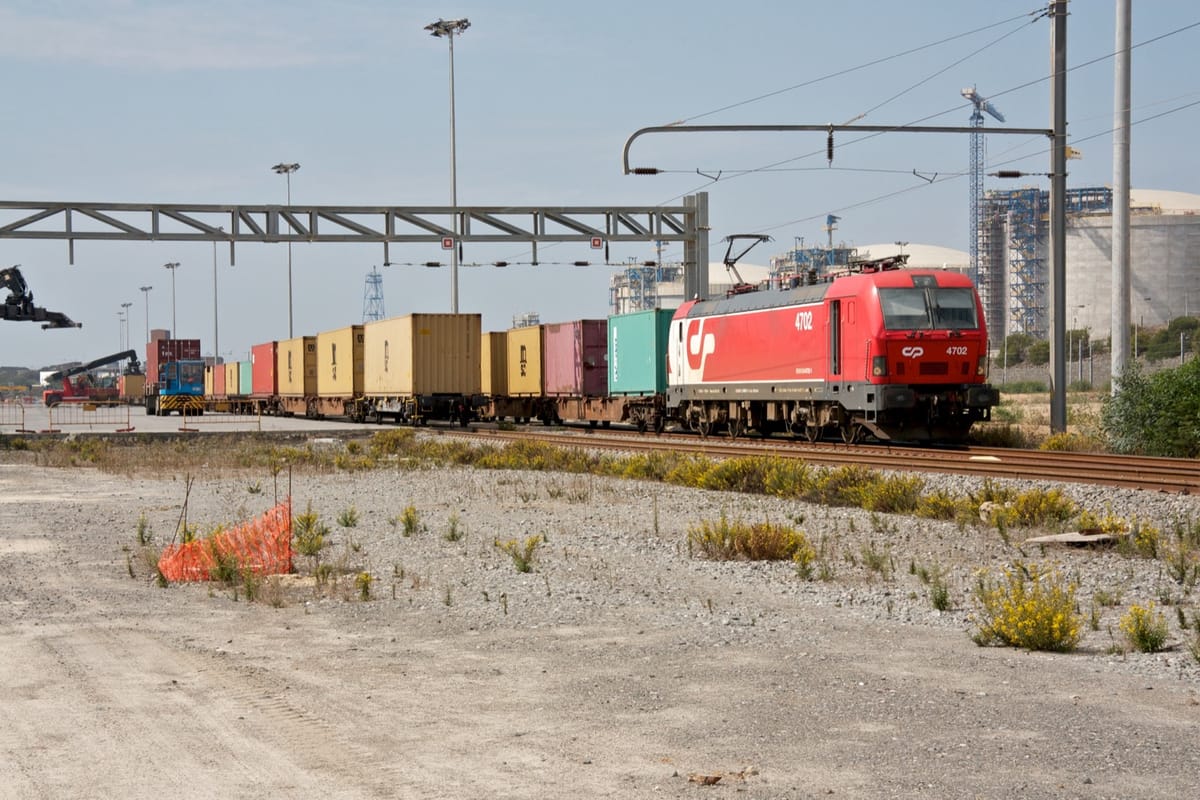
Portugal's largest port has just posted its busiest container month on record. Terminal XXI at the Port of Sines handled more than 189,000 twenty-foot equivalent units (TEU, the standard measure of container traffic) in July, edging past the previous high of 187,621 boxes set in July 2025. It is the strongest single month for the container terminal since the deepwater harbour on the Alentejo coast opened for business in June 2004.
The milestone caps a run of momentum at the terminal, which is operated by the Singapore group PSA. July marked the fifth consecutive month in which the wider Port of Sines moved more than four million tonnes of total cargo — a steady, high-volume rhythm that has held even after a difficult start to the year, when the first two months were hit hard by bad weather.
A deepwater gateway on the Atlantic
Sines is not a typical harbour. Its natural depth lets it receive the largest container ships afloat, and its position on the southwestern tip of Europe makes it a natural first or last European call for vessels crossing the Atlantic or rounding into the Mediterranean. Much of the traffic through Terminal XXI is transhipment — containers unloaded from one ocean-going ship and reloaded onto another bound elsewhere — which is why the terminal's fortunes track global shipping patterns as much as they do Portuguese trade.
That connectivity is expanding. The terminal now serves more than 20 regular weekly shipping lines and has recently added two new routes: one linking Europe with the Middle East, Africa and Asia, and another tying the Iberian Peninsula to the Canary Islands and northern Europe. The port authority credited the record to the terminal's ability to absorb rising demand while keeping its handling efficiency and service levels high.
Why Sines matters to the wider economy
Behind the container numbers sits one of the most ambitious industrial bets in the country. The investment pipeline around Sines has been edging toward the equivalent of a tenth of Portugal's entire economic output, spanning logistics, energy and data infrastructure. The town already hosts the country's only oil refinery, a growing cluster of green-hydrogen and solar projects, and the landing point for Google's Nuvem subsea cable, Portugal's first direct fibre link to the United States. A busy container terminal is the logistics spine that ties all of that together.
What this means for expats
- A read on the real economy: Port throughput is one of the least glamorous but most honest indicators of economic activity. Records at Sines suggest trade flows through Portugal are holding up, which matters for jobs, wages and the broader outlook wherever you live.
- Jobs and growth in the south: If you are weighing a move to the Alentejo or the Setúbal district, the Sines cluster is one of the few large-scale employment engines outside Lisbon and Porto — though local housing costs near the port have climbed sharply as investment has poured in.
- Cheaper, faster imports: More direct shipping lines and higher terminal capacity can, over time, mean better freight options and shorter delivery windows for goods shipped into Portugal — relevant if you import belongings, run a small business or order from abroad.
- A strategic asset to watch: The same deepwater port draws less welcome attention, as this week's record drug seizure aboard a Sines-bound container ship showed. Expect Sines to stay in the national conversation as both an economic prize and a security concern.
A record month is a single data point, and transhipment volumes can swing with decisions made in shipping boardrooms far from the Alentejo. But the trajectory at Sines — more lines, more cargo, more investment — points to a port steadily raising its weight in the Portuguese economy, one container ship at a time. On the Sines industrial file, Repsol's 830 million euro Alba project collecting its operating title for two 300,000-tonne polymer plants, a year behind the company's own published schedule is the latest step.