Guarda Becomes an Inland Terminal for the Port of Leixões, as a 4 Million Euro Dry Port Opens at the City's Rail Freight Yard
The Porto Seco da Guarda opened on 23 October: room for 47,040 containers a year, tracks for 750-metre freight trains and about 10,000 lorries a year, run by YILPORT as an inland extension of the Port of Leixões.
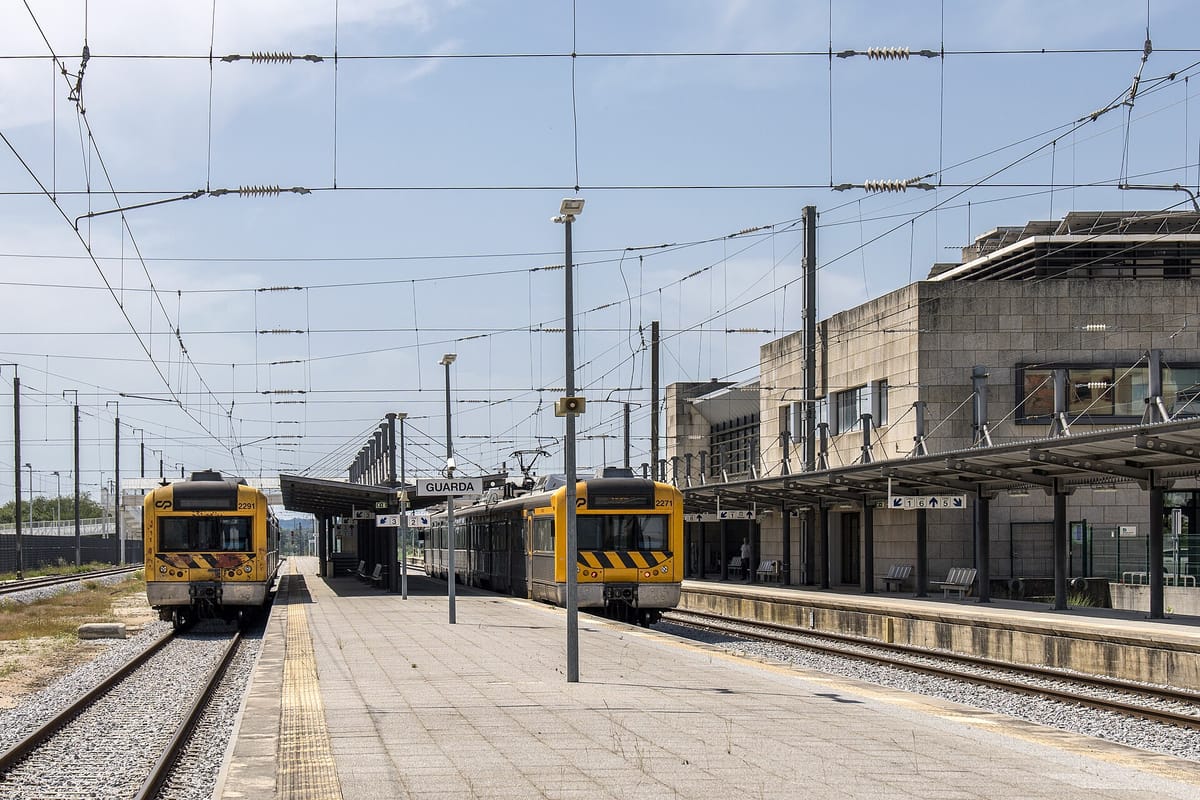
Guarda now has an inland terminal linked to the Port of Leixões, outside Porto. The Porto Seco da Guarda (Guarda Dry Port), opened on 23 October, is meant to take over some of the work now done inside a port that has no room to grow, linking it to the interior by rail and road. The Administração dos Portos do Douro, Leixões e Viana do Castelo (APDL, the Douro, Leixões and Viana do Castelo ports authority) paid about 4 million euros for it.
According to the Government, the terminal has:
- about 30,000 square metres of paved area;
- capacity to handle 47,040 TEU a year (TEU is the standard 20-foot container);
- tracks that can take freight trains up to 750 metres long.
The Câmara Municipal da Guarda (Guarda City Council) says it sits at the city's rail freight terminal and expects about 10,000 lorries a year. The terminal is operated by YILPORT, which the council says brings customers, shipping lines and operating experience. The building work, which the council described in September, was the first phase of the project: adapting the freight terminal to load goods for industry in the region.
Why Leixões needs it
Leixões cannot grow where it is, because Matosinhos, Porto and Maia have built up all around it. Under the Government's Portos 5+ ports strategy, the dry port takes over some jobs normally done inside the port and is meant to win more freight for rail. The Government says it also strengthens the freight route towards Vilar Formoso, Spain and the rest of Europe, as part of the EU's Atlantic Corridor.
"A competitive port does not end at the quay; it extends across the territory," Miguel Pinto Luz, the Minister of Infrastructure and Housing, said at the opening. Because of where it sits, Leixões "can only expand this way", the minister added.
Lorry traffic around the port is a long-running problem: in June the Government announced plans to keep heavy goods lorries off Porto's VCI ring road on weekdays.
Lorries, bypasses and a bid for a business zone
The mayor, Sérgio Costa, told the ceremony that the terminal would not disturb the neighbourhoods around it. According to the mayor, lorries already have set hours and routes, and two planned bypasses, the Sequeira and Galegos variantes, would take the traffic in future. Costa asked the minister to approve the tenders for those works and to commission studies for the IC7 road, and thanked the minister, on behalf of Guarda and Sabugal, for approving an agreement to upgrade the EN233 road to Sabugal.
Costa also wants Guarda chosen as the site of one of the large strategic business zones the Government has announced. The council says its new municipal master plan, in force since 1 July, zones 1,011 hectares for business. José Ribau Esteves, who heads the Comissão de Coordenação e Desenvolvimento Regional do Centro (CCDR Centro, the Centre regional development commission), said the capacity being built in the region gives the Government reason to consider a business zone there.
Neither the Government nor the council has published train timetables, prices or the customs services the terminal will offer. Businesses in the region would have to ask the operator. A freight park on a larger scale is also planned in the south, where the Environment Agency has approved a 468 million euro logistics and rail freight park in Grândola.