The Environment Agency Approves a €468 Million Logistics and Rail-Freight Park in Grândola, With Works Planned for 2027
The Portuguese Environment Agency has issued a favourable, conditional environmental ruling for the Grândola Logistics Park, a 130-hectare, €468 million freight complex with a rail terminal linked to the Southern Line. The promoter, Qantara Capital, aims to license in 2027 and build over two years.
One of the largest logistics projects planned for southern Portugal has cleared its biggest regulatory hurdle. The Agência Portuguesa do Ambiente (Portuguese Environment Agency, or APA) has issued a favourable — if conditional — Declaração de Impacte Ambiental (Environmental Impact Statement) for the Grândola Logistics Park, a 130-hectare freight and warehousing complex in the Setúbal district promoted by Qantara Capital. With the environmental review behind it, the developer says it intends to license the project in 2027 and begin construction immediately, in a build-out expected to take about two years.
The scale is substantial. The scheme, run through a vehicle called Grândola Logistics Park Euro-Atlantic and led by director-general David Claudino, covers roughly 635,000 square metres of construction spread across seven macro-lots. Direct infrastructure investment is put at €40 million, within a total project budget of around €468 million — a figure that could rise further depending on the mix of tenants that eventually move in. The government has already classified the development as a project of Potencial Interesse Nacional (Potential National Interest), a status that streamlines licensing.
A rail-freight hub, not just warehouses
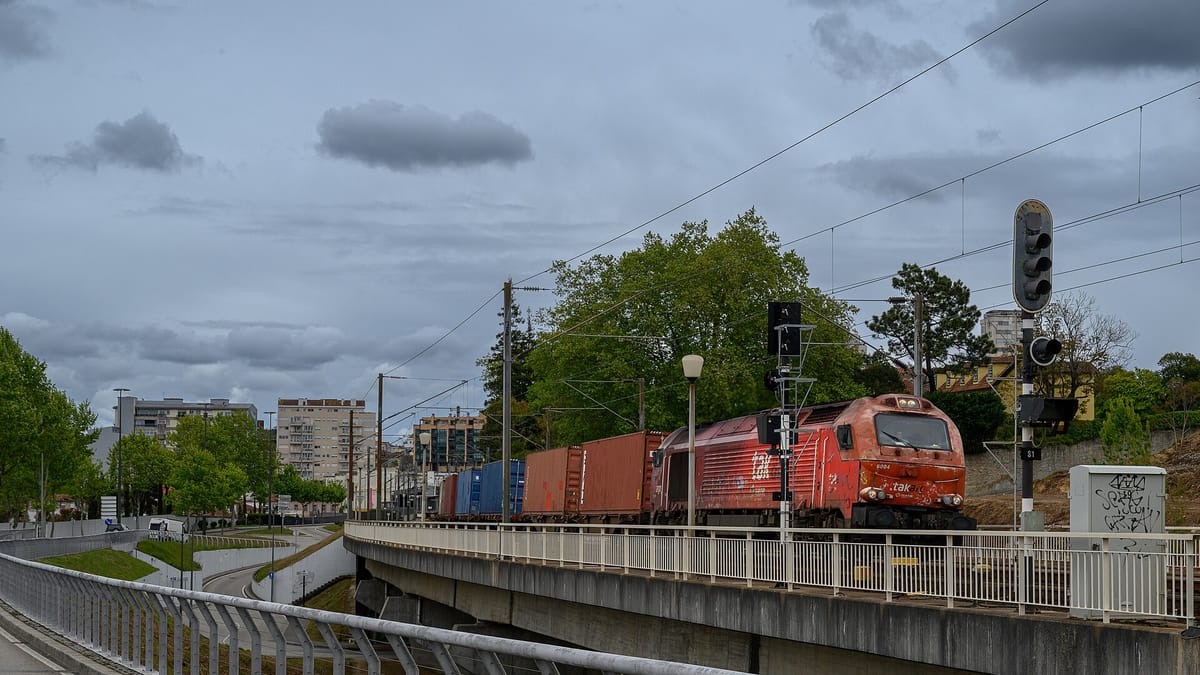
What sets the Grândola plan apart from a conventional distribution estate is its rail component. The park is designed around a rail-freight terminal with a 23,000-square-metre container yard connected directly to the Linha do Sul (Southern Line), the railway that links Lisbon to the Algarve and to the deep-water port of Sines. The first phase will deliver the site infrastructure and the first two macro-lots; a second phase adds the remaining lots and the rail terminal.
The developer estimates the finished park will draw around 1,000 daily users and is pitching it as a way to diversify the local Alentejo economy and create qualified employment in a region that has long exported labour to Lisbon. Grândola sits on the strategic corridor between Sines — Portugal's main container gateway — and the capital, and the government has been trying to build out logistics and dual-use capacity along that axis. It fits a wider pattern: nearby Setúbal is lining up a €100 million dual-use port terminal, and the long-planned Lisbon–Porto high-speed line — whose rolling stock is now down to two bidders — is meant to free capacity on conventional track for exactly this kind of freight.
The conditions attached
The approval is not unqualified. APA barred any new water extraction to supply the park, meaning the operator must source water from existing licensed points rather than sinking fresh boreholes — a live concern in the water-stressed Alentejo. The decision also restricts where rainwater and treated wastewater may be discharged. Those conditions will shape the engineering and, potentially, the timeline.
What This Means for Expats
- Jobs beyond the coast: If it proceeds on schedule, the park will generate construction work from 2027 and permanent logistics roles thereafter, in an interior region where qualified vacancies are scarce. Prioritised local hiring is written into the pitch.
- Property ripples: Large employment sites tend to lift demand for housing and services in surrounding towns. If you own or are considering property in the Grândola–Alcácer do Sal belt, this is a medium-term value signal worth tracking.
- Cheaper goods, eventually: More rail-connected warehousing near Sines can lower distribution costs across southern Portugal — a slow tailwind for consumer prices rather than an overnight change.
- Timelines slip: An environmental green light is a milestone, not a guarantee. Licensing is targeted for 2027, and Alentejo infrastructure projects have a habit of running long. Treat the two-year build estimate as optimistic.
For now, the decision keeps one of the Alentejo's biggest private investments alive and moving. The next test will be whether Qantara Capital can turn a favourable environmental ruling into a financed, licensed project by 2027 — and whether the water conditions prove workable in one of the driest corners of the country. On the environmental licensing file, our report on the APA and ICNF restructuring reaching the Council of Ministers, with environmental impact assessment decisions moving to the centre and river basin directorates replacing the regional hydrographic administrations sets the latest reference.