Setúbal Lines Up a €100 Million Dual-Use Port Terminal and Room to Double Its Car Berths for Chinese Imports
The Port of Setúbal is planning a €100 million military-and-civilian terminal and preparing to roughly double its roll-on/roll-off capacity — positioning itself to receive the wave of Chinese-made cars entering Europe.
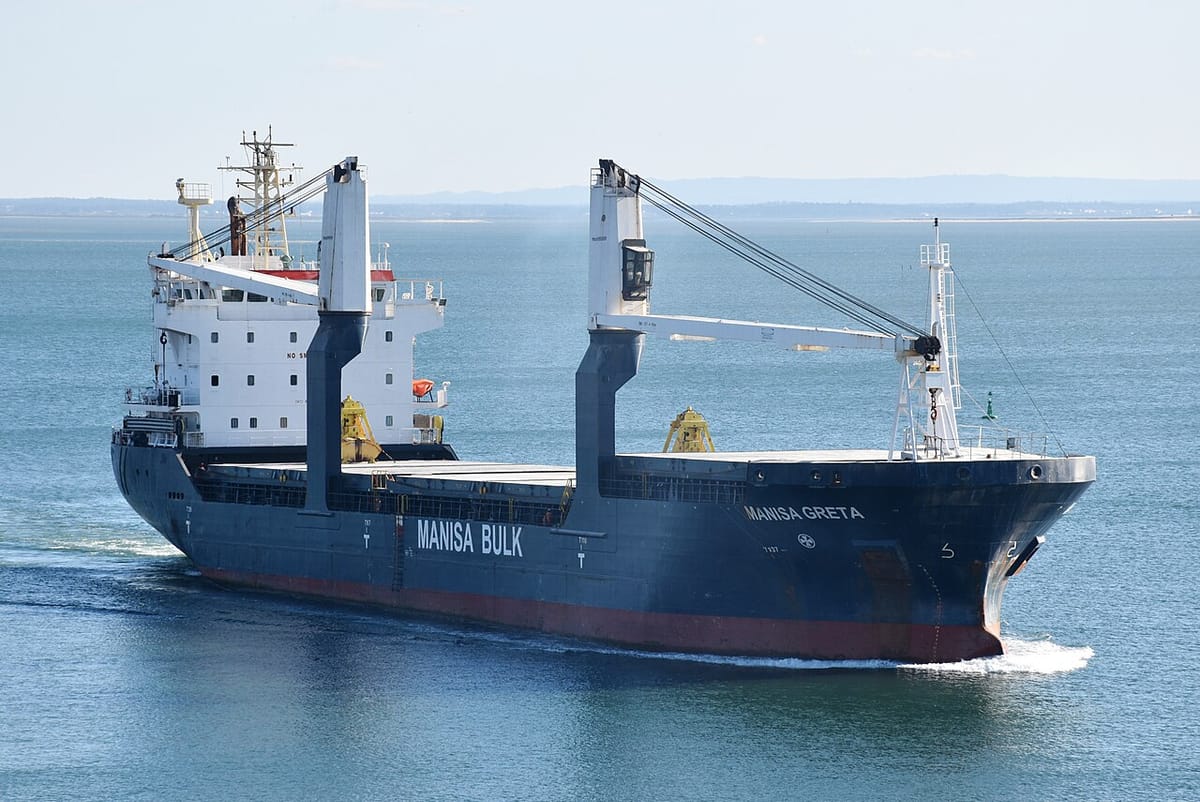
The Port of Setúbal, long known as the gateway for cars rolling off the Volkswagen assembly lines at nearby Palmela, is preparing for traffic moving in the opposite direction — and for a growing role carrying military cargo.
The port authority, the Administração dos Portos de Setúbal e Sesimbra (APSS — the Setúbal and Sesimbra Port Authority), is planning a €100 million investment in what it calls a "dual-use" terminal, capable of handling both military and civilian shipments. Its president told Jornal de Negócios that the project is still in technical development and that the port intends to apply for European funding to help pay for it.
A quiet military hub
The dual-use plan formalises something already under way. Setúbal has quietly become an active staging point for European and North American military vehicle movements, handling hundreds of shipments of equipment through its quays. As NATO members invest in the ability to move armour and supplies quickly across the continent, ports on the Atlantic seaboard with room to expand have become strategic assets — and Setúbal, with deep-water access south of Lisbon, is positioning itself as one of them.
Betting on Chinese cars
The second leg of Setúbal's plan looks to the car market. The port already serves as the main export gateway for vehicles built by Autoeuropa, the Volkswagen plant that is one of Portugal's largest industrial employers. Now it wants to become an import gateway too, expanding its roll-on/roll-off (ro-ro) terminal — the type designed for wheeled cargo that drives on and off the ship — to "practically double" its size.
The target is the surge of Chinese-made cars pushing into the European market. As brands from China ramp up sales across the continent, they need European ports able to land large volumes of finished vehicles and move them onward by road and rail. A tender for the ro-ro expansion is expected to be launched during 2026, according to the report.
The logic is straightforward. Setúbal already has the vehicle-handling infrastructure, the yard space and the road and rail links that Autoeuropa's exports depend on. Turning that machinery around to receive imports is a smaller step than building a car terminal from scratch, and it lets the port hedge its bets: if European carmakers slow down, the throughput of imported vehicles can help keep the quays busy.
Neither the specific Chinese brands nor projected import volumes were disclosed, and the terminal projects remain at the planning stage. But the direction is clear. A port built around exporting one country's cars is repositioning to import another's — and, at the same time, to serve as a logistics base for Europe's rearmament. For a working port on the Sádo estuary, it is an unusually broad set of bets on where the next decade's cargo will come from.