Environmental Regulators Clear the First Porto Section of the Lisbon–Porto High-Speed Line, Unblocking Construction
The Portuguese Environment Agency has validated the execution project for the first stretch out of Porto, one of the last permitting hurdles before builders can start work on the country's long-delayed high-speed railway.
Portugal's most expensive infrastructure project in a generation cleared a decisive bureaucratic checkpoint on Tuesday. The Agência Portuguesa do Ambiente (APA – Portuguese Environment Agency) issued a Título Único Ambiental (TUA – Single Environmental Title) confirming that the detailed execution project for the first section of the Lisbon–Porto high-speed line complies with the environmental terms set out in its Declaração de Impacte Ambiental (DIA – Environmental Impact Declaration). In plain terms, the regulator has signed off on the engineering for the stretch that leaves Porto – one of the last approvals standing between the plans and the diggers.
What was approved
- The section: subsections 4 and 5 of the Porto–Oiã stretch, covering the exit from Porto through Vila Nova de Gaia.
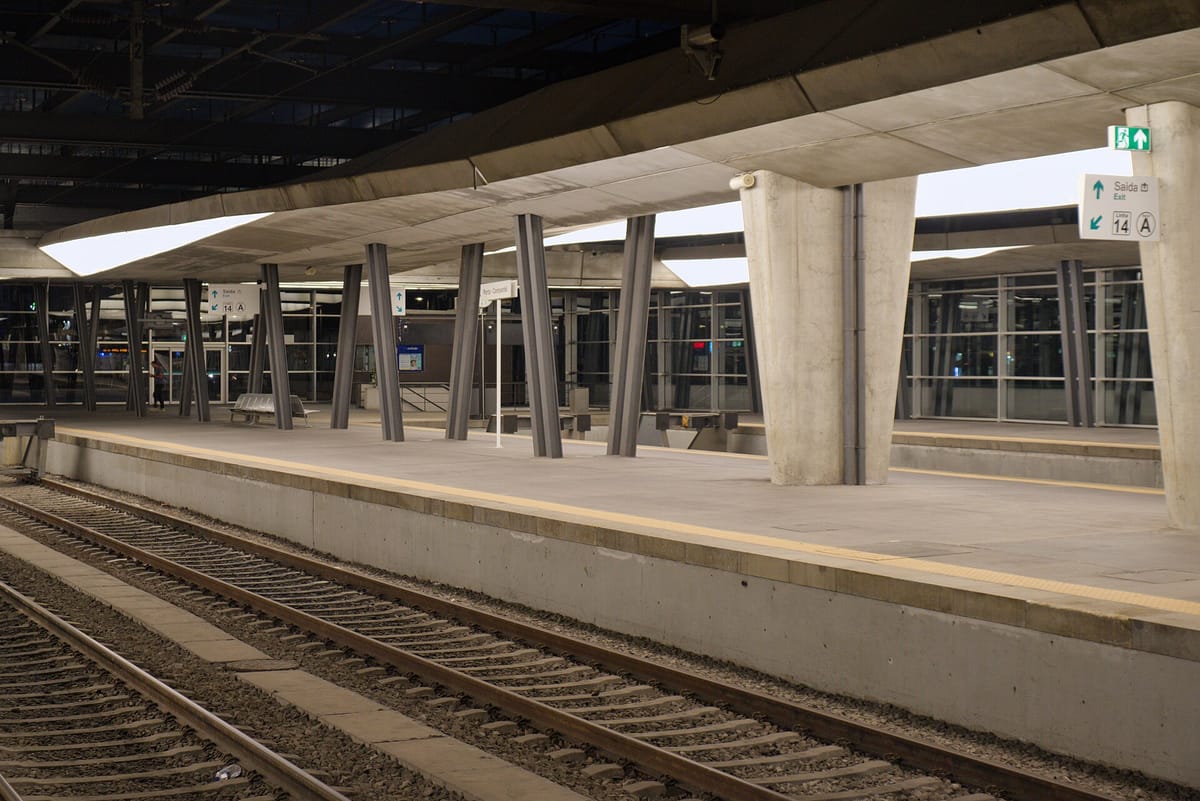
- The stations: a reformulated Porto-Campanhã as the northern terminus, plus a new underground station in Vila Nova de Gaia at Santo Ovídio, connecting to the city's metro.
- The Douro crossing: a new dedicated rail bridge over the river, the single most complex – and locally contested – piece of the whole northern segment.
- The builder: the LusoLav consortium (Mota-Engil, Teixeira Duarte, Alves Ribeiro, Casalis, Conduril and Gabriel Couto), which signed the concession contract in July 2025.
Why it matters
The high-speed line has been promised, shelved and re-promised for the better part of two decades. The current plan, run by the state company Infraestruturas de Portugal (IP), aims to eventually cut the Lisbon–Porto journey to about 1 hour 15 minutes and link Porto to Vigo, across the Spanish border, in roughly 50 minutes, with 2032 the working target for the full connection. But an approved concession is not the same as a shovel in the ground: each section needs its execution project independently checked against the environmental rules before construction money can be released.
That is exactly where the Porto exit had stalled. The Douro bridge became a political flashpoint earlier this summer when the councils of Porto and Gaia pushed back against an original two-deck design that mixed rail with a road crossing, arguing the money would be better spent on a rail-only structure paired with a pedestrian-and-cycle link. Tuesday's environmental green light is the signal that the reworked project has passed muster and that IP can now move the northern section from paper to procurement.
What this means for readers in Portugal
- Timeline reality check: approval unblocks construction, but the first trains between Porto and the Aveiro district are still years away. Treat 2032 as an ambition, not a booking date.
- Property and mobility: confirmed alignments and station sites – especially the Gaia interchange at Santo Ovídio – tend to move land values and rents long before the first train runs. If you are buying near a planned node, the route is now firmer.
- Cross-border travel: the Porto–Vigo leg would put Galicia within a lunch-hour hop, reshaping weekend trips and the northern labour market.
- Public spending: this is a multi-billion-euro commitment that will shadow national budgets for years. Expect it to surface repeatedly in debates over deficits, EU funds and competing infrastructure.
None of this guarantees the line arrives on schedule – Portuguese megaprojects rarely do. But after years in which the high-speed railway existed mostly as a slide in ministerial presentations, the regulator has now put a formal stamp on the first stretch that will actually be built. The next test is whether the diggers follow the paperwork. On the environmental licensing file, our report on the APA and ICNF restructuring reaching the Council of Ministers, with environmental impact assessment decisions moving to the centre and river basin directorates replacing the regional hydrographic administrations sets the latest reference.