Coimbra Region Wins 1.56 Million Euros From the EU to Clear Invasive Water Primrose From the Mondego Basin, One of Five LIFE Projects Led From Portugal
The EU's LIFE programme will pay 1.56 million euros towards a five-year fight against water primrose in the Coimbra Region. Four more Portuguese-led projects cover Misericórdia buildings, energy poverty, hospital wastewater and environmental crime.
An intermunicipal team in the Coimbra Region is to get 1.56 million euros from the European Union to fight two invasive water plants that are spreading through the Mondego river basin. The project, LIFE LUDWIGIA, is one of five coordinated from Portugal among 135 new projects to which the European Commission granted more than 390 million euros under its LIFE environment and climate programme on 19 October.
The other four Portuguese-led projects cover energy renovation in the Misericórdias' care homes and health centres, a network to track energy poverty, cleaner wastewater from a hospital catchment, and training for those who enforce the EU's new law on environmental crime.
Water primrose in the Mondego
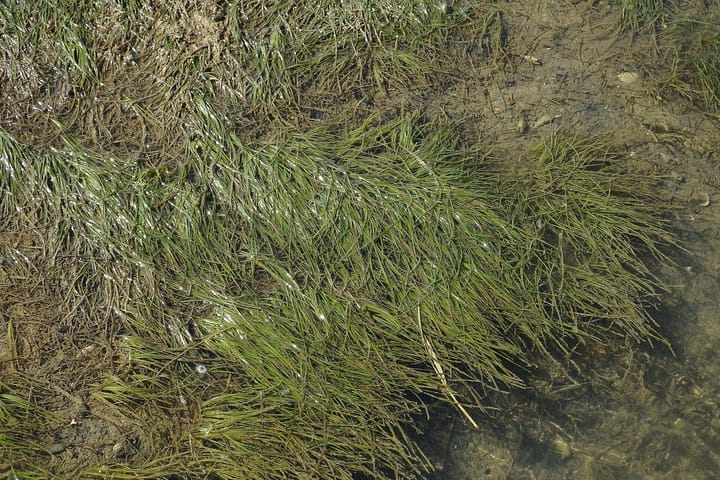
The targets are Ludwigia peploides and Ludwigia grandiflora, amphibious plants from the Americas known in English as water primrose and in Portugal as "ludevigias". The project's own description in the LIFE public database says the invasion in the territory of the Comunidade Intermunicipal da Região de Coimbra (CIM-RC, the Coimbra Region Intermunicipal Community), particularly in the Mondego basin and the Baixo Mondego, "has become particularly severe" and needs urgent measures. Because the plants blend in with riverbank vegetation or grow submerged, they escape notice more easily than other aquatic invaders.
The project runs from 1 July 2026 to 30 June 2031, with a total eligible budget of 2,605,093 euros, of which the EU pays 1,563,056 euros. The CIM-RC coordinates it, with the University of Coimbra, the Polytechnic University of Coimbra, the Agência Portuguesa do Ambiente (APA, the Portuguese Environment Agency), the Instituto da Conservação da Natureza e das Florestas (ICNF, the nature and forests institute) and a Spanish company as partners. Its stated targets include:
- 742 hectares brought under control (566 of water and 176 of land), with the plants eradicated from 90 percent of that area;
- a ten-person brigade, in three teams of three plus a coordinator, recruited and equipped to work on the plants during and after the project;
- prevention, early warning or control work along 671 kilometres of watercourses, and 12 new outbreaks found early using environmental DNA and remote sensing;
- 300 biosafety actions aimed at people who use rivers and reservoirs for sport, recreation and fishing, so that they do not carry fragments from one place to another, and 48 with aquaculture businesses, including watching the online catalogues of suppliers outside the EU;
- training for 160 staff and 300 active contributors on the iNaturalist recording app.
The Natura 2000 sites listed are the Paul de Arzila, the Complexo do Açor and the Dunas de Mira, Gândara e Gafanhas. Five threatened native plants are named as beneficiaries, among them the flowering rush (Butomus umbellatus).
Readers who find an invasive species can check the national rules and what to do in our guide to invasive plants and animals in Portugal. Another invader, a Japanese seaweed, now covers the seabed off Sines.
The other four projects led from Portugal
- Misericórdias' buildings (LIFE SET-M). Santa Casa da Misericórdia de Lisboa leads a three-year project, from September 2026, to prepare 33.6 million euros of energy-efficiency and renewable-energy investment across more than 70 facilities, including care homes, health centres and social housing. The União das Misericórdias Portuguesas (Union of Portuguese Misericórdias) brings in its network of 388 Misericórdias, and a national helpdesk is planned. Budget: 733,218 euros, of which the EU pays 696,557.
- Energy poverty (LIFE EP-MED). Universidade Nova de Lisboa coordinates a project to create or strengthen national energy-poverty observatories in Portugal, Italy, Spain and Cyprus, with regional hubs in vulnerable municipalities, and to look at summer energy poverty, when homes cannot be kept cool. It runs from October 2026 to September 2029. The EU pays 1,837,999 of its 1,934,735 euros.
- Hospital wastewater (LIFE ReFitting). The Laboratório Nacional de Engenharia Civil (LNEC, the national civil engineering laboratory) will compare eight treatment technologies at a Portuguese wastewater plant that takes in hospital effluent, testing their removal of antimicrobial resistance, medicine residues, PFAS "forever chemicals" and microplastics. Almada's municipal water and sanitation services are a partner. The EU pays 997,520 of 1,662,533 euros.
- Environmental crime (LIFE ECOFORCE). A research institute at the University of Lisbon's Law Faculty leads a project to train at least 250 inspectors, police officers, prosecutors and judges in at least 15 member states to apply the new Environmental Crime Directive (EU) 2024/1203, whose deadline for transposition into national law was 21 May 2026. Portugal's Ministry of Internal Administration is among the partners. The EU pays 1,499,899 of 1,666,555 euros.
Portuguese bodies also take part in projects coordinated from other countries, including work on the Iberian desman, a small river mammal, on chestnut groves in Spain and Portugal, and on wildfire resilience where towns meet farmland and forest, according to the Commission's project summaries.