An Invasive Japanese Alga Now Covers the Sea Floor Off Sines Down to Twelve Metres, Ten Years After It Was First Logged in the Marina
Rugulopteryx okamurae runs from Melides to Azenha do Mar, worst at São Torpes and Ilha do Pessegueiro. It blocks light and oxygen, and the coralline algae, wracks and kelps under it die. It has been banned from the EU market since August 2022, which is the problem.
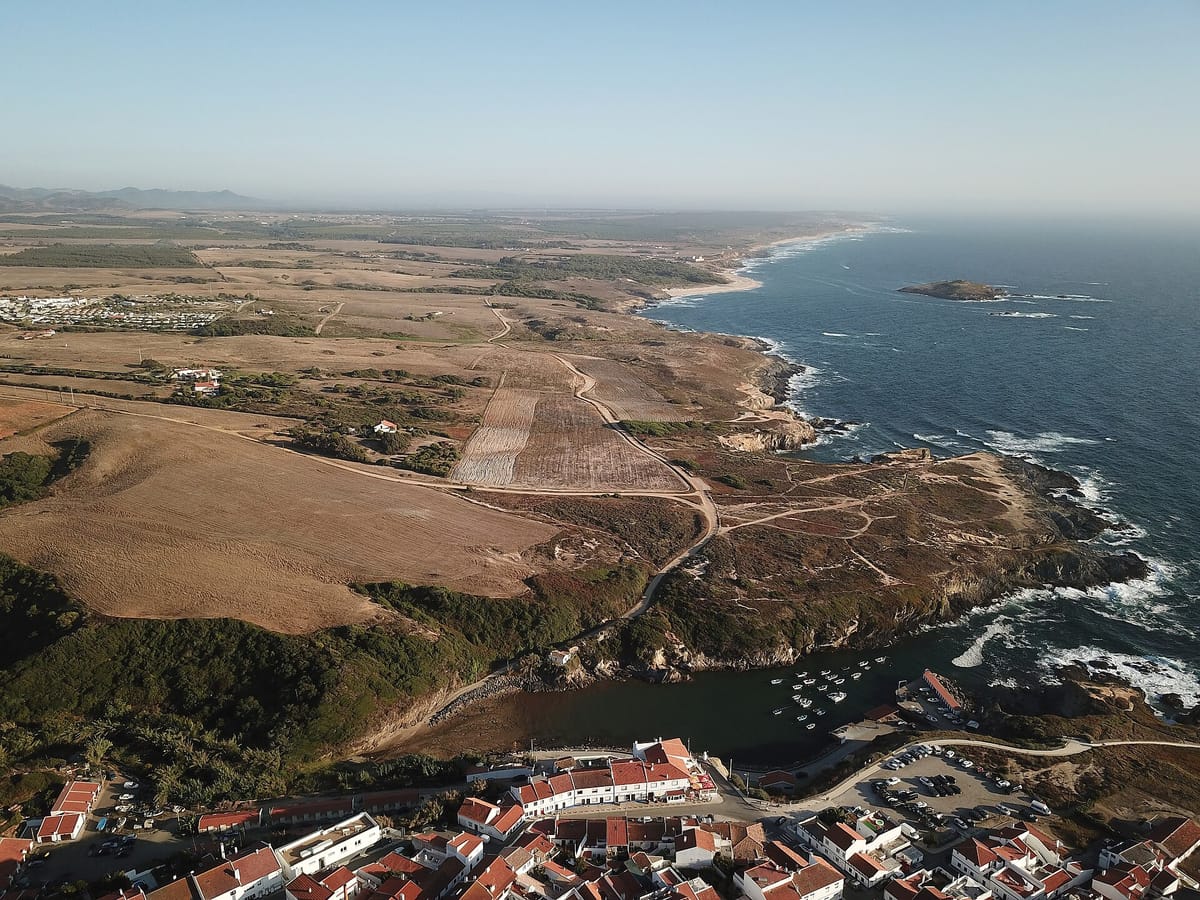
Ten years ago a brown alga native to the seas off Japan and Korea turned up in the marina at the port of Sines. It has been logged there continuously ever since. In the last two or three years it has stopped being a curiosity and become the sea floor.
"With the rise in water temperature there was an exponential boom in every zone down to twelve metres of depth," Joaquim Parrinha, a researcher at the University of Coimbra and the Centro de Ciências do Mar e do Ambiente (MARE, the Marine and Environmental Sciences Centre), told the Lusa news agency. In the shallower areas, he said, "it is all occupied" by the invader.
The species is Rugulopteryx okamurae. It reached the western Mediterranean early this century, arrived on the Portuguese coast from there, settled first in the Algarve and has been working north ever since. Parrinha has now found it along the whole stretch between Melides, in the council of Grândola in Setúbal district, and Azenha do Mar, in the council of Odemira in Beja district, at varying concentrations. São Torpes and Ilha do Pessegueiro are among the worst affected.
What twelve metres of it does
Parrinha dives frequently off Ilha do Pessegueiro, the small rocky island opposite Porto Covo, and his description of the change is not the language of an alarmist. "The forest this alga makes, while it is not unattractive, is not natural for native species and considerably harms their development," he said.
The mechanism is light and oxygen. Where the alga accumulates it blocks the light from reaching the bottom and reduces the oxygen available there. The species that lose out are the ones that built the reef: coralline algae, the wracks, the kelps and the green Codium seaweeds. "They do not get light, they do not get oxygen, and they die," he said. What follows is a reduction in biodiversity and the occupation of the vacated ecological niches by the newcomer.
There is a second effect underneath the mats. Pockets of gas form below them, and where the alga becomes trapped they cause eutrophication of the underwater lagoons in that stretch of coast.
The heavy accumulations that appeared on beaches in the council of Sines recently are the visible end of the same process, and they are a symptom of weather rather than of growth. "The sea moved a bit, tore some of the algae loose, and the result is a coast completely covered," Parrinha said. Rough seas pull the alga off the rock and deliver it to the sand.
The alga is already illegal, and that is the problem
None of this is a gap in the law. On 12 July 2022 the European Commission adopted Implementing Regulation (EU) 2022/1203, which added a dozen species to the list of invasive alien species of Union concern. Rugulopteryx okamurae was one of them, and unlike two other species in the same act it got no grace period: it has been on the Union list since 2 August 2022.
Listing triggers Article 7 of Regulation (EU) No 1143/2014, which applies directly in every member state. A listed species may not be intentionally brought into the Union, kept, bred, transported, placed on the market, used, exchanged, permitted to reproduce, grown or released. The prohibition that bites hardest in practice is the one on placing it on the market, because it closes off the obvious way of paying for removal.
That is the knot we set out at length last month, when the same alga was smothering Algarve beaches and researchers were valuing the biomass. There is a route through the regulation, and it is narrow, and it runs through a management plan Portugal has said it will write.
Parrinha's own proposals run straight into it. He argued for removing the biomass that piles up on beaches and studying its agricultural use once it has been "properly washed to take out the salt". The alternative he set out is harvesting at source: "on land or underwater, to harvest this alga so that we again have clean rock, free for the native algae that interest us to attach and continue their normal life cycle."
Washing and spreading it on fields is a use. Selling it is placing it on the market. Which of those two a Portuguese operator may lawfully do is not decided by how useful the idea is.
An arrival that was recorded and not stopped
The Sines timeline is the part worth sitting with. The alga was detected around 2016 in the marina at the port of Sines, and records have been kept constantly since. It was, in other words, seen early, in a place with a port authority, an industrial complex and a scientific presence, and it still went from a marina record to total occupation of the shallows in a decade.
That is consistent with what marine scientists have been saying about Portuguese waters more generally. A decade added 98 non-native marine species to Portuguese waters, and the researchers who counted them said the rules meant to stop arrivals by ballast water go unverified.
Detection is not the constraint either. Cascais council is far enough into its own version of the problem that in June it funded a twelve-month satellite and artificial-intelligence pilot to track the alga along the Atlantic coast. Knowing where it is has never been the hard part.
Why the water is the variable
Parrinha put the expansion down to two things, warmer water and unusual sea agitation. Both are measurable and both have been moving. The sea off Faro climbed to 26.1 degrees in two marine heatwaves logged by a navy buoy this summer.
The alga is a warm-water species that arrived from the Mediterranean. A coast whose shallow water is warming for longer stretches of the year is a coast that suits it. That is why the twelve-metre line in Parrinha's account matters more than the beach photographs: it is a depth contour, and depth contours move.
For anybody living on the Alentejo coast, the practical consequence is already visible. The rock that used to carry kelp carries this instead, the beaches fill after a blow, and the councils clearing it have no lawful buyer for what they collect.